



Have you noticed “nano hydroxyapatite” circulating in the oral care industry lately (or in the Davids product line)? Have you been wondering what it is and where it came from? If so, you’re not alone.
the NASA origin story: an accidental discovery
The nano-hydroxyapatite story begins in the 1960s at NASA’s Electronics Research Center in Cambridge, Massachusetts. Physicist Dr. Bernard Rubin wasn't searching for a new ingredient to strengthen tooth enamel. They were studying ways to grow perfect crystals for semiconductors, which would be essential for their space technology developments.
During his work, Dr. Rubin noticed something intriguing: the crystals that formed in electronics reminded him a lot of how hydroxyapatite crystals grow in human teeth and bones. If scientists could only replicate that growth process, Dr. Rubin thought they might be able to repair or even rebuild damaged teeth and bones. This was a pertinent discovery, as bone and enamel loss in astronauts was a major concern during prolonged stays in zero gravity.
This led to Rubin and another NASA scientist filing for a US patent detailing the methods to grow the hydroxyapatite crystals and use them in tooth repair.
A few years later, in Japan, Shuji Sakuma (founder of Sangi) was looking through a list of available NASA patents and the hydroxyapatite patent looked interesting. He spoke with one of his investors with a background in dentistry, and they bought the patent. Over the next several years they tried to implement the ideas detailed in Rubins work before creating the first hydroxyapatite toothpaste, passing clinical trials, and finally launching in Japan in 1980.
By 1993, the Japanese government had recognized hydroxyapatite as an anti-cavity agent, and it has been growing in popularity worldwide ever since.
Now, it’s popping up in oral care products in the United States and being (rightfully) celebrated as an effective, science-backed alternative to fluoride. Because it offers unique advantages for your teeth without posing many of the “downsides” that fluoride is known for.
what is nano-hydroxyapatite anyway?
First things first, hydroxyapatite (also known as HAp) is a naturally occurring form of calcium phosphate that makes up about 97% of your tooth enamel (and over 60% of your bones). It’s the substance that gives your teeth their hardness, resilience, and natural whiteness.
Nano-hydroxyapatite (also known as n-HAp or nHA) is the same mineral made at an incredibly small (nano) scale. Why go nano? Shrinking the particle size increases its surface area and allows the mineral to bind more effectively to your enamel when you use it in your daily oral care products.
These nano-sized particles can “slip” into the microscopic cracks and weak spots on your teeth, physically replacing lost minerals and smoothing out damaged surfaces. Over time, this can help restore your tooth’s natural structure, making it stronger and more resistant to daily threats (like food particles, acids, sugar, bacteria, and other microorganisms).
Because nano-hydroxyapatite mimics the mineral that already exists in your enamel, your body recognizes it as “friendly” and familiar. In other words, it’s non-toxic, biocompatible, and safe for long-term use, making it especially appealing for children and other groups at risk of fluoride overexposure. Plus, unlike fluoride, nano-hydroxyapatite doesn’t just provide a protective coating. It delivers real structural repair that works from the inside out, backed by decades of research in both dentistry and materials science.
fluoride: why it’s been so popular
You might be wondering: if nano-hydroxyapatite is so great, why has fluoride been so popular in US oral care for so long? We believe the answer is timing.
In 1901 (well before Dr. Rubin made his hydroxyapatite discovery), US researchers were looking into the cause of discolored teeth in Colorado Springs (called Colorado Brown Stain). They also realized that while their teeth were discolored, they also had much lower rates of cavities and decay.
After several decades of study, and a few more communities like Colorado Springs being found, they were able to trace the source to the local water supply and to high levels of naturally occurring fluoride. Later research identified the optimal amount of fluoride that could help prevent decay without causing the brown staining (now called fluorosis).
By the 1940s, public health initiatives pushed to get fluoride in the water of communities with high cavity rates to help strengthen their tooth enamel. And by the 1950s and 60s, fluoride toothpaste had been clinically proven to reduce cavities, earning the endorsement of the American Dental Association (ADA).
However, while there is no denying that fluoride is effective at fighting tooth decay, it also has some concerns and limitations.
Fun fact: Cambridge, Massachusetts (where the NASA Electronic Research Center was located) started putting fluoride in their water supply in 1952, just 12 years before Dr. Rubin started working on crystal growth.
common concerns and limitations of fluoride
So, what are some of these concerns and limitations?
- reliance on saliva: fluoride works by coating your teeth in a substance called fluorapatite, which relies heavily on the presence of calcium and phosphate in saliva. If your saliva isn’t rich in these minerals (or you suffer from low saliva/dry mouth), even prescription strength fluoride products can be less effective.
- dose dependent: your optimal dose of fluoride will depend on your unique oral microbiome and the minerals that exist in it. It can be hard to get this “optimal dose” exactly right, so too little fluoride won’t be as effective and too much can be harmful.
-
potential overexposure: too much fluoride, especially in children who might swallow their toothpaste or other groups who are exposed to high fluoride levels in water, can lead to some concerning conditions like dental fluorosis (discoloration of teeth), skeletal fluorosis (joint pain and stiffness), and sometimes developmental concerns and neurotoxicity (in extreme cases).
While fluoride is considered safe in most cases, the exposure to fluoride is considered cumulative and the Food and Drug Administration (FDA) has required all fluoride toothpaste to come with a poison control warning since 1997.
why hydroxyapatite excels where fluoride falls short
A huge reason we love hydroxyapatite is because the research shows it’s just as effective as fluoride (if not more), and it avoids the limitations and concerns that fluoride has! Here’s how.
hydroxyapatite is biomimetic
Nano-hydroxyapatite (nHA) mimics the same mineral that already exists in your teeth, so its biomimetic nature allows it to bind seamlessly to your enamel.
Because the particles are nano-sized, they can get into microscopic enamel imperfections. This means that nano-hydroxyapatite isn’t just providing surface-level repair. These particles physically integrate with your enamel structure and fill cracks to offer real root-cause, structural repair!
hydroxyapatite is extremely effective at remineralizing enamel
A growing collection of research (from both labs and clinics) shows that nano-hydroxyapatite closely rivals fluoride in repairing early enamel damage. Some trials show that nano-hydroxyapatite particles penetrate damaged enamel better than fluoride to support remineralization.
hydroxyapatite is safe and effective for all ages
Beyond rebuilding enamel, nano-hydroxyapatite offers even more oral health perks.
- sensitivity relief: n-HAp works to sooth sensitivity by “plugging” holes/tubes in your enamel that lead to your tooth’s center nerve
- whitening: it also whitens and brightens on its own by smoothing surface damage and reflecting light in a more uniform way
-
it’s safe and effective for vulnerable groups: because nano-hydroxyapatite doesn’t pose the same concerns as fluoride (but is still as effective), it’s a great option for groups at risk of fluoride overexposure.
Plus, nano-hydroxyapatite doesn’t rely on your saliva to be effective, so people with dry mouth or an oral microbiome imbalance can still benefit from it.
why did NASA turn to nano-hydroxyapatite for its astronauts?
We covered how Dr. Rubin discovered nano-hydroxyapatite while doing research at NASA, but why did NASA then turn to his discovery for their own employees?
As we mentioned, some of their astronauts were spending extended time in microgravity environments, which led to mineral loss in their teeth and bones. In an effort to repair their teeth and bone density, NASA started seeking ways to “regrow” the mineralized tissue that their astronauts lost. With this in mind, Dr. Rubin saw the potential benefit in his discovery quickly.
Astronauts encounter unique challenges when it comes to oral care and demand solutions that fluoride simply couldn't offer. We mentioned that fluoride relies heavily on the presence of calcium and phosphate to be effective, and astronauts don't always have enough of these essential minerals in their bodies due to how our biological functions change in space. Many astronauts suffer from dry mouth and reduced saliva flow.
Then, we have the issue with spitting. Since it is not advised to swallow fluoride toothpaste, and astronauts spitting in space can cause havoc on delicate systems, fluoride toothpaste wasn't going to work.
Plus, fluoride primarily works by reinforcing existing enamel structures instead of replenishing them the way that nano-hydroxyapatite does.
Because n-HAp can bond with the hydroxyapatite that already exists in your teeth and bones, it offers more direct structural repair. This made it an ideal candidate for NASA’s astronauts returning from long, difficult missions.
the ever-expanding role of nano-hydroxyapatite in modern oral care
As more and more information comes out surrounding the limitations and concerns of fluoride, many people are starting to think: why not try something different? And we don’t blame them! After all, nano-hydroxyapatite has been a superstar ingredient in Japan since 1980. Now that there are so many US consumers (like you!) are looking for effective fluoride-free oral care products, nano-hydroxyapatite is quickly gaining popularity.
Plus, scientists and dental professionals have started to focus more on biomimetic materials in oral and overall health applications because they offer solutions that work harmoniously with the body instead of just covering up or numbing symptoms. By mimicking the natural composition of your teeth and bones, biomimetic materials like nano-hydroxyapatite encourage real root-cause fixes rather than temporary bandaid solutions. This approach aligns with broader trends in holistic healthcare that support your body’s natural healing abilities, leading to longer-lasting results and improved overall wellness (one of our biggest missions at Davids!).
Looking ahead, we expect to see more research and products spotlighting nano-hydroxyapatite. With more and more clinical evidence supporting nano-hydroxyapatite, we also expect to see dentists and regulatory bodies recognizing it as the superstar ingredient that it truly is.
There’s a reason you’ll find nano-hydroxyapatite in our floss, toothpaste, and mouthwash here at Davids!
ready to give nano-hydroxyapatite a try?
At Davids, we proudly feature this groundbreaking mineral across many of our products. You’ll notice that we nicknamed our proprietary blend of nano-hydroxyapatite (with carefully selected naturally sourced and naturally derived ingredients) Hydroxi™. Because “nano-hydroxyapatite” is a bit of a mouthful.
Each one of our Hydroxi™ products is thoughtfully formulated to harness nano-hydroxyapatite’s incredible powers to rebuild your enamel, reduce your sensitivity, and strengthen your teeth! This can help you maintain a healthy, resilient smile in the long-term....something we care about deeply here at Davids.
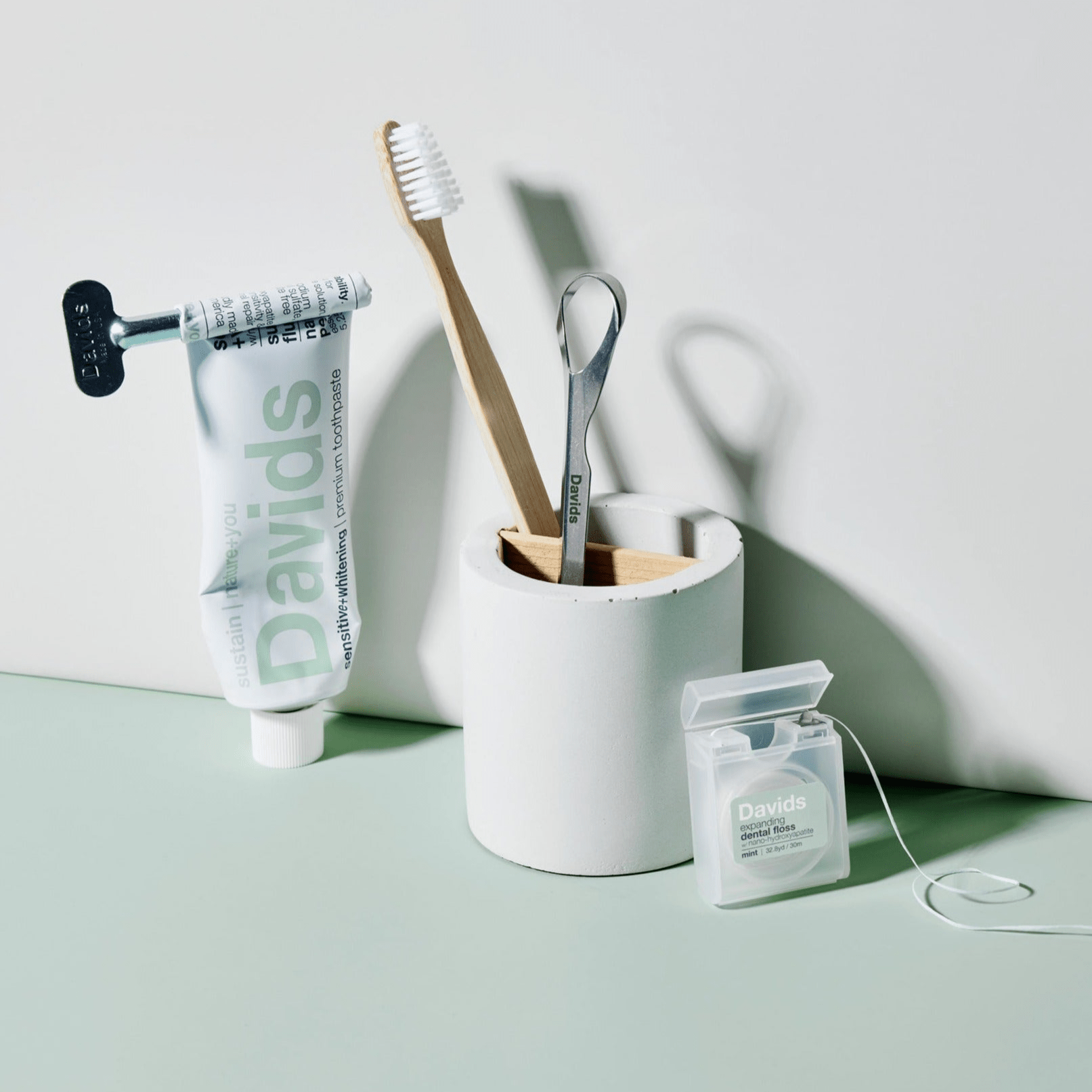
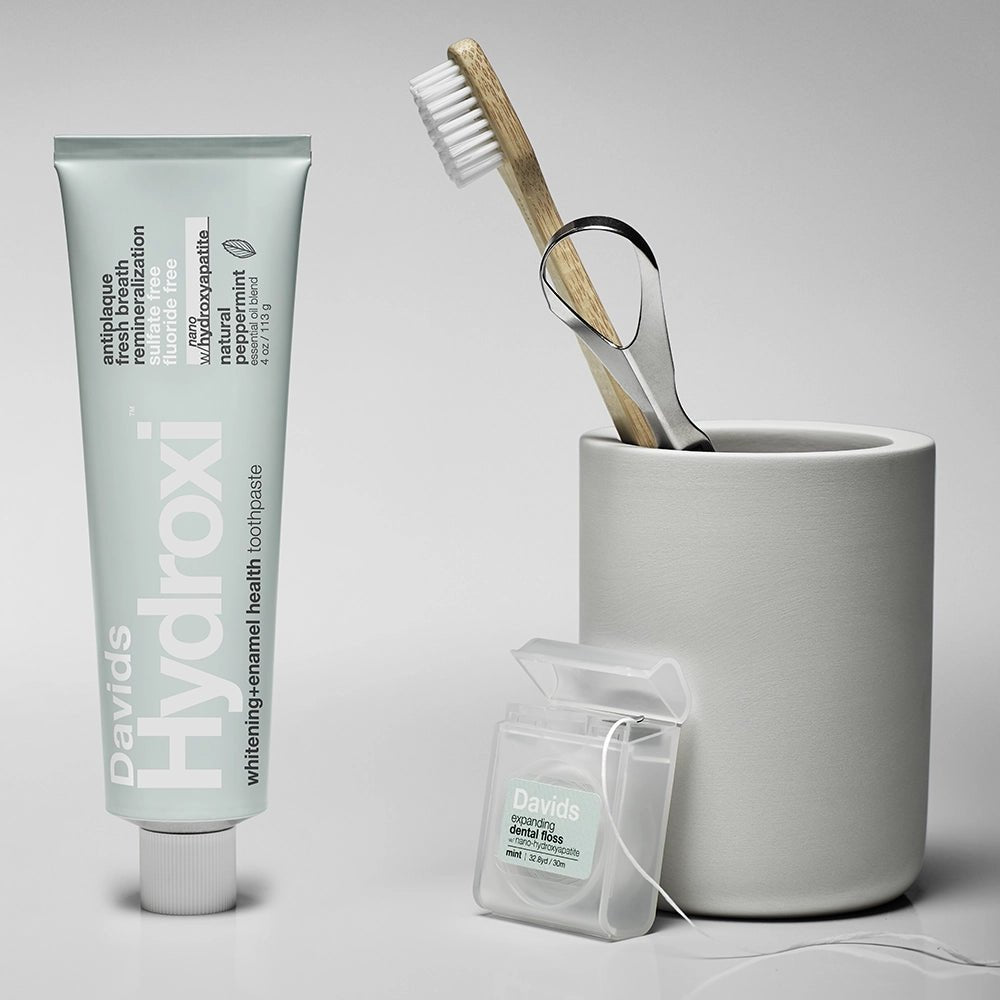
- toothpaste: brushing with our Hydroxi™ toothpaste gives you a daily dose of remineralizing with nano-hydroxyapatite while gently polishing your teeth with ultra fine, naturally derived micro abrasives and freshening your breath with xylitol and real mint oils.
- oil pulling: our modern twist on this ancient tradition uses 100% MCT coconut oil along with nano-hydroxyapatite and premium mint oils to help reduce harmful bacteria (like Streptococcus mutans) and plaque, improve gum health, reduce gingivitis, and freshen breath.
- floss: our expanding dental floss is infused with nano-hydroxyapatite so it can remove plaque between your teeth and deliver n-HAp particles to those hard-to-reach crevices, offering enamel protection where your toothbrush can’t reach.
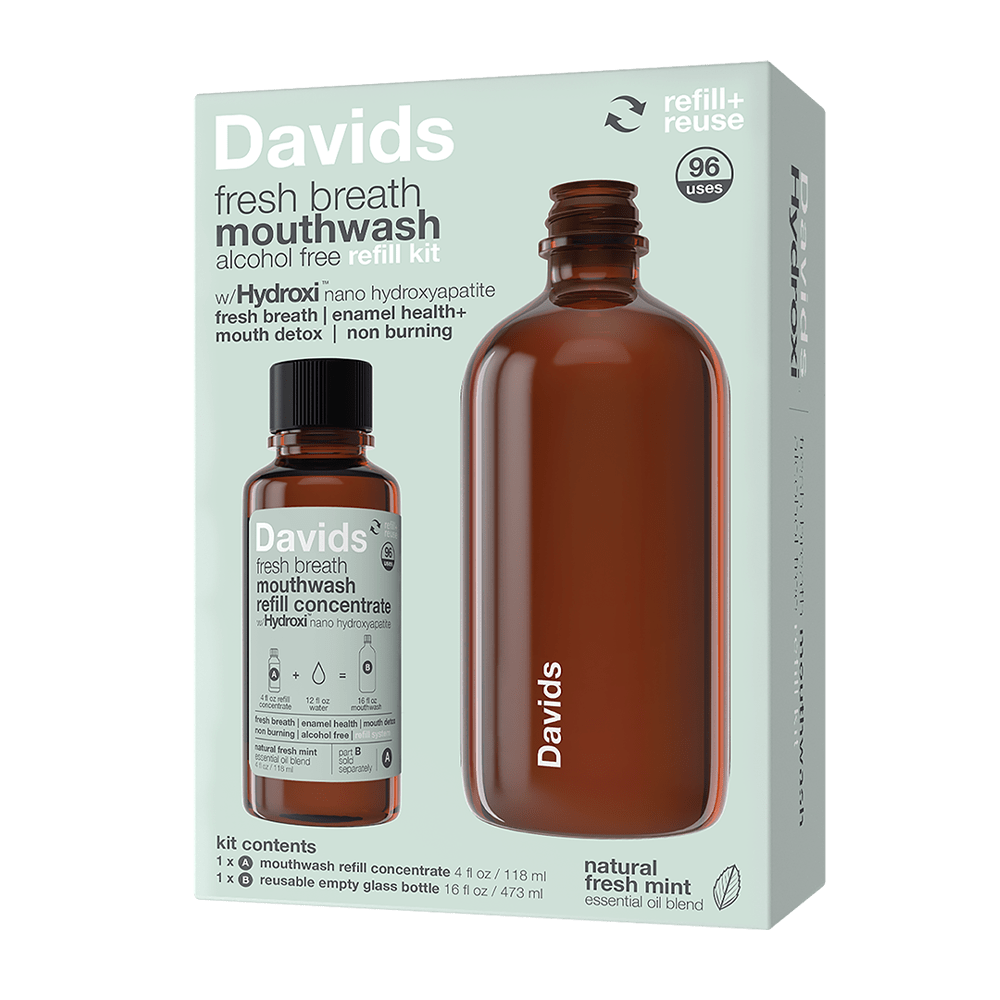
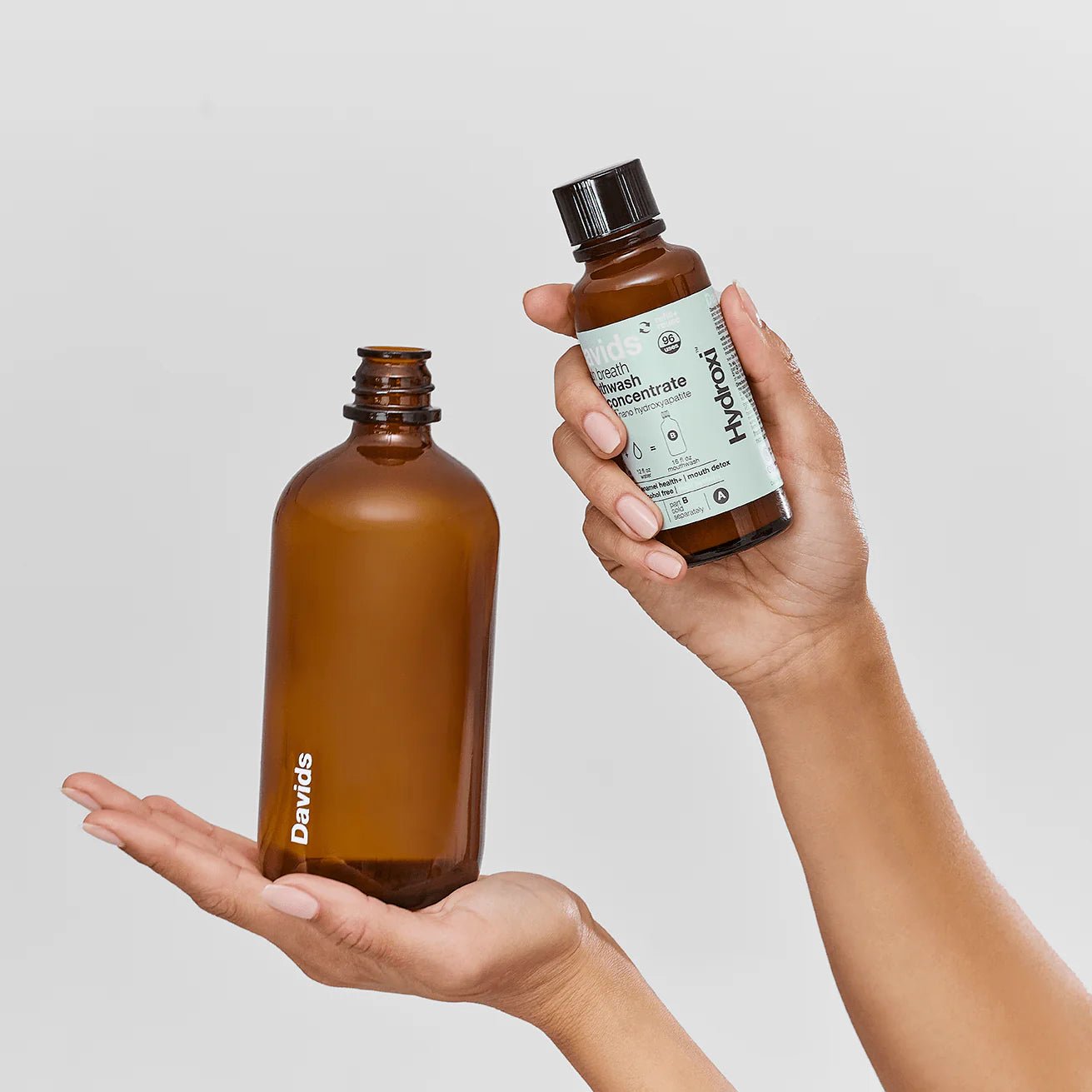
- mouthwash: our alcohol free mouthwash also contains nano-hydroxyapatite, xylitol, and premium mint oils to give you fresh, balanced breath and ongoing enamel repair, without any harsh chemicals, burning, or fluoride.
These products offer a safe, effective fluoride alternative for your whole family! They’re gentle enough for daily use (even/especially for children), yet they’re powerful enough to make a real difference in enamel health and long-term oral/overall wellness.
With decades of research behind nano-hydroxyapatite and growing support from dental professionals worldwide, now is the perfect time to try our Hydroxi™ products. Are you ready to bring the NASA-inspired innovation into your home and give your smile the care it deserves?