



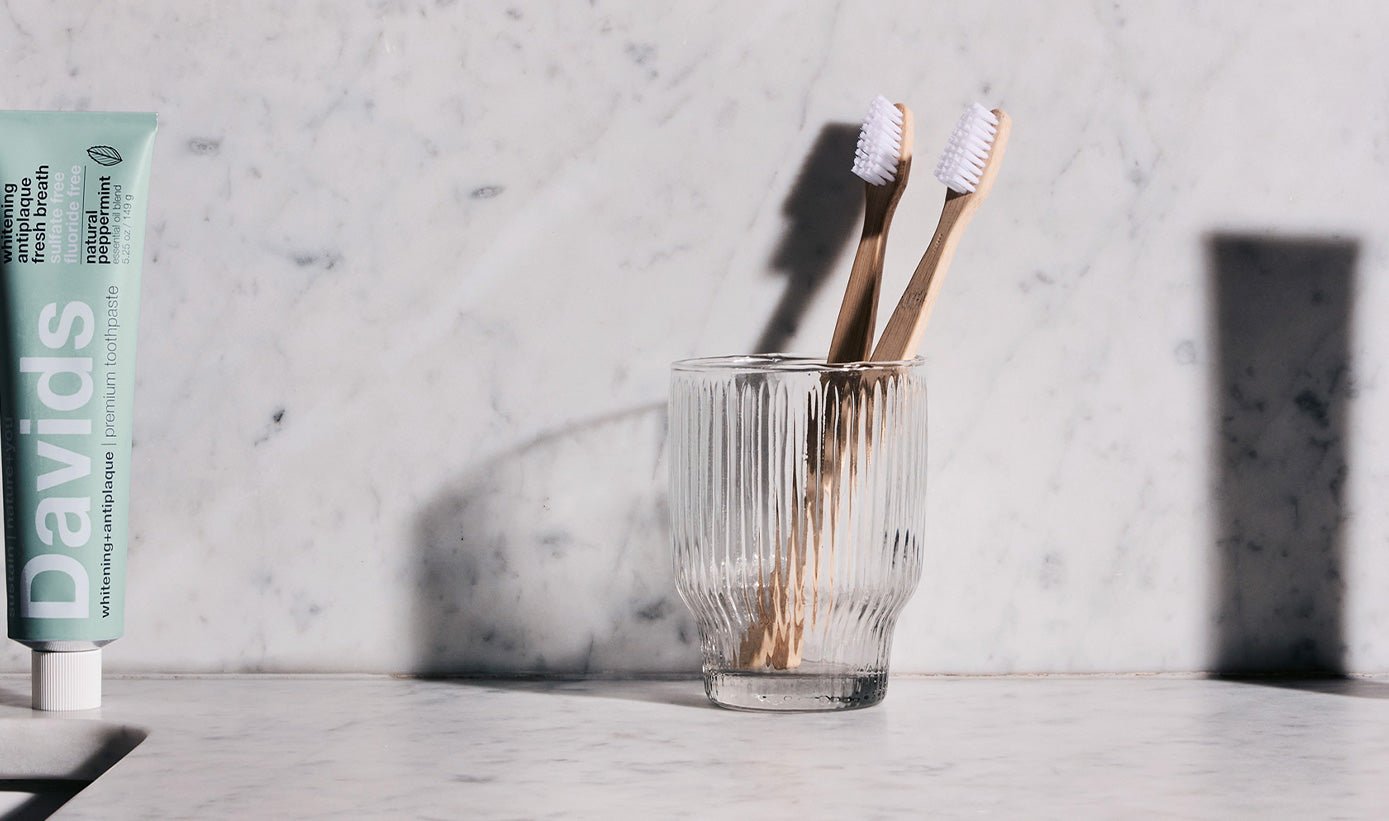
small tool, big impact: brushing up on the eco-benefits of bamboo toothbrushes
You’ve heard that bamboo toothbrushes are better for the environment, but do you know exactly why? Of course, at face value, bamboo seems better than plastic. It’s natural, it’s biodegradable, and it’s not very resource intensive...things that plastic simply can’t claim.
But there are even more bamboo toothbrush benefits below the surface. From sequestering carbon during the growth phase to releasing fewer greenhouse gasses during the manufacturing phase, bamboo toothbrushes have a far smaller environmental footprint than their plastic counterparts, and they’re gentler on your oral microbiome. Sounds like a win-win to us!
Now, to shine a light on all the positives of the bamboo toothbrush, let’s dive into some of the negatives of the plastic toothbrushes that have been around (and will stay around) for far too long.
how long does it take for a plastic toothbrush to decompose?
Experts estimate that it takes around 500 years (maybe even up to 1,000 years) for a single plastic toothbrush to decompose. Even then, the pieces simply decompose into smaller microplastics, which have the power to pollute ecosystems in a less obvious way. It’s difficult (if not impossible) to recycle plastic toothbrushes because they’re so durable, and their small parts can clog up recycling equipment. Most get lost in the process and make their way to landfills, open fields, oceans, rivers, and other waterways, harming delicate ecosystems and precious wildlife.
The plastic toothbrush, as we know it, has only been around since 1938....meaning every conventional toothbrush that has ever been made is still lingering around out there. (That’s part of the reason why we don’t truly know how long it takes for one to decompose.) You’ve probably heard us say before that 1 billion toothbrushes (equal to roughly 50 million pounds of plastic waste) end up in landfills every year in the US alone. Isn’t it time we switched to a better option, say the bamboo toothbrush?
other environmental impacts of plastic toothbrushes
Did you know that both the toothbrush handle and bristles in a conventional toothbrush are derived from petroleum oil? This leads to a lot of environmental pollution throughout the manufacturing process: extracting the petroleum oil → transporting it → refining it for manufacturing → and managing the plastic waste at the end of life.
P.S. If you’re set on a plastic toothbrush, using a toothbrush with a replaceable head can help you reduce plastic toothbrush waste by 30%. But we much prefer our bamboo toothbrush, and we’ve outlined exactly why below.
bamboo toothbrushes can decompose in just a few weeks
If you send your bamboo toothbrush to your local commercial composting facility, it will decompose in just a few weeks. Five weeks for a bamboo toothbrush versus 500 years for a plastic toothbrush? We’ll take that any day.
Worst case scenario, if you even just throw your bamboo toothbrush into your garden, it will still only take up to 10 years to decompose. But we recommend stocking up on bamboo toothbrushes and getting to know your local composting facility. Just search “commercial compost near me” to get to know your local spots.
Now, let’s talk about some of the less obvious benefits of a bamboo toothbrush. Unlike plastic, bamboo is a real plant! Did you know that it can absorb 2x the carbon dioxide that trees can while generating 30% more oxygen? On top of that, bamboo is a fast-growing plant that can thrive in many environments without harmful pesticides and fertilizers. Throughout the manufacturing process, bamboo toothbrushes involve less energy, less water, and less greenhouse gas emissions than their plastic counterparts. What’s not to love?
why do we call ours the best bamboo toothbrush?
We’ll be the first to say that opting for any bamboo toothbrush is better for the planet than continuing on the path of plastics. With so many on the market, we wanted to round up a few important details that set our bamboo toothbrush apart from the competition.
100% natural bamboo handle: if you see color or other embellishments on your bamboo toothbrush, you might want to ask if it’s 100% natural bamboo. Our bamboo toothbrushes are just that…true bamboo.
plant-derived, BPA-free bristles: our soft, BPA-free bristles are derived from castor oil. Unlike many others that are derived from petroleum oil, even our bristles are better for the environment (and your body) than their conventional counterparts.
soft, gentle mouthfeel: our soft high-performance bristles deliver a powerful clean that removes plaque without being too harsh on your enamel, gums, and mucosal lining. The natural bamboo is easy to grip, allowing you to easily and gently maneuver it in those hard-to-reach corners of your mouth.
sleek and minimalistic: everyone loves a toothbrush that looks as good as it performs, and ours sports a simple, natural look that will shine on your bathroom shelves.
While 30 billion toothbrushes worldwide can feel like a problem too big to face, we want to encourage you that together, our small daily steps can add up to big leaps in the right direction. There’s power in numbers, and if we all begin the transition to daily oral care products that are better for the planet (and your body), we can make a big difference. Why not start the journey with a bamboo toothbrush?
Eric David Buss is an American entrepreneur and the Founder and CEO of Davids Health Sciences, Inc., the producer of Davids toothpaste. With over 10 years of experience in oral care product development and formulation, his expertise lies in creating market-leading innovation in the CPG oral care space. Eric resides in Temecula, CA, and in his free time enjoys hiking, architectural tours, and traveling with his family.
key Takeaways
Understanding the common causes of tooth sensitivity helps in choosing effective treatments and preventing future issues.
Acidic foods, aggressive brushing, teeth grinding, and whitening products are all factors that can lead to tooth sensitivity.
Managing underlying issues such as acid reflux, gum disease, and tooth wear, along with proper hygiene, is essential for preventing long-term sensitivity.
Daily use of nano hydroxyapatite toothpaste for sensitive teeth can remineralize enamel, reducing sensitivity and strengthening the teeth against common triggers.
Picture this: you’re eating an ice-cold snack on a hot summer day when suddenly, your sensitive tooth reminds you it’s alive and (un)well. We know how annoying and disruptive sensitive teeth can be, but understanding what causes sensitive teeth can lead to a long-term solution.
That’s why we’re exploring the 10 most common causes of sensitive teeth. We’re also providing realistic, everyday solutions, many of which revolve around brushing daily with nano hydroxyapatite toothpaste designed for sensitive teeth.
Because it’s time to get to the root of your sensitivity and solve the problem once and for all.
1. what causes sensitive teeth: acidic, sugary substances
Acidic substances (citrus fruits, vinegar, tomatoes, yogurt, etc.) can erode your enamel and wear down your gum line over time. This erosion “opens the door” for bacteria and other substances to enter the inner layers of your teeth, exposing the tubules that lead to your tooth’s center nerve.
Foods that are high in sugar and carbohydrates can have the same effect since the bacteria in your mouth (and gut) release acids to break down these carbohydrates, depositing more acid on your enamel and leading to sensitivity.
Don’t worry, daily brushing with a nano hydroxyapatite toothpaste designed for sensitive teeth can clean the acids, plaque, and bacteria in your mouth while also remineralizing enamel, making your teeth stronger and more resilient to future threats.
2. what causes sensitive teeth: brushing too aggressively
One of the lesser-known causes of sensitive teeth is brushing too hard. That’s right, aggressive brushing doesn’t actually clean your teeth more effectively! Over time, it can cause more harm than good by wearing down your enamel and gum line.
To avoid this, do the following:
Use a soft-bristle toothbrush (like our bamboo toothbrush).
Practice mindfulness every time you brush.
Make an effort to brush with soft motions.
Gently sweep over your teeth and gums in circular or back-and-forth motions without pressing too hard.
3. what causes sensitive teeth: teeth grinding
Do you feel tension headaches and jaw soreness after a long day or a night of sleep? These could be signs that you grind your teeth when you’re sleeping (or subconsciously throughout the day when you’re stressed).
Constantly clenching your teeth can also lead to enamel and gum damage, causing pain in your muscles and sensitivity in your teeth! There could be several reasons why you’re grinding your teeth. Identify those reasons and use a nano hydroxyapatite toothpaste for sensitive teeth to remedy them.
The nano hydroxyapatite (nHA) particles in our formula can actually bind to your enamel and repair the small holes, scratches, and depressions caused by grinding over time.
4. what causes sensitive teeth: teeth whitening with peroxides
Do you whiten your teeth with peroxide-based products? While hydrogen peroxide + carbamide peroxide are effective tooth whitening agents, they’re famous for stripping your enamel and causing:
Itching
Burning
Swelling
Redness
Sensitivity
Don’t worry, there’s a more natural approach to whitening that actually fortifies your enamel. Meet PAP teeth whitening, aka the peroxide-free future of teeth whitening.
PAP is an organic acid that activates bleaching, and it’s often mixed with hydroxyapatite to give you a gentle whitening formula that nurtures enamel remineralization and soothes sensitivity as it whitens. What’s not to love?
5. what causes sensitive teeth: chemical mouthwash
Are you using conventional mouthwash every day? Many chemical mouthwashes contain alcohol and hydrogen peroxide. These ingredients are very harsh on your enamel and can lead to pain and sensitivity.
Instead of completely wiping out all of the microorganisms in your mouth with chemical mouthwash, we recommend:
Tongue scraping
Switching to a more natural mouthwash
Using a nano hydroxyapatite toothpaste for sensitive teeth
By making these swaps, you’re nurturing a healthier balance of bacteria in your oral microbiome (yes, good bacteria exist and are essential for your oral and overall health).
6. what causes sensitive teeth: plaque buildup around the gumline
Plaque and tartar are two factors that will harm your enamel and gum line over time, leading to uncomfortable tooth sensitivity.
Plaque is a soft, sticky biofilm made up of bacteria, food particles, and saliva that constantly forms on teeth and along the gumline. If it isn’t removed through daily brushing and flossing, it can begin to mineralize within 24–72 hours and harden into tartar, which only a dental professional can remove. So if your teeth feel rough when you press your tongue against them, you’re past due for a visit to the dentist!
To prevent plaque and tartar buildup, brush daily with our hydroxyapatite toothpaste, which contains:
Micro abrasives to break down plaque
Hydroxyapatite to deliver enamel repair
Xylitol and peppermint oils to kill harmful bacteria
7. what causes sensitive teeth: acid reflux
Just like acidic foods can cause sensitivity, so can acid reflux. This effect is just another example of how your gut health and oral health are so closely intertwined.
Although many doctors will prescribe an antacid medication and recommend using a nano hydroxyapatite toothpaste for sensitive teeth, we believe it’s essential for your holistic health to identify the root cause of your acid reflux.
Do you have low stomach acid levels from stress, magnesium deficiency, poor eating habits, H. pylori infection, or hypothyroidism? We encourage you to consult both a medical doctor and a functional medical practitioner in your area to develop a plan of action that best nourishes your oral and overall health.
8. what causes sensitive teeth: cavities, cracked teeth, worn fillings
It may seem obvious, but cavities, cracked teeth, and worn fillings are all leading causes of tooth sensitivity and discomfort.
If your sensitivity persists despite daily brushing with hydroxyapatite toothpaste, it’s best to visit your dentist to see if the enamel wear has progressed to decay.
Dental professionals can also check for cracks in your teeth and worn fillings. As you get older, fillings can weaken, and bacteria can build up around the edges, leading to uncomfortable sensitivity that only your dentist can treat.
9. what causes sensitive teeth: gum recession + gum disease
You can see that many of the above causes of sensitive teeth revolve around enamel wear and gum health. If your gums begin to recede or form “pockets” because of periodontitis, you’re going to experience persistent sensitivity.
When your gums recede, they expose parts of your teeth that should not come in contact with the outside world. The lower parts of your teeth (which are usually protected by your gums) contain tubules that lead to your center nerve, so when they become exposed, sensitivity starts.
If you notice your sensitivity is coupled with bleeding gums, redness, and inflammation, you might be dealing with gum disease. It’s best to get your gums checked out by your dentist. In the meantime, brush with a nano hydroxyapatite toothpaste for sensitive teeth to alleviate the symptoms.
10. what causes sensitive teeth: aging
We can’t stress this enough: it’s so important to start caring for your enamel and gums as early as possible so you can prevent sensitivity as you age. So, if you’ve been waiting to try hydroxyapatite toothpaste, our best advice is to go for it.
Your oral care habits, eating habits, everyday wear and tear, and genetics all accumulate over time, which can lead to sensitivity throughout adulthood.
As you age, you might take new medications that can lead to dry mouth and sensitivity, so it’s best to start enamel-strengthening habits when you’re young.
why davids is the best hydroxyapatite toothpaste
Now that you understand what causes sensitive teeth, you can take proactive steps to protect and strengthen your enamel. One of these steps involves switching to a nano hydroxyapatite toothpaste for sensitive teeth, and Davids offers one of the most effective options.
You don’t have to take our word for it. We had our Hydroxi™ nano hydroxyapatite toothpaste tested at Intertek, a respected third party lab t comparing our Davids to leading sensitive toothpastes on the market.
The photo results proved that our formula outperformed the rest, successfully promoting enamel repair by remineralizing holes, scratches, and imperfections.
Ready to try it for yourself? Buy our nano hydroxyapatite toothpaste today and brush smarter with science-backed ingredients!
buy premium hydroxyapatite toothpaste now
faqs about what causes sensitive teeth?
can using a nano hydroxyapatite toothpaste for sensitive teeth prevent future dental issues?
Yes, regular use of nano hydroxyapatite toothpaste can help remineralize weak enamel, improve overall tooth strength, and protect against acid erosion and decay. This proactive approach supports long-term oral health and reduces the risk of developing sensitivity and cavities.
how long does it take to see results from nano hydroxyapatite toothpaste?
Most users begin to notice reduced sensitivity within two to four weeks of consistent brushing, and some users noticed reduced sensitivity even earlier. Optimal results, however, depend on regular use, proper oral hygiene, and avoiding known triggers. Patience and consistency are key.
what causes sensitive teeth in children?
Sensitive teeth in kids can result from several factors, including:
Dental trauma or injury
Early signs of cavities or decay
Grinding or clenching teeth (bruxism)
Enamel hypoplasia or developmental defects
Emerging adult teeth or orthodontic appliances
Frequent consumption of sugary or acidic foods and drinks
Promoting good oral care routines in kids, including brushing with a kid-friendly hydroxyapatite toothpaste designed for enamel health, can minimize future sensitivity issues.
can dehydration cause tooth sensitivity?
Yes, dehydration can lead to dry mouth, reducing saliva production, which helps neutralize acids and protect enamel. This effect can make teeth more vulnerable to sensitivity and decay.
key takeaways
Make brushing fun with engaging activities such as fact sharing, experiments, and dance parties to motivate kids and establish positive oral care habits early on.
Use rewards and sensory-friendly toothpaste flavors to encourage your little ones to brush regularly.
Incorporate educational songs and hands-on demonstrations to improve understanding and make oral care a family bonding experience.
Prioritize early oral care to support healthy baby teeth, prevent cavities, and build lifelong positive attitudes towards dental hygiene.
Do your kids put up a fight when you ask them to brush (let alone floss) their teeth? Don’t worry, you’re not alone! For those who feel like they’re entering a battle every time toothbrushing rolls around, we’re sharing our top five oral care tips for kids to help you establish a fun and effective routine.
Of course, we couldn’t share these tips for fun ways to get kids to brush their teeth without also reminding you to schedule a trip to the dentist for your little one (every six months) and encouraging you to refresh their routine with our favorite toothpaste for kids.
Now, onto our favorite tips and the importance of early oral care!
why early oral care matters most
Getting kids to brush their teeth can become a nightly battle. A survey by Delta Dental revealed that 45% of parents agree it’s a huge challenge to get their kids to brush their teeth.
Day after day, fuss after fuss, we understand it’s tempting to throw the towel in altogether. Why go through all the stress of forcing your children’s oral health upon them when their teeth are just going to fall out anyway?
Well, we’re here to remind you that these early years are among the most crucial and foundational stages for oral health. That is why we’re sharing our oral care tips for kids and helping establish good habits at a young age.
the key benefits of early oral care:
Healthy “baby” teeth play a central role in helping your child learn how to chew and talk.
They pave the way for your kid’s permanent teeth, giving them a much better chance at growing healthy adult teeth.
Establishing good oral habits early can prevent common oral health problems later in life.
Early care encourages a positive attitude towards dental visits and hygiene routines.
top five oral care tips for kids
Now that you know about the importance of early oral care, let’s explore the five most effective ways for getting kids to brush their teeth.
1. teach them fun facts about their teeth
One of the most fun ways to get kids to brush their teeth is to wow them with surprising facts about their dental health. Here are some of the most interesting, little-known facts about teeth to get your kids excited about oral care:
Your teeth are as unique as your fingertips.
Dogs have over 10 more teeth than humans.
Enamel is the strongest substance in the body, stronger than bone.
You grow 12 new teeth after baby teeth fall out.
Ancient humans used ground oyster shells to clean their teeth.
why sharing fun facts boosts kids’ interest in oral care tips
Research reveals that oral health education programs in schools have been effective at increasing kids’ knowledge, attitudes, and dental hygiene.
Adding a bit of fun to oral health education can help get kids more excited about oral health! You might learn a thing or two that’ll motivate and rejuvenate your own oral health routine.
Additionally, you can create fictional stories that depict the importance of oral health. For example, if your little one loves superheroes, create a story where oral bacteria and plaque are supervillains, and the toothbrush, toothpaste, and floss are a team of superheroes working together to keep their “tooth town” safe.
2. do fun hands-on experiments
Learning fun facts is one of our most effective oral care tips for kids and a great entry point, but it’s no secret that some kids learn and absorb things better by seeing and doing.
There are so many visual and hands-on activities you can do with your little ones to get them excited about their oral health, ranging from interactive videos to science experiments.
Some fun ways of teaching kids about oral health and getting them to brush their teeth include:
Play a flossing challenge with LEGO or ice cube trays.
Watch animated brushing encouragement videos for kids.
Sort healthy and unhealthy snacks using tooth-shaped trays.
Design posters about brushing and flossing for a fun contest.
why engaging demonstrations help kids understand oral care tips
These activities are more than just fun ways to get kids to brush their teeth. They have a noticeable impact on your kids’ understanding of dental health.
For instance, one experiment could involve covering hard-boiled eggs with flour-based “plaque” and challenging your kids to brush the plaque off the egg before and after it’s hardened. This practice can help them see the value of brushing to prevent plaque from hardening on their own teeth.
Another activity could involve creating a replica mouth full of marshmallow “teeth,” giving you a perfect diorama to show your little ones how to floss correctly.
3. establish a rewards system
A simple oral care tip for kids could include a harmless rewards system to help solidify your child’s dental health routine. While parents often have mixed feelings about external rewards, a 2023 study shows that they are a great way of getting kids to brush their teeth and be more proactive.
If this is something you’re interested in, here are some simple reward ideas:
An exciting playdate
An extra trip to the park
A new toothbrush that lights up
A new toothpaste flavor (more on that below)
Sticker charts or other crafts, puzzles, and art
A new game to play before, during, or after the routine
why rewards make following oral care tips for kids more fun
Rewards turn a routine and boring task like brushing into an exciting experience. They motivate children to brush regularly, create positive associations with dental hygiene, and add an element of playfulness that encourages consistency.
However, we recommend reserving rewards for more “dire” situations, so your little one doesn’t expect a reward after brushing twice every single day (unless you’re up for that).
4. turn brushing into a dance party
One of the mostfun ways to get kids to brush their teeth is to make brushing time a family affair. This habit is among the most effective oral care tips for kids since we all have to brush our teeth at some point in the morning and evening.
It can be the perfect opportunity to bond as a family. After all, kids love following their parents and older siblings! We recommend throwing on your (shared) favorite song to dance and brush together.
get everyone moving with brushing songs
You can also find educational songs specifically crafted around oral health for getting your kids to brush their teeth. These two-minute songs can keep your little one engaged the entire time, guiding them through the movements of brushing and flossing, so they can practice proper techniques while jamming to some tunes.
To implement this oral care tip for kids, start by searching “brush your teeth songs” and sift through options before committing to one (which we encourage, since you’ll probably end up listening to it every day for the foreseeable future).
5. try different toothpaste flavors and toothbrush types
One of the reasons you’re failing at getting your kids to brush their teeth may be related to sensory issues. It could be as simple as they don’t like the taste/texture of their toothpaste or the feel of their toothbrush.
If you haven’t already, try our strawberry+watermelon toothpaste! It’s the perfect option for both kids and adults because, unlike other conventional kids' toothpastes, it doesn’t contain any chemical fillers, artificial flavors, or preservatives.
Because it’s SLS free, it won’t excessively foam like other toothpastes on the market, and its juicy, subtly sweet flavor is perfect for your little ones.
why using sensory-friendly toothpaste is an encouragement for kids to follow oral care tips
We think it’s the best toothpaste for growing kids because it’s fluoride free and SLS free, so you don’t have to worry about them swallowing it.
Many fluoride toothpastes are required to carry a poison control warning due to ingestion risks. Our fluoride free formulas do not require that warning. You can feel peace knowing your little one can swallow our toothpaste without worry.
try these fun ways to get kids to brush their teeth
Getting kids to brush their teeth can be easy. All you have to do is incorporate our oral care tips for kids into their routine to notice the difference. While you’re at it, switch their toothpaste to one of Davids’ high-quality options.
If your little one is open to mint flavors, we highly recommend introducing our sensitive+whitening nano hydroxyapatite toothpaste into their daily oral care routine.
Starting them on a hydroxyapatite toothpaste routine when they’re young can help them develop strong, healthy enamel that’s properly nourished with essential minerals.
This tip can help turn kids' oral care into long-term dental health, setting them up for a bright, smiley future.
buy premium toothpaste today
key Takeaways
Xylitol in toothpaste helps to effectively reduce harmful oral bacteria, promotes remineralization by supporting saliva flow, and contributes to better oral health.
Traditional sweeteners such as saccharin, sucralose, and sorbitol are commonly used in toothpaste to add flavor but do not actively support oral health like xylitol does.
Dental professionals and multiple studies recognize xylitol for its role in supporting daily oral care routines and long-term dental health.
There’s no denying that sweeteners are a big part of the oral care world. Alongside mint and other essential oils (and oftentimes artificial flavors), these ingredients are the reason oral care products are palatable. If toothpastes were made completely without sweeteners, we probably wouldn’t love to use them every day. However, not all sweeteners are created equal.
As a company that sells toothpastes with xylitol and without any artificial flavors, you’re probably not surprised to find out that our formulas include this nature-derived sweetener made from birch trees that only hit the oral care market ~50 years ago.
But with so many options (naturally derived and artificial) on the market, we’re diving into some common sweeteners found in your oral care products. To start, let’s embark on a little journey through history.
the history of non-sugar sweeteners in toothpaste
Thousands of years ago, people worldwide were creating their own versions of toothpaste and tooth powders. These early, naturally derived toothpaste formulas didn’t have xylitol in them. Instead, they would typically contain ingredients like:
Salt
Charcoal
Pumice powder
Ground eggshells
It’s only natural that our ancestors experimented with different sweeteners and flavor enhancers to mask the taste of these ingredients!
early natural toothpaste sweeteners
As time went on, common sweet ingredients included honey and cane sugar, until experts realized these sugars contributed to tooth decay. This realization drove the search for a toothpaste without these sweeteners.
For the past ~150 years, scientists have explored safer and low-cost alternatives to sugar in food and toothpaste, which eventually led to xylitol and saccharin.
discovery of saccharin and its impact
That leads us to the first widely used commercial sweetener, saccharin, which was accidentally discovered by scientist Constantin Fahlberg at Johns Hopkins University in 1879.
When experimenting with coal tar, Fahlberg noticed an unexpected substance that was much sweeter than sugar. Following this discovery, saccharin became widely adopted and also widely debated, as early research raised questions about its long-term safety.
Since then, the race to find safe, healthy, and delicious sweeteners has only ramped up, with a few popular ingredients dominating the oral care market.
comparing common sweeteners
We’ve compiled a list of the most common oral care sweeteners, exploring their benefits and risks to show you why we prefer to see (and put) xylitol in our toothpaste.
sodium saccharin
Sodium saccharin is simply the salt form of saccharin, and it’s one of the most common sweeteners found in conventional toothpaste formulas.
Saccharin was discovered in a lab, so it’s an artificial sweetener (not derived from nature). Before saccharin, toothpastes were made without artificial sweeteners.
disadvantages of sodium saccharin in toothpaste
While sodium saccharin is much sweeter than sugar (without the tooth-decay effects), it presents a few concerns when used in toothpaste instead of xylitol.
Studies show that saccharin can disrupt the delicate balance of bacteria in your gut, nurturing the detrimental bacterial species that are more efficient at harvesting energy.
This disruption can lead to an increased risk of metabolic disorders such as insulin resistance, obesity, and more.
These disorders are also known to snowball other health complications downstream.
Saccharin was also previously listed as a potential carcinogen by the FDA based on early animal studies, but it was removed from this list after further research showed these effects were not applicable to humans. Even so, many consumers prefer to avoid artificial sweeteners. Can you already tell we don’t believe conventional toothpaste can measure up to a toothpaste with xylitol in it?
sucralose
Sucralose is another artificial sweetener found in toothpastes and other sugar-free products.
disadvantages of sucralose in toothpaste
Studies have shown that sucralose can alter the balance in your gut microbiome and destroy the beneficial bacteria.
It’s also suspected to increase inflammation throughout the body, which we definitely don’t want, and you won’t find our xylitol toothpaste having that effect.
sorbitol
Unlike the previous two, sorbitol is considered a natural sweetener derived from sources like corn, potato starch, apples, pears, and berries. It was first discovered in 1872 in mountain ash berries. Today, it’s present in many oral care products and sugar-free foods.
disadvantages of sorbitol in toothpaste
Sorbitol might seem like a good option to some, similar to xylitol in toothpaste. Sorbitol is less fermentable than sugar and generally considered low carcinogenic, but there are a few key differences.
Studies show that some oral bacteria (bacteria that cause tooth decay) can break down or metabolize sorbitol.
In other words, sorbitol can potentially “feed” harmful bacteria, while xylitol starves them.
xylitol
Xylitol is a natural sweetener found in many fruits, vegetables, and plant materials.
At Davids, we chose xylitol as the main sweetener in our toothpastes. We source our xylitol from birch trees, which is the best option for the planet since birch trees are abundant and renewable, aligning with our commitment to thoughtful ingredient sourcing for our toothpastes without artificial flavors, colors, or sweeteners.
advantages of xylitol in toothpaste
A 2012 study found that xylitol can reduce levels of damaging bacterial species by 27-75% without disrupting levels of beneficial ones.
Ten years later, another study confirmed that xylitol chewing gum can reduce the amount of harmful bacteria and plaque in your mouth by 20%.
Many studies attribute these characteristics to the fact that xylitol can increase your saliva flow to:
Prevent dry mouth
Flush out detrimental bacteria and neutralize acids
Maintain a healthy pH in your mouth (which can also greatly benefit your gut)
By creating a healthier oral environment, xylitol in toothpaste supports natural remineralization processes, especially when paired with mineral-rich ingredients like nano hydroxyapatite. This is why we cherish it as the star sweetener in our premium toothpaste!
why you should choose our xylitol toothpaste
There is not only xylitol in our toothpaste but also a range of ingredients designed to nurture your overall health and elevate your oral care routine. Our sensitive+whitening toothpaste contains both xylitol and nano hydroxyapatite, a remineralizing dream team for your teeth.
As the xylitol stimulates saliva production and starves the harmful bacteria in your mouth, hydroxyapatite swoops in to fortify your enamel. Together, these two work to soothe sensitivity and strengthen your teeth.
There you have it, a unique toothpaste without artificial sweeteners that cares for your oral and overall health. Buy it now to choose ingredients your body can trust!
buy your premium toothpaste now
faqs
does xylitol regrow enamel?
Enamel cannot be fully regrown once it is lost. However, studies show that xylitol can help repair and rebuild deeper enamel layers by promoting calcium transfer and making minerals more accessible. When paired with ingredients like nano hydroxyapatite, it enhances remineralization while helping to strengthen and protect existing enamel without artificial sweeteners.
do dentists recommend xylitol?
Several dental associations, as well as the FDA, recognize the benefits of xylitol for dental health and approve its use. That is why many dentists recommend a toothpaste with xylitol in its formula to their patients.
how often should I use xylitol toothpaste for the best results?
It’s best to use xylitol toothpaste twice daily to prevent common oral health problems. Consistent use helps maintain saliva flow, reduces bacteria, and supports remineralization, contributing to healthier teeth and gums over time.