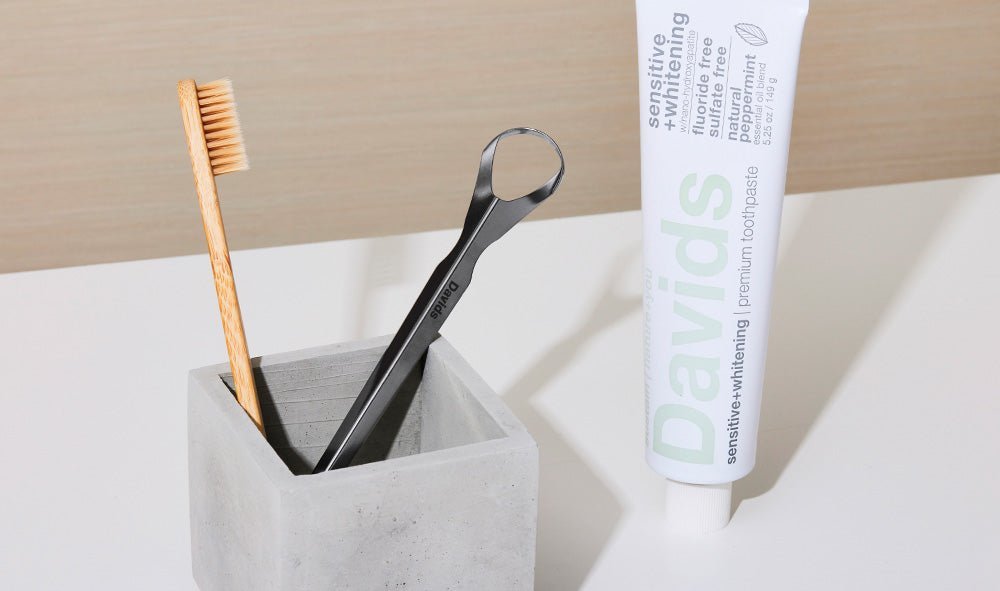
what's on your tongue? how our tongue scraper can help keep it clean and healthy
Have you ever wondered what’s on your tongue? Why does it change colors? Why does it feel thicker and slimier when you wake up? What’s living on that cushy surface?
You might be surprised to learn thathundreds of species of bacteria live on your tongue, doing their best to feed off the biofilm that develops between the times you complete your oral care routine. Oh, and not to mention, there are other microorganisms like yeasts and viruses that can also develop on your tongue, too!
This is why it’sso important to prioritize tongue cleaning during your oral care routine. With products like plastic toothbrushes with a “tongue cleaner” on the opposite side of the bristles and mouthwashes that claim to kill 99% of germs, you might think these things are enough to keep your tongue clean and healthy.
But we’re here to tell you that these methods simply aren’t enough (or in the case of mouthwash, they’re actuallytoo much). We’re going to dive into the different things that live on your tongue and whytongue scraping (when combined with flossing and brushing with premium toothpaste) is one of the best ways to keep your tongue healthy and clean. Of course, we’ll also mention all of the things that makeDavids thebest tongue scraper out there.
what’s on your tongue?
In its simplest state, your tongue is covered with a soft pink tissue called the mucosa. Within the mucosa live tiny bumps called papillae, which house your taste buds. These taste buds contain tiny collections of nerve-like cells that allow your tongue to send messages to your brain.
Your tongue’s mucosa is typically covered with a biofilm, a thick and gooey coating thatfeeds the bacteria in your mouth. Youroral microbiome (aka the ecosystem of your mouth) is home to up to 700 species of bacteria, many of which get cozy on your tongue. Because it has such a soft, porous surface, bacteria can easily penetrate and settle in. Interestingly,scientists have found that specific types of bacteria tend to settle on different areas of the tongue, creating little communities and neighborhoods.
In addition to bacteria, your tongue might be home to oral pathogens (bad bacteria or viruses) or yeast (also known as oral thrush or candida) which can create a white film on the surface of your tongue and often feel “cottony”.
why use a tongue scraper to clean it?
Biofilm regrows on your tonguedaily, so it’s extremely important to address it during your oral care routine. Because your tongue is such a porous, absorbent surface, and biofilm is such a thick, sticky substance....brushing alone cannot effectively clean your tongue.
This is where atongue scraper comes in.Tongue scraping daily (we recommend doing itright after brushing with Davids) can help remove biofilm and stagnant bacteria from your tongue, refreshing your tongue and preventing unwanted oral conditions (such as bad breath, gum disease, and tooth decay).
Although scientists haven’t fully identified all of the hundreds of bacteria that live in our oral microbiomes, they still have strong reason to believe that some of these bacteria are actually beneficial. This is why we recommendtongue scraping over using a chemical mouthwash that “kills 99% of germs” and wipes other beneficial organisms along the way.
Not to mention, those chemical mouthwashes can disrupt the pH of your mouth, create mouth sores, and cause uncomfortable burning sensations. When you use atongue scraper, you don’t have to worry about these things.Tongue scraping is an ancient Ayurvedic practice that has been known to pose manybenefits, some of which include:
ridding of bad bacteria
reducing your body’s toxic load
stimulating your tissues and organs
promoting digestion and gut health
improving taste
correcting bad breath
And more. As you can see thebenefits of tongue scraping extend beyond the mouth. Not to mention, it’s a sustainable, waste-free way to care for your oral and overall health. What an incredible way to sustain nature+you!
what makes ours thebest tongue scraper?
With so manytongue scrapers on the market, we’re here to help you pick the best one. Here are some of the things that set theDavidstongue scraper apart from the rest.
it’s stainless steel: why does this matter? Well, stainless steel is durable, non-toxic, dishwasher safe, and hypoallergenic. It won’t break or fray from everyday use, so you don’t have to worry about ourtongue scraper developing sharp edges or getting messed up in the dishwasher. It’s made to last, so you have a sustainable, long-lasting tool for everyday tongue cleaning.
it can single-handedly clean your mouth: (pun intended) while we don’t recommend an oral care routine with justtongue scrapingalone (pair it with our toothpaste and awesome bamboo toothbrush), we mean you can literally use ourtongue scraper with one hand. Mosttongue scrapers on the market have a two-handed arch design, making them kinda big and awkward to maneuver. Ours is smaller and easier to handle, allowing you to reach areas of your tongue that others simply wouldn’t get to (in a way that avoids activating your gag reflex).
it’s designed and preferred by professionals: this unique design was made by dental professionals. No wonder it’s used as an example in dental schools!
There you have it: an effectivetongue scraper you can use (effortlessly, with one hand) over and over again. Your cleanest, freshest tongue is just around the corner. What are you waiting for?
Andrew Talarzyk is a marketing leader at Davids Toothpaste, where he helps bring the brand’s clean, science-forward approach to oral care into sharper focus for consumers, retailers, and media partners. As Senior Manager of Marketing, Andrew supports a brand built on the belief that toothpaste can be both high-performing and thoughtfully made, combining naturally sourced and naturally derived ingredients with modern dental science.
Through his work with Davids, Andrew helps communicate the company’s broader mission: creating oral care products that prioritize ingredient transparency, sustainability, and everyday performance without relying on harsh chemicals, artificial flavors, colors, or preservatives. His leadership aligns closely with Davids’ position as an innovator in the nano hydroxyapatite space, particularly through the brand’s Hydroxi™ formulas.
Hydroxyapatite is especially compelling because it mirrors a mineral naturally found in teeth and is used in Davids products to support enamel health, help smooth micro-imperfections, and provide sensitivity support.
Andrew’s value as a spokesperson lies in his ability to connect product innovation with a broader consumer shift toward cleaner, more intentional personal care. He represents Davids as a brand that is not simply following the natural oral care category, but helping define where it goes next: toward formulas that are effective, transparent, sustainability-minded, and grounded in a more informed understanding of what people want from the products they use every day.
Your smile is one of the first things people notice about you, often before you’ve said a single word. It can signal confidence, warmth, and approachability. But more importantly, your smile has an important relationship with how you feel.
key takeaways
Expanding floss transitions from a compressed strand into a cushioned texture when triggered by saliva.
One of the key benefits of expanding floss is that the texturized fibers grow to fill variable interdental gaps, sweeping away buildup.
The soft structure supports sensitive teeth and protects delicate gum tissue from harsh snapping.
Pairing this tool with a premium formula like Davids nano hydroxyapatite toothpaste creates part of an excellent oral wellness routine.
understand the innovation of expanding floss
Upgrading your oral care routine means choosing products that work naturally with your mouth. If you’ve looked at our site and find yourself wondering what expandable floss is, the answer lies in how the material behaves when you actually start using it.
Standard floss stays thin and rigid under high tension, but the multi-fiber strands in expanding floss behave differently. To see what expanding floss does in real time, look at how the physical design works. When the strand slips between your teeth, moisture from your saliva activates the texturized fibers.
The material expands instantly, increasing its surface area to protect your enamel from hard edges. This extra coverage catches plaque that flat strings slide right past, demonstrating exactly what expanding floss does to elevate daily hygiene.
the history and evolution of interdental care
Cleaning between the teeth has a long history. Early humans used basic toothpicks made from wood or bone to clear food debris. The first version of dental floss that we’d recognize now arrived in the nineteenth century when a dentist advised patients to use a thin silk thread to clean tight spaces. For anyone wanting to know more about historical innovations, asking what expandable floss is serves as a great starting point for analyzing modern interdental textiles.
For over a century, simple silk and nylon threads remained largely unchanged. While these traditional strings worked for large food particles, they had obvious functional flaws. Because they were uniform and inflexible, they often slipped right past stubborn plaque. Looking into the engineering of adaptive fibers reveals what expandable floss is designed to correct in modern routines.
expandable floss in recent times
As dental science advanced, experts realized a flat string couldn’t thoroughly clean human teeth. This understanding led to the development of texturized materials. Knowing what expanding floss does helps you build a daily routine that supports a balanced oral microbiome.
Nowadays, consumers want to know exactly how these fibers perform when compared to the stiff options of the past. If you’re trying to understand what expandable floss does for your long-term gum health, it is all about friction reduction and surface area contact.
the benefits of expanding floss
When you look at expanding floss vs. regular options, the major difference is how the textured fibers react to tension and moisture. Standard strings stay completely flat, which can cause them to pull roughly against your gums or slide right past plaque in wider spaces.
For people interested in a holistic approach to health, studying the benefits of expanding floss shows how much more effective and adaptive design can be. One of the advantages of expandable floss is its ability to custom-fit every unique mouth structure without causing irritation. What’s more, the benefits of expanding floss extend directly to daily gum tissue protection by reducing mechanical pressure. When you know how to use expanding dental floss correctly, you find a tool that balances deep cleaning with exceptional comfort.
An expanding strand changes its shape to fill the tiny gaps between your teeth. Switching to the best expanding dental floss is an easy way to embrace wellness every day. If you want a truly deep clean, discovering what expandable floss is can completely change your perspective on oral care.
how to use expanding dental floss
You get the best possible results from flossing when you use expanding floss correctly. Because this material reacts to moisture, a few quick adjustments to your technique will maximize your clean. Mastering the use of expanding dental floss means you never accidentally irritate sensitive gum tissue.
Start by pulling off about 18 inches of the floss. Wrap the ends around your fingers securely, leaving a fresh section in the middle to clean with.
As you guide the strand between your teeth, the proper method for using expanding dental floss requires a soft, back-and-forth motion instead of forcing it down hard against your gums.
Once the strand is comfortably placed between your teeth, saliva naturally causes the fibers to expand.
Curve the cushioned material into a “C” shape around the side of the tooth, guiding it gently under the gumline and moving it up and down to pull away hidden plaque.
Make sure to use a new, dry section of the strand for every gap, so you get a fresh, premium clean across your entire mouth.
choose a better interdental cleaner for a healthy smile
Combining superior-quality products with naturally derived oral care products from Davids lets you care for your smile with absolute confidence. Your flossing tools should meet high standards for safety and transparency.
By keeping your oral care up to date with the latest design advancements, you make sure your routine works hard for you. When patients ask what expandable floss is and what it can do for them, they’re usually looking for a comfortable solution to tight spacing or sensitive roots. Going from a thin strand to a soft, cushion-like texture addresses the common complaint that traditional cleaning strings feel too sharp or aggressive.
Now that you know how to use expanding dental floss, you can make an informed decision for your teeth. Seeing how this expanding fiber safely clears bacteria beneath the gumline can transform your long-term oral health. When you see what expandable floss is at its core – a modern textile upgrade – you can pair it with a science-backed routine that leaves your mouth feeling fresh and healthy every day.
shop premium Davids essentials for your daily wellness routine
Ready to clean up your oral care routine? Elevate your daily hygiene by pairing your expanding floss with Davids nano hydroxyapatite toothpaste and fresh breath mouthwash to naturally strengthen enamel, support sensitive teeth, and brighten your smile.
key takeaways
Oral lichen planus can make brushing, eating, and everyday oral care uncomfortable, especially during flare-ups.
Gentle, SLS free toothpaste and alcohol free mouthwash may help reduce irritation in sensitive mouths.
Regular dental checkups are important for monitoring symptoms and spotting changes early.
Managing triggers like stress, spicy foods, acidic foods, alcohol, and smoking can support a more comfortable routine.
If you notice new irritation after certain foods, drinks, or sweeteners, write it down, especially if you have experienced mouth or lips swelling after sucralose.
If you deal with oral lichen planus, you know it can make everyday moments feel painful and overwhelming. Whether you’re enjoying a meal, chatting with friends, or simply brushing your teeth, this chronic condition can turn everyday activities into challenges. Some people also track ingredient reactions, including mouth or lips swelling after sucralose, when they are trying to understand what may be irritating their mouth.
That’s where we come in. At Davids, our mission is to help you take control of your oral health with natural, gentle products that soothe and protect your mouth, no matter how sensitive it is. Keep reading to discover how natural remedies + our mild toothpaste can make a real difference in managing oral lichen planus and keeping your mouth feeling its best.
what is lichen planus?
Lichen Planus is an autoimmune condition that can cause inflammation and irritation in the skin, mouth, scalp, nails, esophagus, ears, nose, eyes, and other areas of the body. It typically appears as follows.
Purple/red flat-topped bumps on the affected skin areas
Fine white “lacy” lines that accompany these bumps
Ridging or splitting in the nails
Sores, flakiness, burning, and pain inside the mouth
Pain and difficulty swallowing (if it’s in the esophagus)
Because lichen planus is a chronic condition, symptoms can come and go, reappear regularly, or persist for a long time. While it can be treated with topical creams on your skin, it can be very tricky to treat those symptoms when they appear in your mouth! On that note, let’s dive into the specifics of oral lichen planus.
what is oral lichen planus?
Oral lichen planus (OLP) refers to the condition that specifically affects the mucous membranes in your mouth (your tongue, gums, and inner cheeks). While there are many variations of oral lichen planus, here’s an overview of the two main types.
Reticular OLP shows up as pale white “lacy” patches. This is the most common type of oral lichen planus and typically does not turn into a more serious condition (like oral cancer).
Erosive OLP appears as red open sores that often hurt and burn. This type of oral lichen planus is more likely to lead to mouth cancer, so it’s best to get it checked regularly.
Both of these types of oral lichen planus come with common symptoms, such as:
Small pale bumps that form a “lacy” pattern on your inner cheeks, tongue, or gums
Red open sores inside your mouth
Dry mouth
Burning, bleeding, inflammation, and irritation with brushing
Sore gums
Metallic taste
Decreased ability to taste
Roughness inside the mouth
General pain and burning throughout the day
All of these symptoms can make it difficult to keep up with your daily habits, whether it’s eating, talking, or keeping up with your oral care routine.
oral lichen planus vs thrush
It can be difficult to distinguish between oral lichen planus and other oral conditions such as thrush and “geographic tongue” because they can all cause white patches or lines in the mouth. To help you separate these conditions, here are a few key things to look out for.
Oral thrush is a yeast (fungal) infection in the mouth that appears as “creamy” white patches in the mouth and cracks in the corner of your lips. It’s often accompanied by dry mouth and burning. Unlike lichen planus, oral thrush can be treated with antifungal rinses.
Oral lichen planus is an inflammatory condition (as described above) that appears as “lacy” white patches, streaks, or tiny white dots.
Geographic tongue looks like red patches on the tongue with white “wavy” lines next to the red patches.
We understand it can be hard to spot the differences among these conditions. If you’re experiencing these symptoms, visit your doctor or dentist to identify the cause and course of action (rather than getting lost in photos and online forums). This is especially important if symptoms appear with mouth or lips swelling after sucralose, since swelling should be discussed with a qualified provider.
Now that we’ve covered the symptoms of oral lichen planus, let’s explore some of the causes.
what causes lichen planus?
While experts don’t know the exact cause of lichen planus, they believe it’s caused by:
immune system dysfunction: also known as an autoimmune response, this occurs when your immune system attacks healthy skin (and mucosal tissue)
genetics: does lichen planus run in your family? Certain genetic variations (called HLA alleles) are associated with lichen planus and can be passed down.
stressful triggers: in addition to general stress, allergies and infections can also trigger lichen planus.
medications: medications for blood pressure, diabetes, heart disease, and malaria have all been linked to lichen planus.
hepatitis C: this virus has also been known to trigger lichen planus.
It’s important to note that some people experience allergic reactions to dental materials like metal fillings, which can cause similar symptoms to lichen planus. At the risk of sounding like a broken record, we recommend visiting your doctor or dentist to distinguish between an allergic reaction and oral lichen planus. It can also help to note whether mouth or lips swelling after sucralose happens repeatedly or only with one specific product.
how common is lichen planus?
About 1 in 100 people will experience lichen planus (this includes all types of lichen planus, not just oral lichen planus). It’s more common to see lichen planus in middle-aged adults over 50.
While non-oral lichen planus tends to affect men and women equally, oral lichen planus is 2x more prevalent in women than men! Experts believe this is related to hormonal changes and the fact that women are more likely to experience other medical conditions that predispose them to oral lichen planus. For example, oral lichen planus occurs more often in perimenopausal women than in the rest of the population. Experts believe this is linked to declining estrogen levels.
It’s important to note that lichen planus is not contagious! So you don’t have to worry about getting infected if someone you know has it.
To recap:
About 1 in 100 people will experience lichen planus.
It’s most common in people 50+ years old.
Oral lichen planus is 2x more prevalent in women than men.
Oral lichen planus is most common in perimenopausal women.
Lichen planus and oral lichen planus are not contagious.
Even though oral lichen planus is not contagious, symptoms like mouth or lips swelling after sucralose should still be taken seriously and reviewed with your dental or medical provider.
the challenges of oral lichen planus
In addition to disrupting your everyday habits like eating, talking, and brushing your teeth, oral lichen planus can evolve and lead to things like:
stress, anxiety, and depression: the pain and discomfort of oral lichen planus can lead to emotional distress, decreased quality of life, and avoidance of social situations. This can lead to more isolation and feelings of hopelessness.
scarring: chronic inflammation can cause permanent tissue damage, leading to stiff, tight oral tissues that affect speech and chewing.
serious pain: severe flare-ups can result in burning sensations, ulcerations, and extreme sensitivity to spicy or acidic foods.
weight loss: pain while eating may lead to reduced appetite, difficulty chewing, and unintentional weight loss.
mouth cancer: in rare cases, oral lichen planus can increase the risk of certain oral cancers.
If someone you love deals with oral lichen planus, we hope this information inspires you to find new ways to support them. To help, we’ve included a few natural ways to manage oral lichen planus below.
People who search for gum disease lichen planus may be trying to understand whether gum soreness is part of a larger oral health concern.
tips to manage lichen planus naturally
prioritize stress management
What’s something you can do every day to check in with yourself and get a break from the demands of your busy life? Whether it’s a three-minute stretching routine, a mindful meditation, a quick walk around the block, a yoga class, or a therapy session, schedule in time to focus on yourself and avoid an overload of stress.
avoid dietary triggers
If you’re experiencing a flare-up of oral lichen planus, it’s natural to want to avoid spicy, acidic, and other irritating foods. While some dietary triggers may be obvious, some less obvious ones include alcohol, tomato-based products, cinnamon, certain sweeteners, peppermint or citrus teas, carbonated beverages, processed meats, and dairy products.
If you notice a pattern after certain foods or drinks, jot it down and bring it to your dentist or doctor so they can help you separate personal triggers from broader dietary restrictions. For example, if you notice mouth or lips swelling after sucralose, that detail may help your provider understand what happened before the flare-up.
utilize anti-inflammatory products and supplements carefully
Try different methods like rinsing with aloe vera juice, applying honey or coconut oil, or using chamomile tea as a mouth rinse. Supplements like turmeric, omega-3 fatty acids, and vitamin D may also help reduce inflammation and support your immune health. As always, we recommend chatting with your doctor before starting new supplements, especially if you’re dealing with a condition like oral lichen planus.
practice good oral hygiene with gentle toothpaste, like Davids
With oral lichen planus, it’s so important to keep your mouth clean. But the condition can make it difficult to tolerate oral care products. This can put you in a bit of a pickle, but that’s where we come in. At Davids, we have a full line of gentle oral care products.
With flavors like mild mint, orange vanilla, and strawberry watermelon, you can choose from a lineup of gentle toothpaste flavors that won’t aggravate your symptoms like strong mint flavors might (more on that below). Or use our new unflavored toothpaste for the mildest brushing experience possible.
In addition to using gentle toothpaste, here are a few daily tips for oral lichen planus:
Avoid alcohol based mouthwash. Alcohol can irritate and dehydrate sensitive oral tissues, making symptoms worse. Opt for an alcohol-free, soothing mouth rinse like our Davids Hydroxi™ fresh breath mouthwash.
Use a soft-bristled toothbrush. Harsh bristles can aggravate oral lichen planus, so choose a soft toothbrush to gently clean your teeth, like our bamboo toothbrush. It’s made with high-performance, BPA-free bristles derived from plant oil.
Keep your mouth hydrated. Hydration is key to preventing dry mouth, which can worsen symptoms. Drink plenty of water and incorporate saliva-promoting foods like cucumbers, watermelon, and sugar-free gum with xylitol.
Avoid alcohol and smoking. Both alcohol and tobacco can increase dry mouth, irritation, and inflammation, potentially worsening oral lichen planus symptoms.
See your dentist every six months. Regular dental check-ups ensure your condition is monitored, managed, and properly treated with professional guidance. Your dentist can provide personalized care to help keep your mouth as healthy and comfortable as possible. If symptoms change suddenly, become more painful, or do not respond to your current routine, schedule an earlier visit instead of waiting for your next cleaning.
People comparing options for mouthwash for oral lichen planus often look for alcohol-free formulas that feel gentle in a sensitive mouth.
Now, let’s dive into a few reasons why our mint toothpaste flavors can be game-changers for those with sensitive mouths and conditions like oral lichen planus.
why our gentle toothpaste is can be helpful for lichen planus
It’s no secret that the mouth is a uniquely vulnerable area. It contains ultra-sensitive tissue and carries out so many daily tasks from chewing to chatting. Not only can oral lichen planus force you to avoid certain foods, but it also makes it unbearable to use certain oral care products, especially conventional ones that contain sulfates, strong minty flavors, and other irritating ingredients.
As an oral care brand with a mission to help you nurture a “healthy mouth + healthy you,” we’re here to provide you with natural products to help manage and soothe conditions like oral lichen planus. To start, you can trust that our gentle xylitol toothpaste formulas contain:
saliva-stimulating ingredients: dry mouth can worsen symptoms of oral lichen planus, so we incorporate naturally hydrating ingredients like xylitol, coconut oil, and vegetable glycerin to help support saliva production and keep your mouth comfortable.
mild, mouthwatering flavors: Our toothpaste is flavored with gentle, naturally derived ingredients like coconut, vanilla, mild fruit extracts, and (low concentrations of) premium mint essential oils to provide a refreshing but non-irritating experience.
zero sulfates (including SLS): our formulas are completely free of harsh foaming agents like sodium lauryl sulfate (SLS), which can irritate sensitive oral tissues and worsen lichen planus symptoms. In place of SLS, we use sodium cocoyl glutamate, which is derived from coconut material. It creates a gentle, mild foaming action to aid in the cleaning and whitening process without irritating your mouth.
zero artificial colors, flavors, or harsh preservatives: we believe in keeping things simple, natural, and effective.
With our thoughtfully crafted formulas, you don’t have to choose between effective oral care and gentle ingredients. We’re here to help you maintain a clean, healthy mouth without unnecessary discomfort. Because when your oral care works with your body, not against it, you can smile, speak, and enjoy life with more comfort and confidence.
oral lichen planus FAQs
what toothpaste is best for oral lichen planus?
A gentle toothpaste that is free from SLS, harsh foaming agents, artificial flavors, and overpowering mint can be a better fit for sensitive mouths. Many people with oral lichen planus prefer mild flavors and formulas designed to clean effectively without extra irritation.
is oral lichen planus contagious?
No. Oral lichen planus is not contagious, so it cannot be passed from one person to another through kissing, sharing food, or close contact.
should I see a dentist for oral lichen planus?
Yes. A dentist, doctor, or oral medicine specialist can help confirm what is causing your symptoms, monitor changes, and recommend the right treatment plan. Regular checkups are especially important if you have erosive symptoms, open sores, or persistent pain.
can oral lichen planus go away?
Oral lichen planus is usually considered chronic, which means symptoms may come and go over time. While there is no one-size-fits-all cure, a gentle oral care routine, trigger management, and professional guidance can help many people manage discomfort.
can oral lichen planus look like gum disease?
Yes, oral lichen planus can involve the gums, which is why some people search for gum disease from lichen planus. Because gum irritation can have several causes, a dentist should evaluate ongoing soreness, bleeding, or tissue changes.
what should I know about mouthwash for oral lichen planus?
When choosing mouthwash for oral lichen planus, many people prefer an alcohol-free option that feels gentle on sensitive tissue. If a rinse stings, dries your mouth, or makes irritation worse, stop using it and ask your dentist for guidance.
should I track mouth or lip swelling after certain ingredients?
Yes. If you experience mouth or lips swelling after sucralose or another ingredient, write down the product, timing, and symptoms. Swelling should be discussed with a dentist, doctor, or allergist so they can help identify the next step.
buy premium toothpaste now