



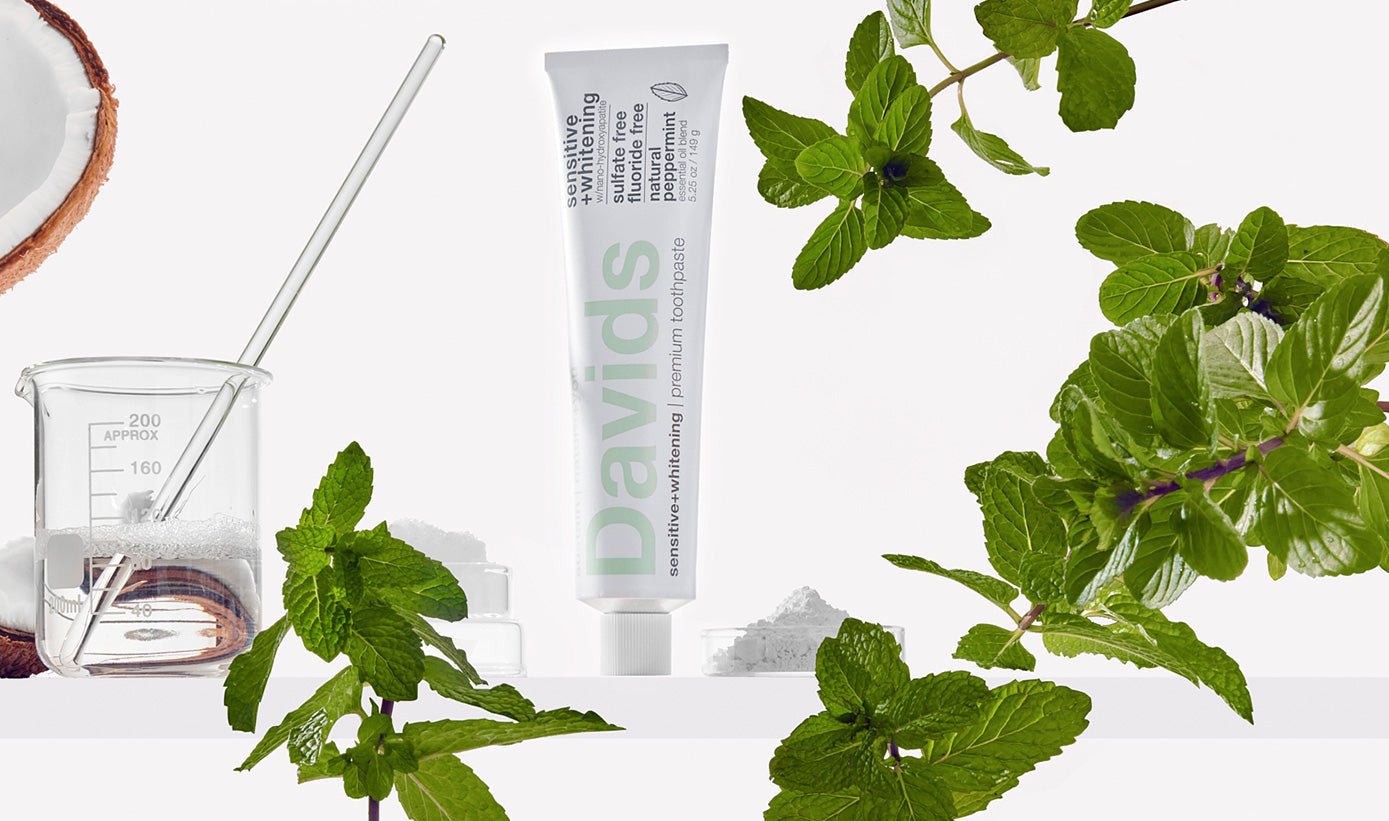
thinking of switching to hydroxyapatite toothpaste? some things you'll want to know
At last, you've been exposed to the hype of hydroxyapatite.
We're so glad you're considering adding this natural remineralizing agent to your oral care routine!
To make your transition to hydroxyapatite toothpaste a little less intimidating, we're covering some of the history, benefits, and awesome facts about this hero ingredient and its ability to enhance your holistic oral care routine.
hydroxyapatite has an out-of-this-world history
In the early 1900s, tooth decay was on the rise, and dental professionals were scrambling to find a way to slow it down. Around 1950, local governments began adding fluoride to their drinking water, and this seemed to be the magic answer everyone was looking for.
Just a couple of decades later, NASA began to experiment with hydroxyapatite. They would give it to astronauts returning from microgravity environments to help them rebuild strength in their teeth and bones.
We're delighted to say....it worked!
there are so many benefits of hydroxyapatite
Whether your main concern is tooth sensitivity or a bright white smile (or both), hydroxyapatite has you covered. Let's dive into some of the common benefits of hydroxyapatite.
enamel support and sensitive teeth: hydroxyapatite already makes up roughly 97% of your enamel! When your enamel gets worn down by bacteria and daily wear and tear, it can expose "tubules" in your teeth that lead to the center nerve. This can lead to super uncomfortable sensitivity (especially when you consume hot+cold items). But nano-hydroxyapatite (n-HA) particles can easily penetrate the enamel and "bind" to it, strengthening weakened areas to support sensitive teeth in as little as a few days.
biocompatibility: unlike many other ingredients in oral care products (especially the "sensitive" ones), hydroxyapatite is biocompatible. This means it works with the cells in your body without harming them. You never have to worry about (you or your little ones) swallowing too much of it.
microbiome-friendly: research shows that hydroxyapatite toothpaste can effectively reduce the bad bacteria in your mouth without wiping out the good ones! This is super important because your oral and gut microbiomes rely on good bacteria to function optimally.
effective whitening: did you know that hydroxyapatite itself can whiten your teeth, even without help from other whitening agents? This is because it actually replenishes minerals, reverses stains, and supports your enamel at the source....revealing a naturally whiter, stronger, and healthier smile.
pH balance: hydroxyapatite helps your teeth stay strong against acidic substances, preventing them from penetrating your enamel and causing tooth decay. This process helps your oral microbiome maintain a healthy pH, which is super important for avoiding bad breath, inflammation, gum disease, and other oral health problems.
As you can see, nano-hydroxyapatite works to nourish your oral health from so many different angles. And it does all of this naturally! When you begin using toothpaste with hydroxyapatite, you can expect noticeable improvements in tooth sensitivity in just a few days....without all the unwanted side effects of chemical-based sensitive toothpastes.
Davids hydroxyapatite toothpaste outperforms the rest
Just like conventional toothpastes, it's safe to say that not all hydroxyapatite toothpaste is made equal. The unique formula of Davids sensitive+whitening nano-hydroxyapatite toothpaste has been shown to outperform other leading sensitive toothpastes.
Don't take our word for it, check out our third-party lab test results!
As you can see, this photo evidence shows our nano-hydroxyapatite toothpaste plugged the exposed tubules and supported the damaged enamel more effectively than its competitors. The results reveal stronger, healthier, and less sensitive teeth.
key takeaways
Not all vegan toothpastes are equal, so look beyond the label to certifications, ingredient transparency, and manufacturing practices.
Ingredients like nano hydroxyapatite and xylitol support enamel health, encourage saliva production, and may help support sensitive teeth.
Calcium carbonate, hydrated silica, and mint oils work together to gently polish teeth and support a cleaner, more balanced oral environment.
Many modern consumers choose products that align with their ethical values. This means choosing oral care products that avoid animal exploitation and reduce environmental impact, leading these customers to vegan toothpaste brands.
Even if ethical or moral questions don’t motivate your tooth care routine, vegan toothpaste companies often prioritize cleaner, more transparent formulas. This is especially true of vegan toothpastes that support sensitive teeth, which avoid synthetic foaming agents and integrate necessary minerals to help with remineralization.
Not all vegan toothpastes are equal, however. Larger brands may have “cruelty-free” products, but the brands themselves still test other items on animals. Other companies may use controversial additives, such as triclosan, saccharin, or parabens, not to mention aggressive “natural” abrasive agents or missing protective ingredients.
The best vegan toothpastes don’t sacrifice the clarity of their cause or transparency about their ingredients. This guide discusses what makes a toothpaste truly vegan and showcases the top ingredients you want in your vegan toothpaste brand.
what makes a toothpaste vegan?
On a surface level, the only real caveat to a vegan label is that a product doesn’t contain any animal-derived ingredients. Standard toothpastes may contain glycerin from animal fats, calcium phosphate from animal bones, egg shells, or propolis from bees. Vegan options will not.
More than ingredients, however, the vegan label speaks to manufacturing, research, and production practices. Many consumer-grade products rely on animal testing practices. The packaging and creation of these products expand the companies’ and consumers’ carbon footprints. Vegan products focus on sustainability and the elimination of animal exploitation
You can look for certifications to ensure vegan toothpaste brands are cruelty-free. Davids Toothpaste is Leaping Bunny certified, meaning Davids doesn’t test any of its products or ingredients on animals, nor does it ask third parties to do so on its behalf.
what are the top 5 vegan ingredients to look for?
Whether you’re looking for a vegan toothpaste to support sensitive teeth or one for general oral health, it all starts with the ingredients. Here are five ingredients that separate quality toothpaste brands from the rest.
1. nano hydroxyapatite
While the highest quality, most effective, and safest Nano hydroxyapatite is a biomimetic material engineered in laboratories, some brands still use cheaper, less effective versions of nano hydroxyapatite that are made from eggshells. If you are looking for an effective vegan toothpaste that contains nHA, you need to make sure you are not getting ingredients that are animal derived.
Davids, for example, uses nanoXIM, which is made up of rod-shaped particles that mimic the chemical makeup of human tooth enamel: calcium phosphate.
A clinical review published in the Journal of Functional Biomaterials (2025) found that because of its chemical similarity, nano hydroxyapatite particles can adhere directly to damaged enamel, filling microscopic cracks and defects. The ingredient shows deep-layer efficacy in aiding remineralization and supporting oral health.
The review also notes that nano hydroxyapatite plugs dentinal tubules, which can be a common source of sensitivity, making it one of the most valuable ingredients for vegan toothpaste brands. The routine use of toothpaste with this ingredient helps create a synthetic mineral layer that acts as a long-term shield. Just make sure you buy from a brand that does not use a nano hydroxyapatite that is derived from animals or animal products.
2. Xylitol
Xylitol is a plant-derived sugar alcohol, commonly sourced from birch trees or corn (Davids uses birch-derived xylitol). A 2026 review published in Bioinformation offers a comprehensive analysis of the ingredient and its role in dentistry.
The review discusses how Streptococcus mutans, a bacterium commonly associated with dental decay, cannot digest and convert xylitol into energy. When these bacteria consume xylitol, the sugar alcohol disrupts energy production and interferes with their ability to thrive.
The authors also found that xylitol encourages saliva production, which reduces acid production and helps support the delivery of minerals like calcium and phosphate. That’s one reason why vegan toothpaste for sensitive teeth includes the ingredient.
Still, before purchasing or using a xylitol toothpaste, be aware of the rare allergy risk. While many vegan toothpaste brands use this plant-derived ingredient, a case reviewed in Allergology International (2018) points to potential severe allergic reactions, though reactions like this are rare.
3. calcium carbonate
Sourced from geological deposits like limestone, marble, or chalk, calcium carbonate is an ultrafine micro-abrasive. In vegan toothpaste, it’s an effective polishing agent that doesn’t damage enamel. Davids sources its calcium carbonate from a quarry in Pennsylvania, where it is mined, screened, cleaned, pulverized, and ground down until it is a very fine, almost silky smooth powder.
According to a 2024 review published in Inorganics, the ingredient helps neutralize bacterial acids in dental plaque, benefiting enamel health. It acts as a “calcium reservoir,” providing necessary ions for the remineralization process.
Calcium carbonate also works as a gentle abrasive, according to the review authors, helping to polish away surface buildup. When paired with nano hydroxyapatite and silica, it becomes part of a more complete approach to enamel care.
4. peppermint and spearmint oils
Many vegan toothpaste brands use peppermint and spearmint oil, which are plant-derived essential oils, naturally sourced. A pilot study in Microorganisms (2024) found that mint oils help control harmful bacteria in the mouth, including those linked to periodontal disease and halitosis.
The authors found that mint oil blends support a more balanced oral environment, with their research pointing to an increase in Corynebacterium and Gemella species. These “good” bacteria, along with others, inhibit the growth of harmful pathogens, such as P. gingivalis.
The study also highlighted the potential for peppermint and spearmint oils as cleansing agents, with the authors arguing the oils may provide a physical or chemical shield for teeth, one that may help limit the formation of sticky biofilm, including plaque.
5. hydrated silica
Hydrated silica, a mineral-derived compound, is a common ingredient in vegan toothpaste for supporting sensitive teeth. It’s often used in combination with calcium carbonate as a gentle polishing agent, helping to remove surface buildup without damaging enamel.
A scoping review published in Oral (2024) explains that silica-based toothpastes show promising results for supporting enamel health. The authors discuss its role in the remineralization process and bioactive formulations, acting as a chemical scaffold for mineral rebuilding.
The research also suggests that silica, by helping to occlude dentinal tubules, may help support sensitive teeth. Combined with calcium carbonate, it contributes to a gentle yet thorough clean, making it one of the more versatile ingredients found in quality vegan toothpaste brands.
why choose Davids as your vegan toothpaste brand?
These five ingredients represent a higher standard for what vegan toothpaste brands can and should offer. Davids is Leaping Bunny certified, meaning no products or ingredients are tested on animals. The brand prioritizes clean, vegan-friendly ingredients across its formulas.
Many Davids toothpaste products are also EWG VERIFIED®, meeting the strict safety and transparency standards of the Environmental Working Group. All toothpaste formulas are made without artificial colors, flavors, and preservatives. The toothpaste comes in recyclable metal tubes to reduce plastic waste, and all of our toothpaste is made in the USA.
If you’re looking for vegan toothpaste brands that don’t compromise on ingredient integrity or ethical standards, Davids is worth your attention. Choose ingredients your body can trust.
key takeaways
Like standard toothpaste, vegan-friendly toothpaste can support surface stain removal, but results depend on ingredients and habits.
Look for micro-abrasives like calcium carbonate and hydrated silica, as well as nano hydroxyapatite in vegan whitening formulas.
Realistic expectations and consistent oral care matter as much as the toothpaste you choose.
Cause-driven shoppers dominate the market, especially in the health and beauty space. Many people look for cruelty-free and environmentally conscious brands to support. However, they still want credible and effective products, such as whitening toothpaste that works.
Vegan-friendly toothpaste may deliver on the cause front, but does the product's efficacy deserve consumer support? Much of the answer depends on the toothpaste ingredients and manufacturing process, but a great deal more rests on individual habits and overall oral care.
Vegan toothpastes are not identical. The ingredients and formulations vary, which leads to differences in expectations and use cases. To find the option that works best for your smile, you need to understand the ingredients, the limitations, and what to realistically expect from vegan-friendly whitening toothpaste.
how do you know if a toothpaste is vegan-friendly?
You know a toothpaste is vegan by checking its ingredients and label for official certifications. For example, the Leaping Bunny logo found on Davids Toothpaste certifies the brand is cruelty-free and does not require or use animal testing across its entire product line, not just select products.
Many standard toothpastes, those not designated as vegan, use hidden animal ingredients, such as glycerin from animal fats, propolis from beehives, calcium phosphate from animal bones, or nano hydroxyapatite from eggshells. Vegan-friendly toothpaste also uses glycerin, but brands typically specify it as plant-based or vegetable glycerin. Some brands that sell vegan, cruelty-free toothpaste may not be cruelty-free across all product lines, which is why third-party certifications are worth looking for.
how does whitening toothpaste work?
There are two types of whitening toothpastes: extrinsic formulas and intrinsic formulas. Extrinsic formulas are the most prominent and use micro abrasives, such as hydrated silica or calcium carbonate. These ultrafine ingredients act as polishing agents, helping to gently scrub away stains and surface buildup.
Intrinsic formulas claim to penetrate the enamel to whiten the dentin underneath. These formulas usually use a chemical, such as hydrogen peroxide or carbamide peroxide. The question is whether these toothpaste formulas are strong enough or fast-acting enough to penetrate the tooth’s surface, or if they are damaging the enamel.
For common stain sources such as coffee, tea, red wine, or tobacco, physical polishing agents may be more effective at addressing everyday discoloration. They work away at surface-level stains to help reveal the natural white tooth color.
can a vegan-friendly toothpaste support whitening?
A vegan whitening toothpaste can be an effective option for surface stain removal, depending on its formula and ingredients. Most toothpastes, vegan and conventional, use mineral-derived abrasives to brighten teeth or return them to their natural color.
Quality vegan-friendly toothpaste brands like Davids use ultrafine ingredients, including calcium carbonate and hydrated silica. Each compound has a different shape and density that contributes to a formula’s scrubbing and polishing strength.
While formulas can make a difference in any whitening results, users must remember that these results vary by person, by habits, and by ingredients. The key is to choose a whitening toothpaste that matches your desired outcome and create a routine and ritual that supports more consistent results.
what ingredients should you look for in vegan whitening toothpaste?
For a vegan-friendly whitening toothpaste, look for mineral micro abrasives, plant-based oils and alcohols, and synthetic strengthening agents. Mineral-derived abrasives (touched on above) include hydrated silica and calcium carbonate. Hydrated silica is a form of silicon dioxide, commonly found in sand, whereas calcium carbonate is a soft, chalk-like substance found in limestone and marble. Each ingredient, when properly milled, is a gentle polishing agent used in toothpaste to lift surface stains and buildup without damaging enamel.
Plant-based oils and alcohols, such as mint oils and xylitol, work as natural flavorings and can contribute to a fresher, cleaner mouth. Mint oils, specifically peppermint and spearmint, were the focus of a 2024 pilot study in Microorganisms, which found that mint oils helped balance the oral environment. According to a review published in Bioinformation (2026), xylitol specifically can support a cleaner oral environment by imitating a primary energy source for harmful bacteria, which may reduce these bacteria over time and contribute to a brighter smile.
Nano hydroxyapatite, a compound with a chemical composition similar to that of tooth enamel and dentin, supports remineralization. A 2025 clinical review in the Journal of Functional Biomaterials found that because of their similar chemical makeup, nano hydroxyapatite can fill defects in damaged enamel while supporting enamel health.
what should you realistically expect from a vegan-friendly toothpaste?
A vegan whitening toothpaste, like any whitening toothpaste, has its limits, and those limitations often compete with consumer expectations. The idea that a toothpaste can provide the same dramatic results as a professional whitening procedure is unrealistic.
Natural tooth shade varies from person to person. Genetics is a powerful indicator of natural tooth shade and brightness. Daily habits, including drinking coffee and smoking cigarettes, also affect the brightness of your teeth. Brushing daily and adopting a healthy cleaning routine can improve the effectiveness of whitening toothpastes.
Even the best toothpaste, vegan or otherwise, can’t counter persistent habits or the absence of a healthy oral care routine. To brighten your smile, you must adopt healthy habits, commit to a specific toothpaste, and maintain a regular oral care routine.
how do you choose the right formula?
When looking for a vegan-friendly toothpaste, especially one for whitening, you want to scan the label for certifications and abrasives. Davids has the Leaping Bunny certification, but there are other vegan-specific labels as well, such as PETA’s “Global Animal Test-Free” logo. For the abrasives, you want to look for formulas with nano hydroxyapatite, calcium carbonate, hydrated silica, or other gentle micro abrasives.
Beyond those elements, look for ingredients that can enhance the taste and texture of the toothpaste. For example, peppermint or spearmint provides a clean, fresh flavor and feel.
how do you get the most out of your brushing routine?
To make the most of your brushing routine, brush for two minutes twice daily. Read the directions for the toothpaste you choose. Some formulas have active ingredients, which means you shouldn’t rinse right away. You should also pair your brushing routine with other oral care habits, such as flossing, tongue scraping, and regular dental visits. Finally, for better whitening results, avoid stains from coffee, tea, red wine, and tobacco.
is vegan-friendly toothpaste the right choice for you?
A vegan-friendly whitening toothpaste can be a practical option for shoppers who want plant-based personal care without sacrificing oral care performance. The choice is about finding an option that fits your values, sensitivity needs, and daily routine.
Davids is a cruelty-free, vegan-friendly toothpaste brand that’s made in the USA without artificial colors, flavors, or preservatives. Many Davids toothpaste formulas are also EWG VERIFIED® and come in recyclable metal tubes. Clean up your oral care routine with Davids.
key takeaways
Foaming agents in toothpaste, known as surfactants, lower surface tension to create the lather you feel while brushing.
Each foaming agent has a distinct profile and foaming effect, including sodium lauryl sulfate (SLS), sodium laureth sulfate (SLES), and sodium cocoyl glutamate (SCG).
The surfactant in your toothpaste matters; choosing a naturally derived option like SCG aligns with a clean ingredient oral care routine.
For some people, it’s a fun side effect of brushing; for others, it’s a sign of a thorough clean. But what makes toothpaste foam up, anyway? Does the foam actually contribute to cleaner teeth or healthier gums?
The driving forces behind that lathered smile are the foaming agents in toothpaste, otherwise known as surfactants. This guide explores these compounds to showcase their unique properties and how they benefit your oral care routine.
the science behind toothpaste foam
Surfactants are detergents, but their key role in toothpastes is as foaming agents. They comprise dual-action molecules, each containing a water-loving (hydrophilic) head and water-repelling (hydrophobic) tail. These molecules work together to lower the surface tension of the toothpaste formula, allowing air into the mix and creating foam.
The foam can help loosen and lift food particles, plaque, and other debris, allowing it to be rinsed or brushed away. The type of foaming agent and its strength determine the lathering effect and how it feels. Milder foaming agents are often preferred for their gentler feel and clean ingredient profile.
common foaming agents in toothpaste
While surfactants make toothpaste foam, the most common ones have different profiles, contributing to the way they lather and affect the mouth. The most common foaming agents are sodium lauryl sulfate (SLS), sodium laureth sulfate (SLES), and sodium cocoyl glutamate (SCG).
Sodium lauryl sulfate is the most common foaming agent used in commercial toothpastes, as well as many shampoos, bubble baths, and shaving foams. It creates a thick foam. However, recent studies, including a literature review published in the Journal of Dentistry (2023), suggest SLS can act as an irritant, triggering canker sores.
Sodium laureth sulfate is also a foaming agent popular in toothpaste and is created from SLS in a process called ethoxylating. The process increases the size of SLS molecules, making them less likely to penetrate the skin or oral tissues, producing a gentler experience. SLES is said to produce a creamier lather and milder experience.
Finally, sodium cocoyl glutamate is an amino acid-based surfactant, naturally derived from coconut oil and fermented corn or fruit glucose. Its lather is fine and creamy and designed for biocompatibility with your mouth. It’s mild and often found in gentler toothpaste brands, especially brands like Davids that care about their ingredient quality and sourcing.
the role of sodium cocoyl glutamate in Davids toothpaste
Davids uses SCG in its products because it creates a rich, creamy lather that’s recognized as a non-irritating and non-sensitizing foaming agent in toothpaste, as reviewed and verified by a literature review published in Dental and Medical Problems (2022). The review authors also noted the biocompatibility with oral cavity tissue.
Beyond its compatibility and ability to make Davids toothpaste foam reliably, SCG is a vegan ingredient. Produced from coconut oil and corn or other fruits, it doesn’t use animal-derived ingredients, nor is Davids SCG tested on animals. As a Leaping Bunny certified company and EWG VERIFIED®, Davids products must meet and uphold strict standards, ensuring every ingredient is rigorously vetted for safety and transparency.
foaming agents and your oral care routine
The right foaming agent depends on your dental needs and possibly your convictions. SLS and SLES surfactants are common in commercial toothpaste brands. SCG is growing in popularity, especially among brands that prioritize clean ingredients.
Davids is a brand that prioritizes naturally derived ingredients that complement a vegan friendly approach. We use premium ingredients to create products that are cruelty-free and Leaping Bunny certified. When it comes to foaming agents in Davids toothpaste, SCG is the choice.
Are you ready to experience the Davids difference? Then, trust nature to brighten your smile and choose Davids.
frequently asked questions
is foaming toothpaste safe?
Whether foaming toothpaste is safe for you depends on your specific dental needs and the surfactants or foaming agents in the toothpaste. Some brands use sodium lauryl sulfate (SLS), which a literature review published in the Journal of Dentistry (2023) argues can cause canker sores and tissue irritation. Davids uses sodium cocoyl glutamate (SCG) because it is a gentle, naturally derived foaming agent, making it well-suited to daily brushing.
does more foam mean cleaner teeth?
No, the quantity of foaming agents in a toothpaste aren’t necessarily the mark of a quality product. A surfactant and foaming agent, such as sodium cocoyl glutamate, complements the overall toothpaste formula. It helps that formula cover the teeth and gums, allowing other ingredients like nano hydroxyapatite, calcium carbonate, and hydrated silica to get to the areas where they can do the most good. In other words, it isn’t the ingredient by itself, but acting in combination that helps.
is sodium cocoyl glutamate vegan?
Sodium cocoyl glutamate is what makes Davids toothpaste foam, and it is, indeed, vegan. The ingredient combines fatty acids from coconut oil with fermented glucose from corn or other fruits. It’s not a synthetic compound and provides a gentle, even lather to help toothpaste formulas cover the teeth and gums.
is sodium cocoyl glutamate safe?
Yes, according to the latest safety assessment of amino-based surfactants published in the International Journal of Toxicology (2017). The authors, a panel of cosmetic ingredient review experts, found that sodium cocoyl glutamate (SCG), a foaming agent in toothpaste and personal care products, is safe for use, including in products designed for mucous membranes. As always, research the credentials and certifications of any toothpaste brand you choose.