



The quick answer
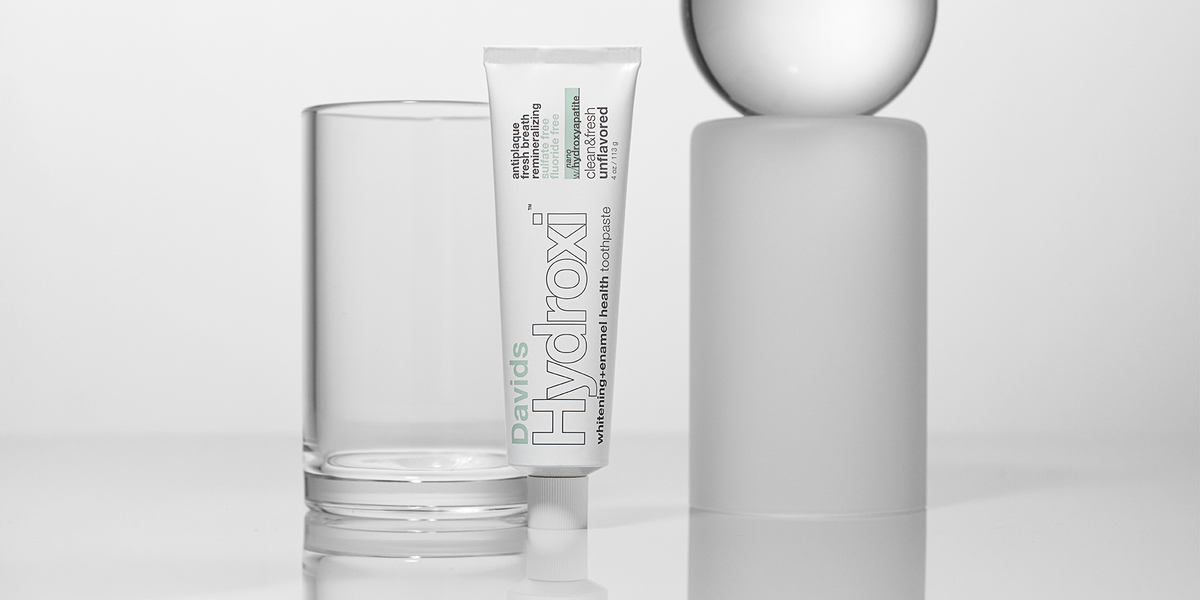
- Unflavored Hydroxi™ uses the same nano-hydroxyapatite, xylitol, and baking-soda-based formula as our other Davids Hydroxi™ toothpaste without any added flavoring.
- It's built for people with sensory sensitivities, flavor aversions, irritating canker sores, altered taste from medical treatment, pregnancy-related nausea, or anyone who just wants the simplest possible routine.
- It's not less effective. The ingredients doing the real work to support enamel health have nothing to do with flavor.
- The taste you notice is shaped by your own saliva, oral pH, microbiome, and genetics. Below: what to expect, why it varies, and how to ease in. Or skip ahead to our FAQ.
Over the years, toothpaste marketing has trained most of us to think about flavor first: spearmint or peppermint, cool or mild, fruity strawberry or hot cinnamon. So it's fair to question just what an unflavored toothpaste actually is.
Is something missing? Is it going to taste like nothing?
No to both. Our unflavored Hydroxi™ toothpaste is a deliberate formulation choice, built for people who want the same enamel-focused, nano-hydroxyapatite formula without any added essential oils. Now you might be wondering, “Who would want that?”
Below, we'll break down what “unflavored” actually means, who might reach for an unflavored toothpaste formula, why the taste experience can vary so much from one person to the next, and what to expect the first time you brush. You might just find yourself intrigued enough to give it a try!
what is unflavored toothpaste?
Unflavored Hydroxi™ starts from the same base formula as Davids' flavored toothpaste:
- nano-hydroxyapatite to support enamel health, sensitive teeth, and whitening
-
xylitol for mild sweetness, saliva stimulation, and bacteria control
- baking soda for cleaning, acid neutralization, and balanced oral pH
- calcium carbonate for gentle, effective polishing and stain removal
- vegetable glycerin for moisture retention and a smooth, creamy texture
- sodium cocoyl glutamate for gentle foaming and cleansing without sulfates
- coconut oil for a smooth mouthfeel and creamy consistency
As you can see, every ingredient on this list is cleaning, protecting, or supporting your mouth in some way. They're all there for bigger reasons than flavor, which is exactly what makes it possible to create an unflavored formula that doesn't sacrifice performance.
who is unflavored toothpaste generally for?
If you've ever searched “toothpaste for sensitive mouths” or “toothpaste without mint,” you might already be in one of these groups. Unflavored formulas tend to solve a specific problem, so here's where they tend to make the most sense.
people with sensory sensitivities
For anyone with heightened oral sensory processing, the tingling or “burning” sensation from mint, cinnamon, or even mild mint oils doesn't feel refreshing, it feels overwhelming. Our unflavored formula removes that trigger altogether, which can make brushing far more tolerable for anyone with a sensory sensitivity.
people with a strong flavor aversion
Plenty of people simply don't like the taste of mint, or notice that flavored toothpaste makes their morning coffee, tea, or orange juice taste weird after brushing. An unflavored formula sidesteps that issue altogether! At the very least, it gives you another option if you want to enjoy your coffee and breakfast without a side of mint.
people with canker sores or oral irritation
Mint and cinnamon oils can sting already-irritated tissue, which makes brushing through a canker sore (or any other sore spot) genuinely unenjoyable. Our unflavored toothpaste removes that flavor-related irritant while still delivering the same deep clean you love from our formulas.
kids and toddlers in picky phases
Some kiddos resist brushing specifically because of taste, whether it's too strong, too “spicy,” or just unfamiliar. An unflavored option can reduce that resistance while parents work out what flavor (if any) their kiddo will tolerate in the long run.
people with altered taste from medical treatment
Chemotherapy and certain medications can alter taste perception, causing flavors that used to be pleasant to suddenly taste metallic, cause nausea, or just feel “off.” An unflavored toothpaste avoids adding another strong flavor profile to an already disrupted or overwhelmed palate.
pregnant people with taste aversions or nausea
Strong flavors are a common trigger for nausea during pregnancy (yes, even usually-pleasant flavors like mint, strawberry watermelon, or orange vanilla). Removing flavor from the equation can make a twice-daily habit easier to keep up during a time when it's needed most!
anyone who just wants the simplest possible routine
You don't need to have a medical reason to want to try unflavored toothpaste. Some people just prefer the plainest formula available…or feel curious to try a formula that has nothing “extra” added beyond what's functionally necessary. Sometimes, less is more!
so…what does Davids' unflavored toothpaste actually taste like?
The first brush with an unflavored toothpaste can catch you off guard, simply because most of us have never tasted toothpaste without added flavor before. It's important to note that unflavored toothpaste doesn't have zero taste. Even water has a flavor of some kind! Here's a high-level review of what you can expect from some of the base ingredients that shine in this formula.
Baking soda (sodium bicarbonate) is doing a lot of work in all of our formulas. It helps to neutralize acids, reduce bacteria, and works to bring oral pH back toward neutral, which supports fresher breath and helps counteract the kind of acidic conditions that can harm your enamel over time. On its own, baking soda has a mild, slightly salty, faintly mineral taste. It's not unpleasant, but it's distinct.
Xylitol adds a gentle sweetness that helps balance the naturally salty, mineral notes of the other ingredients in our base formula. But xylitol does more than improve taste: research combining human subjects and salivary gland cell models has found that xylitol activates a specific receptor (the M3 muscarinic receptor) on salivary gland cells, triggering the same signaling pathway responsible for fluid secretion. In other words, xylitol doesn't just taste sweet, it appears to directly encourage your salivary glands to produce more saliva, which is part of why it shows up in both dry-mouth research and cavity-prevention research. On top of that, unlike sugar, xylitol can't be metabolized by Streptococcus mutans (one of the primary bacteria involved in tooth decay). By disrupting the bacteria's ability to produce acids, xylitol helps support a healthier oral environment.
Coconut oil and vegetable glycerin, on the other hand, don't contribute much flavor or affect saliva production directly. Instead, they work as humectants and emollients. These ingredients help the paste (and your mouth) hold onto moisture rather than pull it away. That's what gives the formula its smooth, creamy texture and subtle richness, and it's part of why brushing doesn't leave behind the dry, chalky feeling some pastes can.
When you put these powerhouse ingredients together, most people describe the experience as mild, clean, and a little salty or mineral, though this varies more than you'd expect…which brings us to the more interesting part of the story.
why does the taste of unflavored toothpaste seem to change?
This is the part that surprises people: two users with the same tube of unflavored toothpaste can have genuinely different taste experiences. Don't worry, that's not a flaw in the formula…it's basic oral biology! Here's what we mean.
saliva does more work in flavor perception than most people realize.
Saliva acts as the solvent that carries flavor compounds to your taste buds, and its flow rate and composition can vary a lot from person to person. Research on flavor perception has found that people with different flow rates can experience the same taste totally differently, since saliva is what “transports” flavor molecules to the receptors in your mouth that “register” those flavors.
your baseline oral pH shapes how strongly you notice the neutralizing effect.
One of the earliest and most cited studies on this found that differences in saliva pH alter how people perceive sour taste specifically. That being said, baking soda's entire job is to shift your oral pH toward neutral. So, if your mouth tends to run more acidic to begin with (which can be influenced by diet, hydration, or reflux), that shift will likely be more noticeable than it would be for someone whose mouth is already closer to neutral.
your oral microbiome is unique to you.
A 2022 study measured the oral microbiome of multiple subjects and found their baseline microbiomes (before accounting for diet or hygiene habits) to be very individual-dependent. That makes sense, because your oral microbiome consists of hundreds of unique bacterial species, shaped by your genetics, diet, environment, and even your own oral care habits over time. So it's highly unlikely it would match anyone else's!
Since certain bacteria in your oral microbiome interact with ingredients like xylitol and baking soda when you brush, the taste you experience will be unique to you…no matter the flavor of the toothpaste (or lack thereof).
genetics affects how intensely you register certain tastes at all.
Did you know that your taste receptors are affected by your genetics? This commonly shows up around bitter tastes. Some people are “supertasters” of bitter compounds like caffeine and certain veggies, while other people barely notice them. This has been linked to a specific taste receptor gene. Taste variabilities like these can impact how strongly you register the subtler flavors in an unflavored toothpaste formula.
your recent food intake, hydration, and time of day all shift your baseline.
Your salivary flow, saliva composition, and oral pH change throughout the day based on what you eat and drink. That's why brushing on an empty stomach, after eating onions/garlic, or after an acidic drink (like coffee or wine) will all produce a different experience. Unflavored toothpaste is, in a sense, a mirror of your own mouth chemistry and the foods/drinks you've consumed recently.
There's no added flavor working to standardize the experience, so it can be fun to experiment throughout the day to see how the taste profile changes, and compare with a loved one to see how differently the same tube can taste to two different people.
temperature plays a quiet role too.
Taste receptors are more sensitive to certain flavors at certain temperatures, which is part of why food can taste blander when it's cold and more pronounced when it's warm. The same applies here: brushing with cold water straight from the tap versus letting the water run warm first can subtly shift how strong the base flavor feels, even with the same toothpaste.
is unflavored toothpaste as effective as flavored formulas?
Yes! Our unflavored Hydroxi™ still packs a punch of:
- Nano-hydroxyapatite, which we've formulated with enamel health in mind
- Calcium carbonate, which act as gentle polishing agents
- Xylitol, which stimulates saliva production to create a more balanced oral environment
- And so much more!
What do all of these functions have in common? They have nothing to do with flavor (for the most part)! The parts of the formula responsible for enamel support, gentle polishing, and a balanced oral environment are working exactly the same way they do in every other Davids toothpaste.
how to ease into unflavored toothpaste
If you're curious about switching to unflavored toothpaste for the first time but nervous about the experience, these few small adjustments can help you ease in.
- For adults with flavor sensitivities, try experimenting by brushing at different times of day or rinsing your mouth with water first to reset your palate and make the “base taste” feel milder and more neutral.
- For anyone brushing through sensory sensitivity, try pairing our unflavored formula with a soft-bristle brush to help make the overall experience gentler. Beyond taste…texture, pressure, and even the sound of brushing can all contribute to sensory overload.
- For kids transitioning away from a flavor, try framing unflavored toothpaste as “the grown-up kind” or pairing it with a favorite toothbrush to reduce resistance.
If you decide you'd like a hint of flavor after all, our mild mint formula is a great next step. It uses the same enamel-focused Hydroxi™ base, with just a touch of naturally derived peppermint oil added on top, so you can ease into flavor gradually instead of jumping straight to a stronger mint.
frequently asked questions
Is unflavored toothpaste as effective as flavored toothpaste?
Yes. The ingredients doing the real work like nano-hydroxyapatite, xylitol, baking soda, and gentle polishing agents like hydrated silica and calcium carbonate function the same way whether or not a flavor is added. Flavor is a sensory layer on top of the formula, not a strictly functional one.
What does unflavored toothpaste taste like?
Well, it's not flavorless. Most people describe it as mild, clean, and a little salty or mineral, mostly from the baking soda and calcium carbonate in the base formula. Exactly how strong or subtle it tastes varies a lot from person to person, since your saliva, oral pH, microbiome, and genetics all shape how you perceive it.
Who should use unflavored toothpaste?
Unflavored toothpaste tends to be popular with people who have sensory sensitivities, a strong aversion to mint or other flavors, canker sores or oral irritation, altered taste from medical treatment, or pregnancy-related nausea. Though you don't need a specific reason to try it. Some people simply prefer the simplest formula available.
Is unflavored toothpaste good for kids?
It can be, especially for kids who resist brushing because a flavor feels too strong, unfamiliar, or overwhelming. Removing that trigger can make brushing easier while parents figure out what flavor, if any, their child will tolerate long-term.
This article is for general informational purposes and isn't a substitute for professional dental or medical advice. If you have specific concerns about oral sensitivities, medical treatment side effects, or pregnancy-related symptoms, talk to your doctor or dentist.
the takeaway
Unflavored toothpaste is a deliberate formulation choice, built for people with sensitive mouths, flavor aversions, or simply a desire to keep their routine as simple as possible. The taste you experience will genuinely be your own, and now you know why: your saliva, your oral pH, your microbiome, and even your genetics are all quietly shaping that experience.
Curious what your own mouth has to say about our unflavored Hydroxi™ toothpaste? There's only one way to find out...
buy now.