Skip to content
free shipping $35+
+
do you have one sensitive tooth? it might be trying to tell you something

do you have one sensitive tooth? it might be trying to tell you something

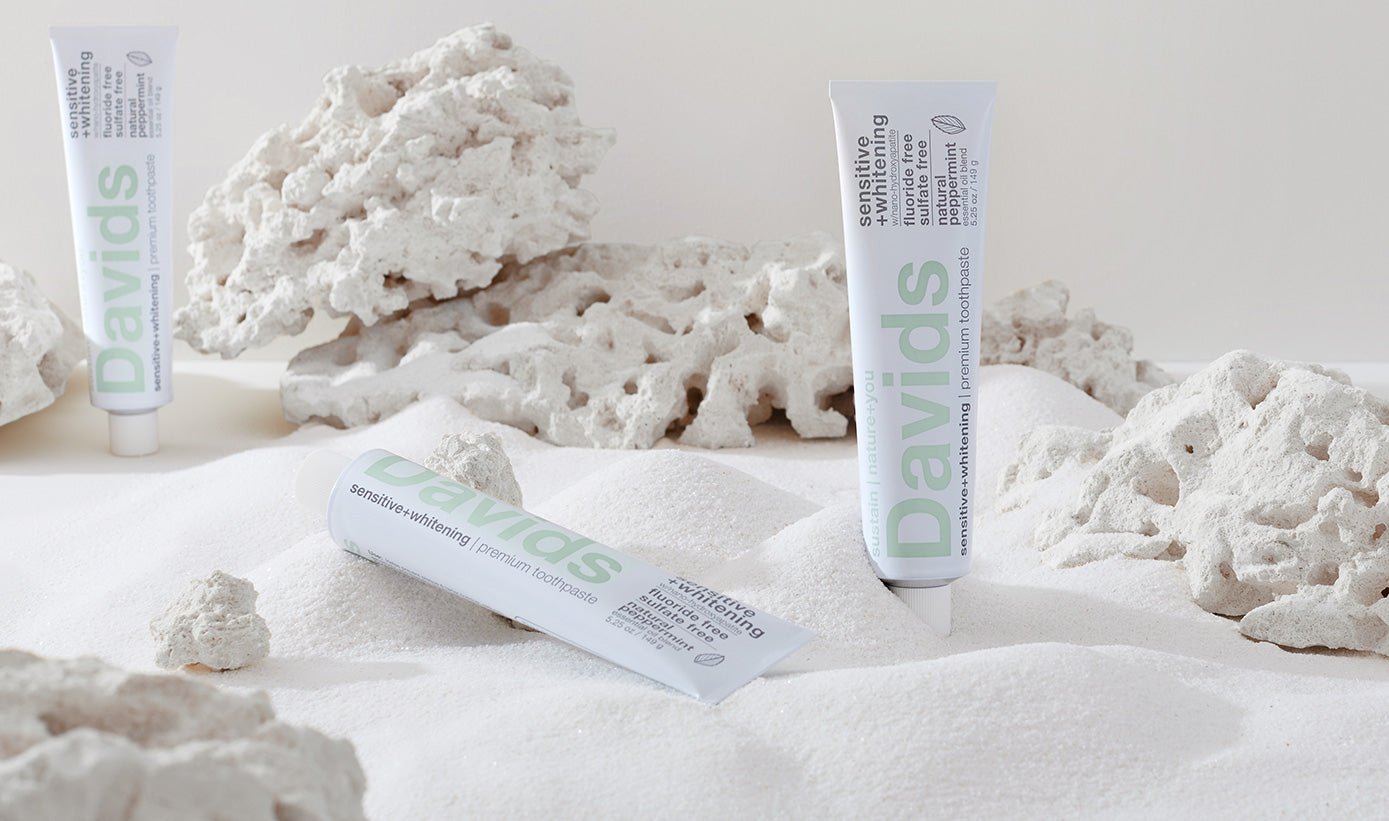
Do you have that one sensitive tooth that always seems to get in the way? It forces you to chew on one side of your mouth, sip through a straw, and be extra careful when you brush on that side. We know that sensitivity, in general, can be extremely uncomfortable and disruptive. But when it’s just one sensitive tooth, it can even feel a little bit mocking. All of your other teeth feel fine, so why is this one giving you such grief? It’s not like you’re skipping it when you brush! Don’t worry, we completely understand the frustration. And we’re here to tell you that there can be several different causes (and solutions) for that one sensitive tooth! Sensitivity isn’t always your fault. In fact, it can even happen when you’re sleeping. Let’s dive into some of the many causes of your one sensitive tooth and how adding hydroxyapatite toothpaste into your routine can work wonders for this pesky issue. what’s happening inside a sensitive tooth? Tooth sensitivity occurs when the hard outer layer of your tooth (enamel) is worn down, exposing the layer underneath (dentin). Your dentin contains tubules, which are little tube-like pathways that lead to your ultra-sensitive tooth’s center nerve. If your enamel gets worn down over time through things like poor oral care, rough brushing, plaque buildup, etc., these tubules become exposed to all outside forces such as food, drinks, sugar, cold air, and beyond. These outside forces now suddenly have access to your tooth’s center nerve, causing extreme sensitivity. Now you might be thinking....how can plaque buildup or rough brushing affect just one tooth? Wouldn’t it affect more of them? That’s a great question, let’s dive into some reasons why you might have just one sensitive tooth. why you might have just one sensitive tooth One sensitive tooth might be an indication that the issue isn’t simply plaque or aggressive brushing. There are a few reasons why sensitivity might be able to single out just one tooth, let’s explore some of them. tooth decay: has it been a while since you’ve gotten an x-ray at the dentist? This would tell us if your one sensitive tooth is actually a result of tooth decay. If that’s the case, your dentist can prescribe a treatment such as a filling to relieve the sensitivity. Tooth decay can “target” one single tooth because of its location. It’s possible that the tooth is used more frequently than others for chewing, so it’s often exposed to sugars and acid-forming bacteria that wear down its enamel over time. gum recession: this is actually one of the leading causes of sensitivity, especially in just one tooth! Over time, harsh brushing or general wear and tear can cause your gum tissue to recede on one tooth (or more). Your gum tissue is another protective layer for your dentin. Below your gums, your teeth don’t have any enamel! So they rely on your gums for protection, keeping those tubules protected from the outside world. jaw clenching (bruxism): clenching is another common cause of localized sensitivity. If you have an off-center bite, or if you tend to clench at an angle during the night, it can wear down your enamel in one localized area. Clenching/grinding can also lead to gum recession, as it puts serious pressure on your gums. Serious tooth grinding can also make your teeth “loosen” in their sockets, creating pockets for bacteria to fester and cause even more sensitivity. How do you know if you’re clenching at night? Keep an eye out for the common symptoms of clenching, such as jaw soreness, tension headaches upon waking, ear aches, or clicking in your ears when you open your jaw. Other (more obvious) causes of sensitivity include a loose filling or a cracked tooth. If you’re experiencing sensitivity in a tooth that has a history (your dentist has already done some work on it), then we highly recommend going to visit your dentist to see if everything is in place. No matter what, we recommend visiting your dentist to get a professional opinion instead of self diagnosing. One sensitive tooth could be the sign of a bigger issue, and your dentist will be able to outline the next steps, whether it’s a filling or a mouth guard. how hydroxyapatite provides tooth sensitivity relief After you’ve been cleared from any serious issues by your dentist, nano-hydroxyapatite (n-HA) could be the missing piece to your one-sensitive-tooth puzzle. While many conventional sensitive toothpastes rely on chemical numbing agents and fluoride to “relieve” your sensitivity, we prefer the (lab-tested) natural route. Unlike fluoride and chemical numbing agents that act as a bandaid quick fix, nano-hydroxyapatite particles actually work to repair sensitivity at the source. You see, hydroxyapatite already makes up the majority of your enamel, so when you brush daily with hydroxyapatite toothpaste, you give your enamel a natural dose of the mineral it needs. The nano-hydroxyapatite particles in our sensitive+whitening toothpaste penetrate your enamel, plugging the exposed tubules that lead to your tooth’s center nerve. After just a few days of daily brushing with our hydroxyapatite toothpaste, your one sensitive tooth should feel a whole lot of relief. How can we be so sure? Because our third-party lab test revealed photo evidence that our hydroxyapatite toothpaste outperformed leading competitors when it came to plugging exposed tubules. Check out the results for yourself, or better yet....give our hydroxyapatite toothpaste a try and let us know how much better your sensitive tooth (or teeth) feel after just a few days.   Buy Nano Hydroxyapatite Premium Toothpaste Now.

everything you need to know about smarter, cleaner oral care

Better oral care begins with knowledge. That’s why our dental care blog goes beyond trends to share insights that help you make health- and earth-conscious choices for your smile.

Learn about everything from innovations like nano hydroxyapatite (nHA) to understanding what natural whitening involves. This oral health care blog breaks down the science with clarity to make it easy to understand and apply.

the Davids difference

Davids story began with a mission: to create premium oral care that’s good for people and the planet.

Every decision we make stems from integrity and respect for the environment. We use premium, naturally sourced and derived, USA-origin ingredients, recyclable metal tubes, and sustainable packaging.

As a family-owned and operated business going up against the giants of the toothpaste industry, we hold ourselves to higher standards because clean doesn’t just describe our premium ingredients; it describes our values, too.

You can read about these values and more in our transparent dental care blog.

sustainability in action

If you’re trying to live clean, we’re the toothpaste brand for you and your family. From recyclable packaging and aluminum tubes to our commitment to USA-based production, we’ve built sustainability into every step of our process.

We’re helping make conscious care a daily habit by reducing waste and supporting local manufacturing.

Learn, question, and smile brighter. Our oral health blog is an open space for learning and exploration. We hope each post will help you think differently about oral health and feel more empowered in your daily care routine.

stay connected

The learning doesn’t stop at this dental care blog. Follow Davids on Instagram, Facebook, TikTok, and Pinterest for daily tips, ingredient spotlights, and oral care inspiration.

Plus, subscribe to Davids today for more educational content and perks like 20% off every order, free shipping on orders over $35, and more.