



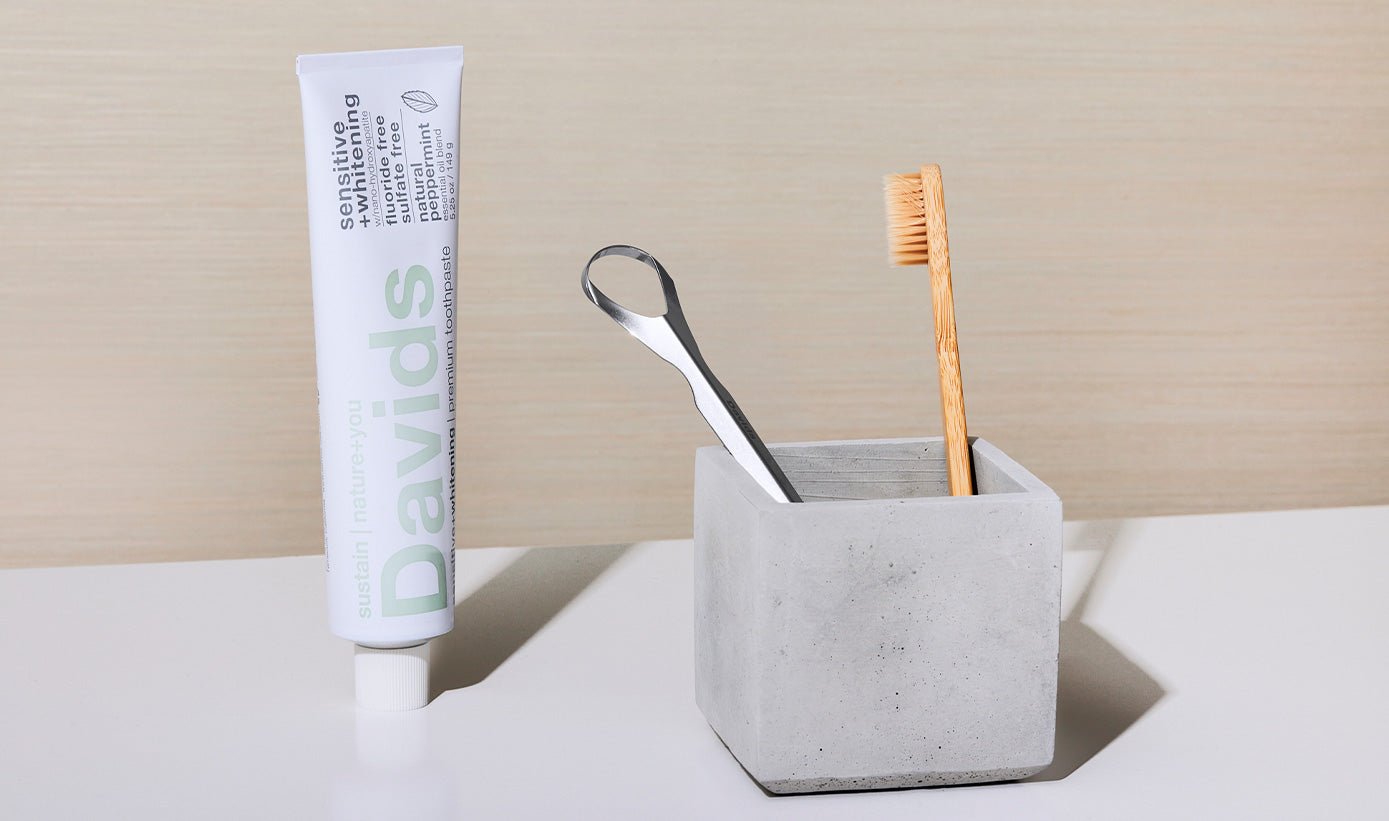

why you should try tongue scraping, an ancient art that has thrived for thousands of years
Have you ever wondered where tongue scraping came from? If you’ve never tried tongue scraping before, the habit can seem a little odd. But you might be delighted to find out that it’s an ancient art that’s been around for thousands of years across many different cultures. From thin strips of wood to precious metals to mother-of-pear, tongue scrapers have taken on many different forms over the years. But one thing has remained true: tongue scraping is still a cornerstone of oral care...transcending cultures, fads, and skeptics for millennia. There’s a reason for that, so let’s scrape the surface of the long history of tongue scraping. tongue scraping in ancient Ayurveda You might have heard us mention Ayurveda before. It’s an incredible system of natural medicine that originated in India over 3,000 years ago. Formed by combining two Sanskrit words, the term Ayurveda translates to “knowledge of life.” It takes a completely holistic approach to health and wellness, understanding that all systems of the mind, body, and spirit are intertwined. Ayurveda also contextualizes health using laws of nature and energy, affirming that humans are intimately connected to the universe. Ayurveda says that true health works in harmony with nature, an ethos that we can truly get behind at Davids. Now, onto tongue scraping. For thousands of years, tongue scraping (previously with metals like silver, gold, and copper) has played an important role in Ayurvedic medicine, as the tongue is viewed as a window to your overall health. Different areas on your tongue are said to be connected to different internal organs. Because tongue scraping detoxifies, massages, and stimulates the tissue, Ayurveda says that it does the same for the connected organs. Tongue scraping removes a harmful film called “ama,” which often manifests as bad breath or an unpleasant film on the tongue. When you remove this film with a tongue scraper, it can protect your dental and digestive health, improve taste, stimulate your organs, and beyond. Perhaps most importantly, Ayurveda believes that tongue scraping (and examining your tongue in general) is a foundational daily wellness check. We do too! There’s a reason this habit has persisted over thousands of years. Traditional Chinese Medicine’s take on tongue scraping Originating 20+ centuries ago, Traditional Chinese Medicine (TCM) is a bit younger than Ayurveda. Like Ayurveda, TCM is a holistic well-being system centered around life-force-enhancing practices (such as yoga), whole food nourishment, herbal healing, breathwork, and intention. TCM also believes that characteristics of the tongue (color, shape, smell, texture, etc.) reflect the health of certain internal organs such as the heart, spleen, liver, and lungs. To no surprise, TCM values tongue scraping to keep internal systems healthy and thriving. As a side note, TCM also uses acupuncture as an essential well-being tool, and most acupuncturists will want to take a look at your tongue to assess your wellness before a session. To ensure an accurate assessment, many acupuncturists will ask you not to use a tongue scraper in the 24 hours leading up to your session. tongue scraping in Arabic and African cultures Many Arabic and African cultures have been tongue scraping for centuries. Instead of a metal tongue scraper, they utilize wooden sticks and twigs from native trees. They soak the stick in water overnight, chew the end of it to create frayed bristles, and use the bristle end as a toothbrush. Then, they finish the routine by using the smooth end as a tongue scraper (sometimes formed into an inverted V-shape similar to many tongue scrapers on the market today). After each use, the stick gets shorter (because of the repeated fraying), so they typically replace the stick once it gets too short to use. European cultures adopt tongue scraping European cultures were a little bit later to the party, picking up tongue scraping between the 15th and 19th centuries. They crafted metal tongue scrapers that look a lot like the ones we use today. Some were an inverted U-shape, and some had a single-handed design similar to the Davids stainless steel tongue scraper you see below. However, tongue scraping was typically limited to the upper class back then. Of course today, we believe everyone deserves to feel the unparalleled freshness you can get after using a tongue scraper (trust us, it’ll hook you). today, you can use the best tongue scraper Thousands of years later, tongue scraping is alive and well (arguably gaining more popularity as we speak). We believe this is because once you try it, you’ll never want to stop. After all, you can truly feel the benefits of tongue scraping after every use. On that note, our stainless steel tongue scraper is preferred by dental professionals because of its unique single-handed design and smooth rounded edges. This design allows you to reach all those areas of your tongue that are associated with essential organs (according to Ayurveda and TCM) without aggravating your gag reflex. Although copper tongue scrapers are popular in Ayurveda, copper requires extra care after each use to ensure it doesn’t tarnish. Our stainless steel tongue scraper doesn’t require as much diligence, since it won’t tarnish and its edges will remain smooth even after long-term use. Not to mention, you can put it in the dishwasher for a deep cleaning without having to worry about it! Especially if you’re new to tongue scraping, ours is designed to give you the best experience. For our favorite tongue scraping routine, visit our previous article, “should I scrape my tongue before or after brushing? our top tips for you.” buy now.
Learn more
how often should you scrape your tongue? our favorite routine explained
Tongue scraping is taking the world by storm, and it’s about time. This ancient practice can bring so many amazing benefits to your oral care routine, but it can be hard to know exactly how to incorporate it.Should you use your tongue scraper in the morning and at night? Should you use it before or after brushing? Where does mouthwash fit into the routine?Don’t worry, we’re covering all of these questions. quick refresh: the benefits of tongue scraping Before we dive into the step-by-step breakdown of the ideal tongue scraping routine, let’s do a little recap on the benefits of tongue scraping. If it’s something you’re going to do every day, you should at least know why it’s so great for you, right?Some of the amazing benefits of tongue scraping include: that *clean* feeling: you know that feeling when your mouth is really, truly clean? To us, that feeling is unbeatable. And without a tongue scraper, it’s almost impossible (just keep reading to see all the reasons why). removal of bacteria, toxins, and debris: the grooved, cushy surface of your tongue is an ideal breeding ground for bacteria, toxins, and debris. By scraping daily, you’re starting (and/or ending) the day with a fresh clean slate. fresher breath + improved taste: by removing the bacteria and mucosal film that sits on your tongue, tongue scraping can directly freshen your breath and improve your sense of taste. better digestion and gut health: not only does tongue scraping reduce the number of harmful bacteria in your mouth (which affects the very important bacterial balance in your gut), but research suggests that it can also directly help your digestion. By improving your sense of taste, you can experience higher satisfaction during meals, allowing your body to listen to hunger cues and improve digestion. organ stimulation: ancient Ayurveda states that different areas of your tongue are connected to your vital organs. Massaging each of these areas through tongue scraping can stimulate and nurture these organs, including your heart, kidney, stomach, liver, and lungs. increased health awareness: your tongue has a lot to tell you. In general, your tongue should be even in color (a rich pink), smooth in texture, and free of grooves. If your tongue doesn’t look this way, check out our previous article which outlines certain health issues that can appear on your tongue. All of these benefits can improve your oral and overall health, reduce your risk of tooth decay, prevent gum disease, relieve tooth sensitivity, and beyond. the ideal tongue scraping routine First off, we want to warn you to avoid drinking water first thing in the morning (before your oral care routine). This is because when you wake up, your mouth is full of bacteria and pathogens. While it can be tempting to immediately quench your thirst, we don’t want you swallowing all of those harmful bacteria and introducing them to your gut microbiome.Now, let’s get into the routine. floss: we recommend Cocofloss, our favorite eco-friendly floss. brush with Davids Premium Toothpaste: all of our toothpaste formulas are made with intentional ingredients that reduce the load of harmful bacteria in your mouth, while whitening your teeth, freshening your breath, and nourishing your oral microbiome. scrape your tongue: we recommend tongue scraping after you brush, so your tongue is already coated in the amazing ingredients of our premium toothpaste. The residue of the toothpaste will linger on your tongue, and tongue scraping allows the ingredients to penetrate deeper into the tissue to effectively fight bad bacteria. (optional) oil pull: if you want to, start your day with some herbal oil pulling to extract bacteria from your teeth and give your body a healthy dose of nourishing Ayurvedic herbs. Swish the oil around in your mouth for anywhere from 5-15 minutes while keeping your mouth closed. Once you’re done, rinse with warm water. (optional) use a natural mouthwash: natural mouthwash is another amazing tool to help you feel super fresh at the end of your oral care routine. Unlike conventional mouthwashes that burn your mouth and completely wipe out the good bacteria in your oral microbiome, natural mouthwash works to balance bacteria and remineralize your teeth with hydroxyapatite supplementation. Now that we’ve covered the perfect tongue scraping routine, let’s discuss how often you should scrape your tongue....and what really sets the Davids tongue scraper apart from the rest. how often should you scrape your tongue? You’ll see some mixed answers to this question, so here’s the general rule of thumb we like to recommend. You should use your tongue scraper at least once per day, towards the end of your oral care routine (as explained above).Twice per day is ideal because the bacteria load in your mouth is highest at the end of the day and after a long night’s sleep. However, if you find that tongue scraping every morning and night is leaving your tongue feeling dry and/or sore, you can reduce it to once per day. Also, be sure that you’re not pressing too hard on your tongue. Tongue scraping should be a gentle, nurturing act that sweeps away the day’s (or night’s) impurities, and it shouldn’t be causing any lingering discomfort. why is Davids the best tongue scraper? Now that we’ve covered the perfect tongue scraping routine, it’s time to talk about the best tongue scraper out there.There are so many tongue scrapers on the market, and you’ll notice many of them are arch-shaped. But our professional tongue scraper is a natural stand-out with its single-hand, round-edge design that helps you clean those hard-to-reach spots on your tongue....without upsetting your gag reflex. Made of 100% medical grade stainless steel, it’s the tongue scraper that’s preferred by dental professionals....and actually used as an example in dental schools.In other words, it’s the best tongue scraper for your (now perfected) tongue scraping routine. buy now.
Learn more
what's on your tongue? how our tongue scraper can help keep it clean and healthy
Have you ever wondered what’s on your tongue? Why does it change colors? Why does it feel thicker and slimier when you wake up? What’s living on that cushy surface? You might be surprised to learn that hundreds of species of bacteria live on your tongue, doing their best to feed off the biofilm that develops between the times you complete your oral care routine. Oh, and not to mention, there are other microorganisms like yeasts and viruses that can also develop on your tongue, too! This is why it’s so important to prioritize tongue cleaning during your oral care routine. With products like plastic toothbrushes with a “tongue cleaner” on the opposite side of the bristles and mouthwashes that claim to kill 99% of germs, you might think these things are enough to keep your tongue clean and healthy. But we’re here to tell you that these methods simply aren’t enough (or in the case of mouthwash, they’re actually too much). We’re going to dive into the different things that live on your tongue and why tongue scraping (when combined with flossing and brushing with premium toothpaste) is one of the best ways to keep your tongue healthy and clean. Of course, we’ll also mention all of the things that make Davids the best tongue scraper out there. what’s on your tongue? In its simplest state, your tongue is covered with a soft pink tissue called the mucosa. Within the mucosa live tiny bumps called papillae, which house your taste buds. These taste buds contain tiny collections of nerve-like cells that allow your tongue to send messages to your brain. Your tongue’s mucosa is typically covered with a biofilm, a thick and gooey coating that feeds the bacteria in your mouth. Your oral microbiome (aka the ecosystem of your mouth) is home to up to 700 species of bacteria, many of which get cozy on your tongue. Because it has such a soft, porous surface, bacteria can easily penetrate and settle in. Interestingly, scientists have found that specific types of bacteria tend to settle on different areas of the tongue, creating little communities and neighborhoods. In addition to bacteria, your tongue might be home to oral pathogens (bad bacteria or viruses) or yeast (also known as oral thrush or candida) which can create a white film on the surface of your tongue and often feel “cottony”. why use a tongue scraper to clean it? Biofilm regrows on your tongue daily, so it’s extremely important to address it during your oral care routine. Because your tongue is such a porous, absorbent surface, and biofilm is such a thick, sticky substance....brushing alone cannot effectively clean your tongue. This is where a tongue scraper comes in. Tongue scraping daily (we recommend doing it right after brushing with Davids) can help remove biofilm and stagnant bacteria from your tongue, refreshing your tongue and preventing unwanted oral conditions (such as bad breath, gum disease, and tooth decay). Although scientists haven’t fully identified all of the hundreds of bacteria that live in our oral microbiomes, they still have strong reason to believe that some of these bacteria are actually beneficial. This is why we recommend tongue scraping over using a chemical mouthwash that “kills 99% of germs” and wipes other beneficial organisms along the way. Not to mention, those chemical mouthwashes can disrupt the pH of your mouth, create mouth sores, and cause uncomfortable burning sensations. When you use a tongue scraper, you don’t have to worry about these things. Tongue scraping is an ancient Ayurvedic practice that has been known to pose many benefits, some of which include: ridding of bad bacteria reducing your body’s toxic load stimulating your tissues and organs promoting digestion and gut health improving taste correcting bad breath And more. As you can see the benefits of tongue scraping extend beyond the mouth. Not to mention, it’s a sustainable, waste-free way to care for your oral and overall health. What an incredible way to sustain nature+you! what makes ours the best tongue scraper? With so many tongue scrapers on the market, we’re here to help you pick the best one. Here are some of the things that set the Davids tongue scraper apart from the rest. it’s stainless steel: why does this matter? Well, stainless steel is durable, non-toxic, dishwasher safe, and hypoallergenic. It won’t break or fray from everyday use, so you don’t have to worry about our tongue scraper developing sharp edges or getting messed up in the dishwasher. It’s made to last, so you have a sustainable, long-lasting tool for everyday tongue cleaning. it can single-handedly clean your mouth: (pun intended) while we don’t recommend an oral care routine with just tongue scraping alone (pair it with our toothpaste and awesome bamboo toothbrush), we mean you can literally use our tongue scraper with one hand. Most tongue scrapers on the market have a two-handed arch design, making them kinda big and awkward to maneuver. Ours is smaller and easier to handle, allowing you to reach areas of your tongue that others simply wouldn’t get to (in a way that avoids activating your gag reflex). it’s designed and preferred by professionals: this unique design was made by dental professionals. No wonder it’s used as an example in dental schools! There you have it: an effective tongue scraper you can use (effortlessly, with one hand) over and over again. Your cleanest, freshest tongue is just around the corner. What are you waiting for? buy the best tongue scraper now.
Learn more
should I scrape my tongue before or after brushing? our top tips for you
Whether you’ve never heard of tongue scraping before, or you’ve been using a tongue scraper for years...it can be confusing to determine the most effective order of operations for your oral care routine. Should I scrape my tongue before or after brushing? We’ve asked ourselves the same question a time or two. And lucky for you, we’ve found the answer. Follow along as we discuss the best time to use your tongue scraper + all of the amazing benefits it adds to your oral care routine. should I scrape my tongue before or after brushing? You’ll get maximum benefits if you scrape after brushing, especially when there’s still a bit of natural toothpaste left behind. Your tongue is full of cracks, grooves, and pores. So when you scrape your tongue after brushing, you allow the bacteria-fighting ingredients of our natural toothpaste to enter these spaces and begin cleaning. Then, you can use your tongue scraper to wipe away remaining food particles, residue, and bacteria for a deeper clean. Here are some additional tips regarding the order of your oral care routine. floss first: while most dentists will floss your teeth after cleaning, we recommend doing it before. When you floss, you’re dislodging particles and bacteria from the tiny crevices between your teeth. If you don’t brush after doing this, some of those particles and bacteria may remain in your mouth. Plus, when you floss before brushing, you allow your teeth to receive the maximum effect of your toothpaste. If you’re using our hydroxyapatite toothpaste, flossing first may allow those hydroxyapatite particles to better penetrate weakened areas and remineralize your enamel. brush with Davids: brushing with our effective natural toothpaste sets your mouth up for the perfect tongue scraping. It covers your mouth with bacteria-fighting, teeth-whitening, and enamel-restoring ingredients, leaving your mouth fresh and primed for tongue scraping. use your tongue scraper: as explained above, tongue scraping after brushing sets you up for maximum benefits (which we discuss in the next section). finish with natural mouthwash: when you finish with natural mouthwash (especially one fortified with hydroxyapatite), you allow the ingredients to penetrate and nourish your freshly cleaned teeth. Oh, and stay tuned for an exciting announcement from us about natural mouthwash! One last pro tip: we recommend doing this entire routine first thing in the morning before you eat or drink anything. This is because tons of bacteria form and fester in your mouth while you sleep, so if you wake up and take a big gulp of water, you might be swallowing harmful bacteria that could disrupt the balance of your gut microbiome. Avoid this by starting your day with a fresh mouth. why use a tongue scraper? The benefits of a tongue scraper are undeniable. If you’re not already using one, here are a few great reasons to start! it clears bacteria, toxins, and dead cells from your tongue: this is perhaps the most obvious benefit, as tongue scraping removes residue and microorganisms from your tongue's surface. it can prevent bad breath: tongue scraping is one of the most effective ways to remove odor-causing particles from your tongue (especially the back of your tongue) it can enhance your sense of taste: tongue scraping cleanses and rejuvenates your taste buds. One study found that just two weeks of tongue scraping resulted in improved taste. it increases your overall health awareness: ancient Ayurveda claims that you can learn a lot about your current state of health by the appearance of your tongue. Conventional doctors also tend to follow this concept, which is why many doctors and dentists will ask you to stick out your tongue at the beginning of an exam. it can reduce your overall toxin load: dental Ayurveda also states that your tongue is directly connected to several of your vital organs. When you use a tongue scraper, you remove toxins from your tongue while stimulating the tissue, which does the same for the connected organs. The result? You help your organs detox and restore balance. it can improve your digestion: your mouth is the window to your gut, and reducing the amount of bad bacteria in your mouth does the same for your gut, allowing the good bacteria to flourish and promote good digestion. For a deeper dive into the benefits of tongue scraping, check out our previous article: why use a tongue scraper? 5 little known facts about its benefits. why Davids’ is the best tongue scraper Tongue scraping has been around for centuries, so there’s no shortage of tongue scraper options on the market. We’d like to explain some of the things that set ours apart from the rest. Our tongue scraper is the Tongue Sweeper Model P, which sports these amazing qualities. stainless steel construction: this model is dishwasher safe, hypoallergenic, BPA-free, and non-toxic. Unlike plastic and bamboo tongue scrapers, it’s extremely durable and will not break from everyday use. This high-quality metal will not show sharp edges like some copper and other low-quality metal options. dentist designed: the Tongue Sweeper is used as an example in dental schools! Its patented design is preferred by dental professionals. easy to use: unlike most tongue scrapers, it’s designed with a one-handed grip with a soft, curved head to reduce initiating the gag reflex and to promote overall ease of use. This model can be used by adults and children 5+ years of age, and you can even use it on your pets. Our tongue scraper is a safe, sustainable, and effective way to elevate + optimize your oral health. When you pair it with our natural toothpaste, it’s one of the best + easiest ways to start and end your day on the freshest possible note. buy premium toothpaste now.
Learn moreeverything you need to know about smarter, cleaner oral care
Better oral care begins with knowledge. That’s why our dental care blog goes beyond trends to share insights that help you make health- and earth-conscious choices for your smile.
Learn about everything from innovations like nano hydroxyapatite (nHA) to understanding what natural whitening involves. This oral health care blog breaks down the science with clarity to make it easy to understand and apply.
the Davids difference
Davids story began with a mission: to create premium oral care that’s good for people and the planet.
Every decision we make stems from integrity and respect for the environment. We use premium, naturally sourced and derived, USA-origin ingredients, recyclable metal tubes, and sustainable packaging.
As a family-owned and operated business going up against the giants of the toothpaste industry, we hold ourselves to higher standards because clean doesn’t just describe our premium ingredients; it describes our values, too.
You can read about these values and more in our transparent dental care blog.
sustainability in action
If you’re trying to live clean, we’re the toothpaste brand for you and your family. From recyclable packaging and aluminum tubes to our commitment to USA-based production, we’ve built sustainability into every step of our process.
We’re helping make conscious care a daily habit by reducing waste and supporting local manufacturing.
Learn, question, and smile brighter. Our oral health blog is an open space for learning and exploration. We hope each post will help you think differently about oral health and feel more empowered in your daily care routine.
stay connected
The learning doesn’t stop at this dental care blog. Follow Davids on Instagram, Facebook, TikTok, and Pinterest for daily tips, ingredient spotlights, and oral care inspiration.
Plus, subscribe to Davids today for more educational content and perks like 20% off every order, free shipping on orders over $35, and more.