




debunking five common myths about oral care for kids
When it comes to oral care for kids, it’s only natural to want to ensure you’re doing everything you can to nurture strong foundations. The habits they establish from a young age can pave the way for their long-term oral and overall health! That’s exactly why we’re debunking five common myths about kids oral care, so you can feel confident providing them with the tools and guidance they need. We’re also exploring the benefits of our kids hydroxyapatite toothpaste, NEW mild mint toothpaste, and hydroxyapatite floss, spotlighting their important roles in the world of oral care for kids. So, for a bright smile and an even brighter future, let’s bust some pesky myths! myth 1: baby teeth don’t require much care Baby teeth fall out. How important can they be, right? The truth is that healthy baby teeth are essential. They lay the foundation for your baby’s permanent teeth…and the foundation for their long-term health. Baby teeth play a central role in speech development, eating, jaw health, making room for adult teeth, and more. Baby teeth can develop cavities if not properly maintained through (1) proper kids oral care and (2) a healthy diet. A 2019 study in the UK found that 23% of children will develop a cavity by the age of five, which can increase their risk of tooth decay once their permanent teeth come in. To take care of those baby teeth, dental professionals recommend bringing your baby to the dentist within six months of their first tooth or by their first birthday…whichever comes first. We also recommend no bottles in bed, clean pacifiers, avoiding sugary drinks (and sugary rewards), limiting sticky snacks, introducing cups around their first birthday, and brushing with kids hydroxyapatite toothpaste to protect their enamel as they grow. myth 2: sugary foods are the only cause of cavities Other common causes of cavities in children include: poor kids oral care habits: like avoiding brushing and flossing. bottles in bed: bottles in bed are never recommended for little ones, especially if they contain sugary substances. teeth grinding: this is usually accompanied by jaw tightness/soreness, headaches, and general discomfort. dried fruit and other sticky snacks: sugar, we see you pop up in subtle places. vitamin D deficiency: severe deficiencies can cause enamel damage, so be sure to get their levels checked if it seems like their tooth issues are coming out of nowhere. acidic substances: foods and drinks like lemons, limes, oranges tomatoes, and more can also wear down enamel. In addition to these causes, a healthy diet is so important to pave the way for strong teeth and holistic health. A mouth-healthy diet focuses on whole nutrient-dense foods rich in fiber, calcium, protein, vitamins, and minerals…limiting processed, sugary, and acidic foods. myth 3: flossing isn’t necessary for kids This one is tempting to believe, especially since it can be so hard to get little ones to floss. But flossing is so important when it comes to oral care for kids, as it fights bacteria and plaque between their little teeth, helping to prevent enamel damage, bad breath, gum disease, and other complications. Not to mention, encouraging them to floss from a young age can solidify this habit into adulthood, which can work wonders for their long-term oral and overall health! Here are some of our top tips to get your little ones excited (or at least not upset) about flossing. floss with them: to demonstrate good habits and create a bonding experience use a gentle waxed floss: like our expanding hydroxyapatite floss, which is infused with vegan wax & cocoa for a smooth, gentle glide play visual games: try making a diorama mouth with playdough or marshmallow teeth, showing them proper flossing techniques using string as floss sing songs and dance with them: flossing is a dance too, so you can play videos or do the dance while you both floss together. PS: brushing twice daily is just as important as flossing! These two kids oral care habits work together to nurture strong enamel and prevent tooth decay and other dental discomforts. myth 4: kid’s dental visits are only for emergencies Preventative care is essential for everyone, especially developing children. As we mentioned in myth 1, you should bring your baby to the dentist for the first time within six months of their first tooth or by 12 months at the latest. After that, it’s important to go back every six months to assess changes and ensure everything progresses as expected. Between ages 2-3, your little one should have all of their baby teeth, and by 4-5, they’ll be able to get their first X-rays to point out any tooth decay or other complications. Each visit is so important because the dentist can make suggestions about your kids oral care to help prevent dental problems down the road, reduce anxieties surrounding dental visits, and assist in developing a positive attitude around oral care. myth 5: fluoride is the only/best option for healthy enamel It’s easy to believe this myth, as the American Dental Association (ADA) will only place its seal of approval on fluoride toothpaste. However, science reveals that fluoride is not the only ingredient that can effectively remineralize and strengthen the enamel. Our favorite remineralizing hero ingredient, nano-hydroxyapatite, has shown promising results (especially for children) in recent studies. This 2018 study recommends hydroxyapatite as an effective remineralizing ingredient for children, especially since it’s non-toxic (and kids are more likely to swallow their toothpaste accidentally). This 2020 study confirms that hydroxyapatite oral care products effectively nourish and strengthen children’s enamel. This 2021 clinical trial concludes hydroxyapatite toothpaste is not inferior to fluoride when it comes to reducing enamel damage. It also confirms that it’s safer to swallow than fluoride. Our own third-party lab testing (conducted with adults) revealed that our hydroxyapatite outperformed other leading sensitivity toothpastes. It effectively repaired and remineralized weakened enamel to soothe sensitive teeth within days. Check out the results for yourself! optimizing kids oral care with Davids Now with our orange vanilla hydroxyapatite toothpaste, strawberry watermelon classic toothpaste, and mild mint toothpaste, we have the perfect kids oral care lineup at Davids. Your little ones can also get used to flossing with our innovative expanding dental floss, infused with remineralizing hydroxyapatite for strong enamel and vegan wax + cocoa butter for a smooth, gentle flossing experience. buy kids toothpaste now
Learn more
heroes behind the smile: honoring hygienists and routines for dental hygiene month
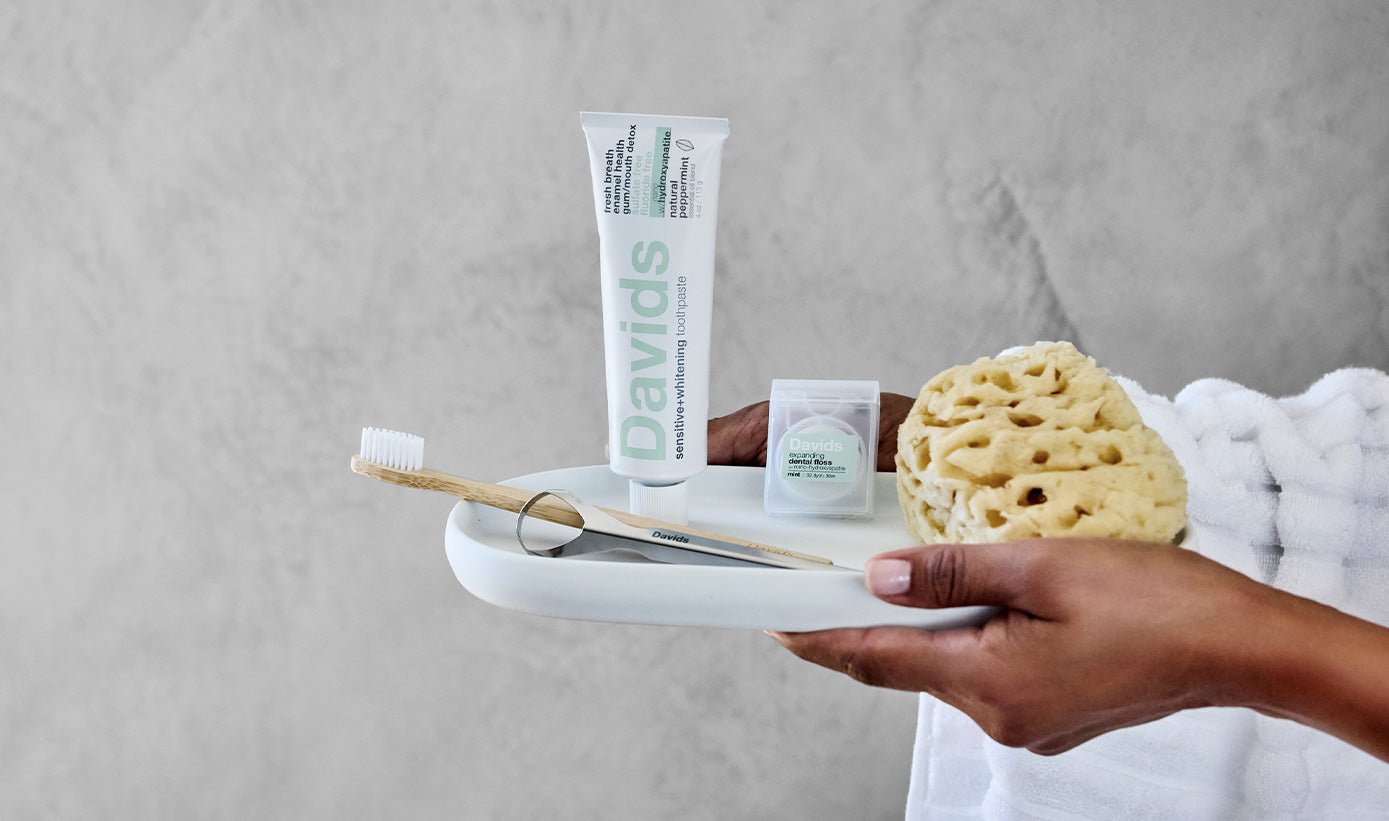
October is National Dental Hygiene Month, a smile-worthy month created by the American Dental Hygienists Association (ADHA) in 2009. It’s dedicated to celebrating all the incredible hard work dental hygienists do, while highlighting the importance of good oral hygiene and oral health access for all. As a brand built around dental hygiene, holistic oral health, and community, we’re so excited to celebrate National Dental Hygiene Month at Davids! There are over 214,000 dental hygienists in the United States alone, and lucky for us, that number is expected to grow in the coming years. In honor of everything they do for us and our oral + overall health, let’s dive into the incredible importance of dental hygiene. why is dental hygiene important? You’ve probably heard us talk about the importance of dental hygiene and how its benefits extend far beyond the mouth, but let’s brush up on a few key points. Dental hygiene plays a crucial role in… prevention: this is one of the most important aspects of oral care! A solid, holistic oral hygiene routine can prevent bad breath, gum disease, dental complications, and so much more. Prevention is the best approach because it can save you pain, cost, and complications in the long run. Don’t worry, we’ll cover our favorite oral hygiene routine at the end of this article. Pair that with routine dental visits, and you’ve got an amazing recipe for long-term oral health. overall health: poor oral hygiene can lead to more than just oral complications. It’s linked to health issues such as heart disease, diabetes, metabolic disorders, gut dysbiosis, stroke, respiratory problems, and more. essential functions: dental hygiene has the power to impact your comfort level when eating, drinking, and talking. If you’ve ever had a sensitive tooth, you know exactly what we mean! From sensitivity to bleeding gums, your oral hygiene routine can prevent discomfort and support essential daily functions (like chewing and swallowing) that so many of us take for granted. emotional well-being: our smile plays a huge role in our emotional health, self-confidence, and ability to socialize. On top of this, oral health issues can affect your gut health which can alter your hormones and brain chemistry. This can directly impact your mental health! Now that we’ve covered why hygiene is so important, let’s explore (and celebrate) the essential role of a dental hygienist! what do dental hygienists do? It’s common to experience some anxiety when visiting a dentist or dental hygienist. Their sharp tools can feel a bit intimidating, but we’re here to assure you that their work is so important! In honor of National Dental Hygiene Month, let’s dive into what dental hygienists do, and how it benefits you! review your health history: this can include gum health, previous fillings, oral care complications, and health history outside the mouth. For example, if you have a history of cardiovascular issues in your family, your hygienist and dentist might flag it and discuss it with you. As we mentioned, gum disease correlates with heart disease. deep clean your teeth: when plaque (bacteria-filled goo) hardens into tartar, it must be removed by a dental hygienist. They use special tools to safely scrape away tartar buildup without damaging your teeth or gums. They are extremely skilled at cleaning those hard-to-reach places of your mouth, such as your molars, the backs of your teeth, between your teeth, and the spots where your teeth meet your gum line. take dental X-rays: these images can reveal tooth decay, bone damage, cysts, tumors, and more! Your dental hygienist will take x-rays as needed based on your history, and your dentist will analyze them to recommend any treatment plans. offer recommendations: with help from the dentist, your hygienist can recommend products, tips, and tricks to elevate your oral hygiene routine. educate: hygienists who are passionate about holistic oral care can educate you on the role your mouth plays in your overall health. As mentioned above, so many diseases and complications start in the mouth, and signs like inflammation, gum disease, recurring enamel damage, and more can all reveal something about the bigger picture. Even (or especially) if it’s been a while since your last dental cleaning, take this as a sign to schedule one! It might feel intimidating, but your dental hygienist wants the best for you and your oral health. our favorite oral hygiene routine Celebrate National Dental Hygiene Month by upgrading your oral hygiene routine with our premium products for a healthy mouth + healthy you. brush twice daily with Davids: we have an incredible lineup of natural toothpaste, including mint hydroxyapatite toothpaste, orange vanilla hydroxyapatite toothpaste, strawberry watermelon toothpaste, and citrus peppermint. No matter what your flavor preference, we have a formula for you (and your little ones)! If you experience sensitivity, we highly recommend one of our hydroxyapatite formulas, as the nanoparticles work to remineralize weakened areas of the enamel for long-term comfort and health. Oh, and we recommend using our bamboo toothbrush for the sake of your teeth and the planet, and be sure to replace it (at least) every three months! floss daily with our hydroxyapatite floss: our expanding floss contains hydroxyapatite and xylitol to deliver essential minerals, remove plaque, and dislodge debris in the tight crevices of your mouth. Flossing is essential for oral hygiene, so don’t gloss over the floss! tongue scrape daily with our stainless steel tongue scraper: what better way to fight the countless bacteria that thrive on the cushy surface of your tongue? If you’re not tongue scraping, you could miss out on the cleanest clean you’ve ever felt! add a hydroxyapatite mouthwash: if you want to further elevate your oral hygiene routine, add a mineral mouthwash to nurture your enamel. Make sure it’s alcohol and peroxide-free for a gentle, effective clean. Do these things consistently, and your dental hygienist will thank you. On that note, in honor of National Dental Hygiene Month, we invite you to schedule a cleaning and checkup appointment with your dentist and stock up on your favorite Davids products! buy premium Davids products now
Learn more
refreshing relief: five sensitivities that call for mild mint toothpaste
At Davids, we believe oral care should truly feel good and refreshing, not overwhelming. That’s why we’ve crafted a lineup of gentle yet effective toothpastes, from our NEWEST mild mint toothpaste to our fun fruity flavors like strawberry watermelon and orange vanilla. So whether you feel like regular toothpaste is too minty or you struggle with oral conditions, our mild toothpaste options might be exactly what you’ve been seeking. Now, to celebrate the launch of mild mint and to remind you that you’re never alone in your oral care complications, we’re diving into five mouth sensitivities that might require a gentle toothpaste option. From supertasting to burning mouth syndrome, these sensitivities might surprise you! 1: heightened taste sensitivity aka supertasting Did you know that there are some “supertasters” out there? They have more taste buds than the average human (up to 45 more per 6mm section of the tongue). This enhanced sense of taste can be fun, but it can also be very overwhelming, especially when it comes to strong flavors. Particularly sour, bitter, salty, sweet, umami, and minty flavors can be too much, causing these supertasters to turn away from broccoli, spinach, coffee, and even minty foods/toothpaste. To a supertaster, our mild mint toothpaste might taste like our classic mint flavors to “average” tasters. It could be the perfect gentle toothpaste to deliver a minty fresh feeling without the bite! P.S. If you’re a supertaster and you hate vegetables because of it, be sure to get your daily dose of vitamins, nutrients, and fiber in other ways to help you avoid oral and overall health problems down the line! 2: gum sensitivity You might be dealing with gum sensitivity if you regularly experience pain, swelling, redness, bleeding gums, and/or bad breath. This sensitivity differs from tooth sensitivity as it occurs specifically in your gums and not on your tooth, so be sure to note exactly where the sensitivity originates. Gum sensitivity can have many different causes, including gingivitis, vitamin deficiencies, rough brushing/flossing, stress, hormone changes (like pregnancy), oral infections, diabetes, smoking, drinking, and more. If you’re experiencing gum sensitivity, we strongly recommend visiting your dentist to see if it’s developed into gingivitis. We also recommend cleaning up your oral hygiene routine, and a great way to do that is with our mild mint toothpaste. When dealing with gum sensitivity, you’ll want fresh, effective toothpaste that doesn’t burn, and our mild mint is the perfect candidate. This gentle toothpaste gives a fresh minty clean without delivering a strong mint profile that could add to the pain. 3: oral ulcers, aka canker sores The causes of canker sores overlap a lot with gum sensitivity….hormonal changes, vitamin deficiencies, smoking, and medications. They’re very common, so they’re not cause for immediate concern unless they reappear. They’ll typically clear up within two weeks, but if they don’t (or they keep coming back), it could be a sign of a larger systemic problem such as autoimmune disease, HIV, inflammatory bowel disease, celiac disease, oral cancer, and beyond. If you’ve ever had one, you know how uncomfortable canker sores can be. When your mouth feels vulnerable and uncomfortable like this, it’s important to avoid overwhelming it with strong flavors. That’s where mild mint toothpaste comes in, providing a fresh clean without an intense flavor bite. When you have a canker sore, it’s important to be easy on your oral microbiome, using a soft bristle toothbrush (like our premium bamboo toothbrush) and our NEW gentle toothpaste. 4: burning mouth syndrome Burning mouth syndrome (BMS) is a painful, uncommon condition affecting an estimated 2-18% of the population, mostly people over 59. It causes you to feel tingling, burning, or scalding sensations in your mouth, occurring in areas such as your tongue, lips, inner cheeks, gums, and the roof of your mouth. Along with painful burning sensations, BMS can cause dry mouth, altered taste buds, extreme thirst, and metallic tastes. While doctors don’t know the direct cause(s) of BMS, they suspect it’s associated with dental work, medication, vitamin deficiencies, stress, TMJ problems, hormonal changes, and reactions to oral care products. There’s no easy cure for BMS, but you can manage it with things such as pain medication, mouth rinses, hormone replacement, stress management, etc. If you’re experiencing BMS, it can be hard to keep up with an effective, holistic oral care routine. But diligent oral care is so important as you age! Our mild toothpaste can help you stay on track, as its gentle flavor and effective ingredient profile work to keep your mouth fresh and clean without the intensity of conventional mint toothpaste. 5: acid reflux Did you know that strong mint flavoring can trigger acid reflux? Mint oils can relax the muscles between your mouth and your stomach. We love a bit of relaxation, but these muscles are important because they keep your stomach acids from flowing back upstream. When they get too relaxed, those acids can reach your esophagus, causing symptoms like heartburn, acid reflux, stomach aches, difficulty swallowing, and sore throat. Acid reflux is one of the most common GI disorders in the world, affecting an estimated 80 million people in the US alone. If you’re one of those people, and you notice your minty toothpaste triggers your acid reflux, try switching to our mild mint toothpaste or one of our fun, fruity toothpastes. While it can be easy to avoid triggering acidic foods and drinks like tomatoes, coffee, and citrus, we know it can be harder to find a gentle toothpaste that fits your needs. That’s why we’re so proud to offer delicious, effective alternatives to classic mint toothpaste. it’s (mild) mint to be If you experience any of the conditions above (or you simply don’t like strong mint flavor!) be sure to try out our mild mint toothpaste, strawberry watermelon toothpaste, or orange vanilla hydroxyapatite toothpaste. These flavors are gentle, effective, and fit for the whole family, allowing you to keep up with a premium holistic oral care routine for a healthy mouth + healthy you. buy premium toothpaste now
Learn more
sweet tooth spooks: unwrapping sugar truths and the evolution of a cavity
It’s October, which means we’re approaching one of the biggest sugar holidays of the year: Halloween. In honor of the candy craze that comes with this spooky holiday, let’s brush up on the age-old question “Does sugar cause cavities?” We’ll also dive into the evolution of a cavity and what you and your little ones can do to prevent them! does sugar cause cavities? Sugar (by itself) does not cause cavities, but it sure plays a huge role in cavity development. The not-so-sweet side of sugar is that bacteria love it as much as we do! Sugar feeds the bad bacteria in your mouth. The bacteria “eat” this sugar by releasing damaging acids that can erode your enamel, alter your mouth’s pH, and cause all kinds of problems for your oral microbiome. In the news, you might find claims of Americans buying 600 million pounds of candy on this spooky holiday. Not to mention, a lot of this candy is chewy, sticky, and hard…the perfect setup to keep sugar lingering on your (and your little one’s) teeth for a long time. As we mentioned, sugar (especially sugar that lingers around on your teeth) can lead to cavities and other oral problems. These problems can become especially damaging for all the little trick-or-treaters whose teeth are still developing. To paint a picture of how cavities can progress (and give you the tools to stop them in their tracks), let’s dive into the evolution of a cavity. stage 1: enamel demineralization You’ve probably heard us talk about enamel demineralization before. This occurs when bacteria, plaque, and tartar sit on your teeth for too long, releasing acids that can wear down your enamel. Enamel demineralization can cause uncomfortable sensitivity to hot/cold foods, beverages, and even air (when you flash your teeth and suck in air). The good news is that at this point of the “cavity evolution” process, you can still reverse the damage! It’s so important to listen to the signs and symptoms of enamel demineralization and use proper oral care techniques to stop it in its tracks, remineralize your enamel, and soothe your sensitivity. The best way to do this is with hydroxyapatite toothpaste! Our third-party lab testing showed that daily brushing with our hydroxyapatite toothpaste remineralizes enamel more effectively than other leading sensitive toothpastes. Our customers have also reported that their sensitivity improved in just a few days of brushing with our hydroxyapatite toothpaste. In light of Halloween, grab a tube for you and your little ones…they’ll love our orange vanilla flavor! stage 2: incipient cavity If left untreated, enamel demineralization turns into an incipient cavity. While sometimes hard to identify, an incipient cavity might reveal itself with white spots where plaque has built up (mostly near your gum line or in the grooves of your molars). An incipient cavity is typically still contained in your enamel, so it hasn’t reached the layers underneath. If left untreated, an incipient cavity can develop into a “hole” that exposes those layers underneath, causing uncomfortable sensitivity and prompting the need for a filling. If it hasn’t reached this point, an incipient cavity can be treated with topicals (you know we prefer hydroxyapatite over fluoride treatment). Your dentist can tell you if your incipient cavity is still treatable via topical products, or if it requires a filling. stage 3: small tooth cavity Once the incipient cavity has turned into a small tooth cavity, there’s no going back. The cavity has penetrated your enamel enough to cause lasting damage, and although it’s small right now, it’ll continue to spread. A small tooth cavity will show up on an X-ray, and it’s important to stop it with a filling before it turns into a medium or large tooth cavity. stage 4: medium and large tooth cavity A cavity can jump from small to large pretty quickly, which is why 6-month dental check-ups are so important! While your dentist can usually fix a medium cavity with a larger filling, a large tooth cavity might be too large for a filling. This is because you must have enough strong, healthy enamel to keep the filling in its place…otherwise, it might crack or break while you chew. For a large tooth cavity, you might require a crown, which covers the entire tooth to prevent further cavity damage and allow you to chew normally. However, a large tooth cavity can progress into nerve damage if left untreated. If it reaches your tooth’s center nerve tissues, it will jeopardize the life of your tooth, and fillings/crowns are no longer an option. This is where root canals come in (or full tooth extractions if the damage has progressed too far). A root canal involves removing the nerve and blocking off any pathways for bacteria to travel into your bone. Spooky, right? Don’t worry, we’ve got tips to help you fight these frights. strengthen your enamel to fight these frights Here are some of our favorite ways to keep the Halloween treats from haunting your teeth! don’t let sugar hang around: enjoy your sweets in short bursts, and be sure to rinse or brush your teeth after indulging (especially if it’s a lollipop or particularly chewy candy). This will keep the sugar, bacteria, and damaging acids from lingering on your pearly whites for too long. floss daily with our hydroxyapatite floss: this can help you avoid and reverse enamel demineralization in those hard-to-reach crevices between your teeth. Our expanding floss is infused with hydroxyapatite particles to deliver minerals to those damaged areas. brush daily with our bamboo toothbrush and hydroxyapatite toothpaste: the nanoparticles in our hydroxyapatite toothpaste will deliver essential minerals to your enamel to help stop enamel demineralization in its tracks. In the process, it can provide much-needed tooth sensitivity relief, so you can sport a healthy smile that feels as good as it looks. On top of that, our bamboo toothbrush is a great sustainable alternative to the conventional plastic toothbrush. The handle is compostable and biodegradable, so you can feel good about not contributing to the 1+ billion plastic toothbrushes (and countless candy wrappers) that make their way into landfills every year. Our orange vanilla hydroxyapatite toothpaste is perfect for you and your little ones this Halloween! It’s sweet, it’s orange, and it’s ready to fight demineralization at the source. buy premium hydroxyapatite toothpaste now
Learn more
threads of relief: how hydroxyapatite floss can soothe your sensitivity
When dealing with sensitivity, it’s tempting to skip flossing (and brushing) those tender areas. It might seem counterintuitive to “rub” those super-sensitive teeth with your floss and toothbrush, but skipping over those parts can drastically worsen your sensitivity. If you maintain proper brushing habits but still experience a lot of sensitivity, it might be because you’re skipping flossing. Did you know brushing alone leaves about one-third of your tooth’s surface untouched? This allows bacteria to fester, plaque to build up, and sensitivity to take over in those tight crevices between your teeth. Don’t worry though, regular flossing with hydroxyapatite floss can soothe that pesky sensitivity. Let’s explore how! how flossing can soothe sensitivity Daily use of hydroxyapatite floss helps to remove plaque from your teeth, keeping your gums healthy and your sensitivity at bay. If you leave the plaque to linger, it can form into tartar: a hardened version of dental plaque that can lead to gum disease, enamel erosion, and severe sensitivity. Once tartar forms, it can only be removed by dental hygienists using a scalar (that hard metal hook tool used to scrape your teeth at the dentist). When you make a habit of hydroxyapatite floss, you can break down plaque, prevent tartar buildup, and deliver a much-needed dose of minerals to those hard-to-reach parts of your enamel. The nanoparticles in the hydroxyapatite floss bind to your tooth, strengthening your enamel from the inside out to prevent damage and relieve sensitivity at the source. So next time you feel stubborn sensitivity, don’t toss the hydroxyapatite floss. one tooth hurts when I floss If one tooth hurts when you floss, there could be many explanations. We’ve outlined a few common ones below. improper technique: rough flossing (and brushing) can cause sensitivity instead of soothing it. Has your sensitivity only appeared after you added flossing into your routine? This could indicate improper technique (don’t worry, we’ll cover our favorite technique tips in the last section). irreversible sensitivity: sometimes sensitivity is “too far gone” for at-home brushing and flossing. For example, you might need a dental professional to remove tartar buildup. Maybe your gum has receded so far (from gum disease) that your tooth’s nerve passageways are exposed around the gumline. Maybe you’re just genetically predisposed to stubborn sensitivity. These things could require dental work to stop the pain. tooth decay: flossing that tooth can cause intense pain if tooth decay is already present. Tooth decay tends to start in those tight crevices between your teeth, so pain after flossing a certain tooth can unveil tooth decay you didn’t previously notice. If tooth decay is the problem, your dentist can give you a deep cleaning and a treatment plan. dental work: if one tooth hurts when you floss, be sure to ask yourself if you’ve had any dental work (recent or past) in that area. Pain in one spot could indicate a loose crown or a cracked filling. This is not a comprehensive list. If you have one (or more) sensitive spot that won’t go away no matter how much you brush and floss with hydroxyapatite, reach out to your dentist. lingering pain after flossing If you have lingering pain after flossing, many of the causes above also apply. However, the difference here is that the lingering pain exists throughout your entire mouth instead of in one spot. If that’s the case, you could be dealing with gum disease. When the pain lingers for days, try to notice any other symptoms. Are your gums bleeding after you floss (even though you’ve been flossing for a while? Do your gums appear red and inflamed? Do your gums appear “detached” from your tooth, leaving pockets where bacteria can build up? No matter what, lingering pain after flossing (especially if it lasts over a week) is enough cause to visit your dentist. how to relieve gum pain from flossing If you’re new to flossing, it’s common to experience gum discomfort and intermittent bleeding. To soothe these symptoms, here are a few at-home remedies. warm saltwater rinse: rinsing with saltwater can reduce plaque buildup, swelling, and inflammation. It can also increase your mouth’s pH, making it harder for bacteria to thrive. hot or cold compress: place a heating pad or an ice pack on the outside of your cheek to soothe the pain and reduce inflammation. smooth waxed floss: our hydroxyapatite floss is coated with vegan wax and cocoa butter for a gentle glide. This should help you avoid “jamming” the floss into your teeth and placing too much pressure on your gums. However, if the pain persists (especially if accompanied by swelling and a fever), visit your dentist. They can tell you if the pain results from gum disease, an infection, or another oral condition. our top tips for the best flossing experience For a soothing flossing experience, we’ve outlined the importance of the product you’re using… and how to floss properly. use our hydroxyapatite floss: as mentioned, this is crucial for delivering essential minerals to those tight crevices between your teeth. Our floss utilizes an innovative design to expand while you use it and cover more surface area of your tooth. pair it with hydroxyapatite toothpaste: hydroxyapatite toothpaste can be a game-changer for sensitivity. If you experience one or more sensitive spots throughout your day (especially when you brush or floss), add our hydroxyapatite toothpaste to your routine. You might just notice some relief within a few days of consistent brushing! follow a proper flossing technique: like grabbing 12 inches of floss and forming a U-shape around each tooth to scrub the surface. In this previous article, we outline how to floss the right way. This can help you avoid unnecessary gum pain and bleeding. Remember, floss plays an important role in your oral and overall health, working to fight plaque, gum disease, and sensitivity in the tightest parts of your mouth. Don’t gloss over the importance of floss! buy hydroxyapatite floss now
Learn more
bite back: 10 natural remedies for your sensitive teeth
If you’re experiencing sensitivity, we fully understand the need for quick and effective solutions. From green tea to hydroxyapatite toothpaste, we’ve compiled a list of 10 simple natural remedies for sensitive teeth, so you can nip that “bite” in the bud as soon as possible. 10: saltwater rinse Saltwater has been a staple natural remedy since at least 1600 B.C. when ancient Greeks and Egyptians recorded salt-based treatments. Saltwater is known for its natural antiseptic and anti-inflammatory properties, reducing plaque buildup, soothing pain and swelling (in the mouth and throat), and relieving tooth pain. It can do this by increasing your mouth's pH, making it less acidic and harder for bacteria and harmful pathogens to survive. Simply mix warm water with salt, swish it, and gargle it as you would with mouthwash, and you have a simple and affordable natural remedy for sensitive teeth. 9: green tea Like saltwater, green tea can act as a natural mouthwash, reducing bacteria to relieve sensitivity and inflammation. Green tea is known for its antioxidants (catechins), which have incredible bacteria-killing properties and nurture a less-acidic oral microbiome. This isn’t quite the case for green tea’s morning drink competitor: coffee! Coffee is quite acidic, which can lead to dry mouth, bad breath, enamel erosion, and more. On top of being a natural remedy for sensitive teeth, green tea serves many other amazing purposes. It’s said to improve brain function, bolster the immune system, aid in weight loss, reduce inflammation throughout the body, improve liver function (and overall body detoxification), protect good cholesterol, and more. 8: turmeric Turmeric has famous anti-inflammatory properties. It can help ease the symptoms of various oral care issues, including sensitivity, gingivitis, and overall discomfort. It can work to reduce plaque, soothe redness and swelling, and even whiten teeth. Many people don’t realize that tooth sensitivity is not only a result of enamel erosion, it’s also caused by gum disease and separation. When your gums recede from your teeth or become inflamed, it can expose the tubules that lead to your tooth’s center nerve. Substances like turmeric can help with these gum-related issues and act as an effective sensitive teeth home remedy. 7: peppermint oil You can think of peppermint oil as a natural numbing agent. Instead of using synthetic drugs to numb your sensitivity, peppermint oil can deliver a gentle soothing effect. Research has revealed that, in the process, peppermint oil also has the power to kill bacteria and fight oral pathogens that might otherwise damage your gums, tissue, and enamel (worsening your sensitivity). Whether it’s chewing gum, a homemade rinse, or one of our natural toothpastes (formulated with premium peppermint oil), peppermint oil is a simple, effective, and accessible sensitive teeth home remedy. 6: clove oil Like peppermint oil, clove oil is amazing for temporary sensitivity (and oral pain) relief. Clove oil contains eugenol (also found in turmeric), which has natural antibacterial and numbing properties that can relieve pain, reduce inflammation, freshen breath, and break down plaque and bacteria. Clove oil also has antifungal properties to help prevent gum disease, cavities, and topical skin issues. Clove oil has been used in dentistry and as a natural remedy for sensitive teeth since the 1800s! 5: oil pulling with coconut oil Oil pulling is an ancient Ayurvedic practice where you swish coconut oil in your mouth for 15-20 minutes (it can take some practice to get up to that timeframe). In Ayurveda, this practice is used to heal cells, tissues, and organs throughout the body by eliminating toxins and promoting a healthy flora distribution in your oral microbiome and gut microbiome. By stimulating saliva production, reducing bad bacteria, and eliminating toxins, consistent oil pulling can help to provide tooth sensitivity relief and promote holistic oral health. Fun fact: our nano-hydroxyapatite toothpaste formulas contain coconut oil (more on that in option number 1 below). 4: custom night guards Do you wake up with sensitivity you didn’t have when you went to bed? This could indicate that your sensitivity is caused by teeth grinding (bruxism) while you sleep. Some common causes of nighttime bruxism include anxiety, stress, sleep apnea, use of certain medications (like SSRIs), TMJ, jaw misalignment, consuming too much caffeine, smoking, and drinking. While night guards aren’t a “root cause” solution to teeth grinding, they can provide short-term tooth sensitivity relief. We recommend asking your dentist about a custom night guard (you want it to fit your unique teeth) and exploring the root cause of your teeth grinding. 3: if you’re whitening, switch to hydroxyapatite and PAP Teeth whitening with hydrogen peroxide is a quick way to experience uncomfortable sensitivity. Conventional products like whitening toothpastes, gels, strips, mouthwashes, and more can contain high concentrations of hydrogen peroxide. They’re effective at whitening but can also release harmful free radicals that can damage your enamel, gums, and tissues. The good news is that you can whiten without the pain using PAP+ whitening products. They’re formulated with hydroxyapatite and PAP, a gentler alternative to hydrogen peroxide that does not release free radicals. As the PAP works to lift stains and brighten your smile, the hydroxyapatite particles repair weakened, damaged enamel to reveal a stronger and whiter smile and act as a natural remedy for sensitive teeth. 2: a soft-bristle bamboo toothbrush Medium and hard-bristle toothbrushes can be harsh on your enamel, causing sensitivity after multiple uses. If you’ve noticed sensitivity after using one, we recommend switching to a soft-bristle toothbrush. Our bamboo toothbrush is crafted with soft, BPA-free bristles derived from plant (castor) oil. Many conventional toothbrushes use bristles derived from petroleum oil, which we don’t recommend for you or the planet. For a gentle brushing experience (and a simple sensitive teeth home remedy), grab a single or 3-pack of our soft bamboo toothbrush. The 100% bamboo handle is compostable, so you can avoid contributing to the 1 billion toothbrushes that enter landfills annually in the US. 1: Davids hydroxyapatite toothpaste and floss You can think of nano-hydroxyapatite as your sensitivity superhero. It already exists in your enamel, so when you floss and brush with our hydroxyapatite products, the nanoparticles know exactly how to remineralize your enamel and reduce sensitivity. We now offer a hydroxyapatite-infused floss to help remineralize the tightest spots between your teeth. We also have two delicious flavors of hydroxyapatite toothpaste that appeal to every palate. If you’re a mint lover, try our original sensitive + whitening nano-hydroxyapatite toothpaste in our classic mint flavor. If you hate the “bite” of mint and prefer a fun fruity flavor, try our mouthwatering orange vanilla nano-hydroxyapatite toothpaste for kids + adults! Whichever flavor you choose, consider it your go-to natural remedy for sensitive teeth. buy premium hydroxyapatite toothpaste now
Learn more
freshness that feels good: discover the benefits of our mild mint toothpaste
Are you someone who feels like toothpaste is just too minty? Does it make your mouth burn or leave you feeling like you just ate an ice cube? If you’ve never understood the hype behind strong mint flavoring, you’re not alone. Sensitive palates deserve to feel that fresh mint sensation without the intense “bite” of strong mint flavoring, and that’s exactly why we’ve been working on an effective mild mint toothpaste here at Davids. To celebrate the recent launch, we’re exploring why people might prefer mild toothpaste. But before we dive in, let’s start by answering the question: how did mint become the most dominant toothpaste flavor, anyway? why is mint the most popular toothpaste flavor? Mint in toothpaste traces back to nearly 2,000 years ago when ancient Egyptians crafted “toothpaste” with salt, pepper, mint, and dried flowers. While many different ancient cultures continued to make their own oral care products using mint (and other wildcrafted ingredients), toothpaste as we know it didn’t emerge until the late 1850s. But even these early “tooth crèmes” contained mint extracts. In the early 1900s, a toothpaste company called Pepsodent ran an ad campaign that claimed their formula removed the dangerous “film coating” that makes your teeth appear dull, discolored, and dirty. One key characteristic of Pepsodent was its minty flavor, and consumers admitted that the flavoring left their mouths feeling particularly refreshed and clean. This encouraged people to maintain a daily brushing habit, and Pepsodent went on to dominate the oral care market for three decades. Pepsodent is largely credited for associating the cool, minty sensation with a fresh, clean mouth. This association has endured for decades, which is why mint still dominates the toothpaste world to this day. why do some people prefer mild mint toothpaste? There are many reasons why someone might opt for mild mint toothpaste over regular, powerful mint flavoring. Do any of these resonate with you? strong mint can cause burning + tingling sensations: scientists have confirmed that menthol (a compound that exists naturally in peppermint oil) activates the same nerve-ending-receptor that senses cold. This tricks your brain into thinking that peppermint causes a cooling, tingling sensation. Many people find this uncomfortable! strong mint can trigger acid reflux: certain mint oils relax the muscle keeping your stomach acids from flowing back upstream. When this muscle gets too relaxed it can allow acid and bile to make its way back to your esophagus to cause symptoms like heartburn, stomach aches, and acid reflux. children’s palates are still developing: their taste buds are still evolving, so intense minty flavors can feel very overwhelming. Many kids will describe mint as “spicy” or “cold,” making them want to avoid it in their daily routines. It’s perfectly normal for this preference to extend into adulthood too! Also, it’s natural to crave variety in your routine. Since you’re brushing your teeth twice per day (or at least that’s the professional recommendation), you might as well jazz it up with different flavor profiles. With flavors like strawberry watermelon, orange vanilla, herbal citrus peppermint, and our NEW mild mint toothpaste, we have a range of flavors to choose from at Davids. Each flavor packs intentional ingredients to reveal your brightest, healthiest smile. the benefits of mild mint toothpaste If you’ve avoided strong mint flavoring in the past, mild mint toothpaste might be the perfect option for you to get that fresh feeling without unwanted tingling sensations. At Davids, we’ve spent time formulating the perfect mild mint toothpaste, so sensitive palates (adults + kids alike) can enjoy a more subtle (but still super fresh) mint feeling. Here are a few noteworthy benefits of our new mild toothpaste. gentle flavor profile: unlike intense mints that can overwhelm your senses, mild mint offers a refreshing, balanced flavor that’s perfect for those who prefer a subtler taste. It’s minty without the bite, making it an ideal choice for sensitive palates. effective oral care: don’t let the mildness fool you—our mild mint is packed with all the essential ingredients to keep your teeth and gums healthy. With every use, you’re helping to fight cavities, freshen your breath, and maintain optimal oral hygiene. perfect for the whole family: mild mint’s gentle formulation makes it a family-friendly choice. It's safe and enjoyable for everyone, from kids learning to brush properly to adults seeking a more refined flavor experience. When you and your kids share the same toothpaste flavor, it can create a fun bonding experience and make brushing more exciting! sustainable and natural: like all our products, mild mint is made with natural ingredients and packaged in environmentally responsible materials, so you can feel good about taking care of your oral health and the planet. All the incredible benefits of Davids without the bite...what’s not to love? how to use mild mint toothpaste for best results Here’s our go-to oral care routine for the ultimate fresh and clean feeling, using toothpaste that doesn’t burn. floss daily with our hydroxyapatite floss: our floss is coated in xylitol and nano-hydroxyapatite to deliver bacteria-fighting, enamel-strengthening goodness to the tightest crevices in your mouth. Smile wide knowing every part of your mouth is as healthy as it can be! Pro tip: we recommend flossing before brushing, so you can brush away any lingering debris. brush with mild mint toothpaste twice a day: to scrub away plaque, tame bad bacteria, freshen your breath, and whiten your smile… naturally! pair it with our nano-hydroxyapatite toothpaste: this will give you enhanced remineralization and protection against cavities, improving sensitivity and promoting long-term oral health. Our new orange vanilla hydroxyapatite toothpaste has a deliciously sweet fruity flavor. tongue scrape to remove even more bad bacteria: after brushing with your mild mint toothpaste (and the amazing ingredients are still on your tongue) scrape using our professional stainless steel tongue scraper. This will remove even more bad bacteria from your mouth, as they love to linger on your tongue’s cushy surface. This holistic routine will nurture your long-term oral health and set a great example for your little ones too! ease into mint Have you been on the search for an effective gentle toothpaste? Our mild mint toothpaste might just be the perfect fit (for both kids + adults) to get an effective clean without unwanted tingling. buy premium toothpaste now
Learn more
the sensitivity solution: how hydroxyapatite can help teeth prone to pain
Do you feel like your teeth are just more sensitive than others? That you’re doomed to deal with uncomfortable sensitivity for the rest of your life? Well, we’re here to give you something to smile about. Not only are we exploring the reasons you might be predisposed to sensitivity, but we’re also reminding you of a critical solution to your sensitivity: hydroxyapatite toothpaste. By addressing sensitivity at the source, nano hydroxyapatite is changing the game for sensitive mouths. No matter the cause (as you read on, you’ll discover there are many), hydroxyapatite is here to provide you with long-term enamel repair and tooth sensitivity relief. genetics’ role in tooth sensitivity Did you know that sensitive teeth can be genetic? Dental pain can range from a minor nuisance to severely debilitating, and genes can play a role in where you fall on this spectrum. Specific genes influence the development of nerve pathways, where pain signals travel from your tooth to your brain. These nerve pathways can differ from person to person, influencing how much tooth pain they feel throughout their day, when they brush, or even during dental procedures (which is why some might require more numbing than others). A common representation of this is redheads! Some research indicates that redheads might be more sensitive to pain, including tooth sensitivity. This is because red hair comes from a mutation to a receptor gene that’s connected to your pain response. Research also suggests that redheads might be less responsive to local anesthetics used in dentistry, and they’re twice as likely to avoid dental work due to bad experiences. Not to fear! If you suspect you’re genetically predisposed to sensitive teeth, just be sure to tell your dentist in advance to avoid bad experiences. You can also brush with hydroxyapatite toothpaste to nurture strong, healthy enamel and provide tooth sensitivity relief. hormonal changes and sensitive teeth Hormones can also play a large role in tooth/gum sensitivity. As an example, estrogen and progesterone increase during pregnancy, which can cause inflammation in your gums, increase blood flow and volume to your mouth, and affect how your body responds to the bacteria in your mouth. All of these factors can make your teeth and gums more sensitive. On the opposite end, decreased hormone production during menopause can lead to dry mouth, decreased bone density, thinning mouth tissue, and weakened enamel. All of these things can lead to uncomfortable tooth (and overall mouth) sensitivity. During times of hormonal changes (from puberty to pregnancy and beyond), it’s important to add our hydroxyapatite toothpaste into your oral care routine to nurture strong enamel, reduce sensitivity, and fight bad bacteria for a healthy mouth. daily habits that may cause sensitive teeth Alongside genetics and hormones, your daily habits can play a huge role in causing/relieving sensitivity. From your diet to how hard you press on your toothbrush, there are so many things that can impact the sensitivity of your teeth. Here are a few! poor oral care habits: plaque buildup and tartar (hardened plaque) are among the most common causes of sensitivity! If you’re not properly brushing and flossing with effective toothpaste (like our hydroxyapatite toothpaste), plaque can remain on your enamel and damage, causing sensitivity. aggressive brushing: brushing too hard, especially with a medium-to-hard bristle toothbrush can erode your enamel. This exposes the sensitive layers beneath and the tubules that lead to your tooth’s ultra-sensitive center nerve. Our bamboo toothbrush is made with high-performance soft bristles to reveal an effective clean without harmful pressure. Our hydroxyapatite toothpaste works to repair damaged enamel and relieve sensitivity by delivering essential fortifying minerals and nutrients that bind to your teeth for long-term benefits. teeth grinding: just like aggressive brushing, teeth grinding can also wear down your enamel over time. Because teeth grinding is often a subconscious habit that occurs during sleep, it can be harder to identify and address. Be sure to take note if you’re waking up with jaw pain, tension headaches, and increased sensitivity in the morning. To understand the causes of teeth grinding and how nano hydroxyapatite can help, check out our previous article here. eating acidic or sugary foods: did you grow up eating/drinking sugary substances? Do you love lemons, limes, coffee, or wine? Over time, these things can weaken your enamel, also exposing the pathways to your tooth’s center nerve. Without repairing that enamel with powerful minerals like nano hydroxyapatite, these foods and drinks can lead to long-term sensitivity. whitening with peroxides: using peroxide mouthwash or whitening strips, gels, and foams can cause sensitivity after a single use. This is because peroxides release damaging free radicals as they work, causing discomfort for your gums, enamels, and mouth tissue. If you’re experiencing sudden tooth sensitivity out of nowhere, it could result from a lingering dental issue (like a cracked tooth or cavity) or even sinus pressure. When you’re sick or experiencing allergies, the inflammation in your sinuses can increase the pressure on your teeth, resulting in sudden sensitivity. solve your sensitivity with Davids hydroxyapatite toothpaste When you use our hydroxyapatite toothpaste daily, you can smile bright knowing you’re providing relief for your sensitive teeth by nurturing strong, healthy enamel. Unlike other sensitive toothpastes that use chemicals to numb your teeth and gums, our hydroxyapatite toothpaste delivers enamel repair and tooth sensitivity relief at the source. Because hydroxyapatite makes up the foundation of your enamel and dentin (the layer right below), the nano hydroxyapatite particles in our toothpaste can penetrate your enamel, bind to it, and fill any holes or imperfections that might expose your tooth’s center nerve. The result is a truly healthier, less sensitive smile. If you feel like you’re someone who has surrendered to having more sensitive teeth than everyone else, give our hydroxyapatite toothpaste a try! It might just be the thing you’ve been seeking to achieve that healthy, comfortable smile. buy premium hydroxyapatite toothpaste now
Learn more
is hydroxyapatite safe? why this superhero is the best choice for the whole family
Hydroxyapatite has become oral care’s newest hero ingredient, and for good reason. As it continues to gain popularity for adults and children alike, it’s natural to wonder.... is hydroxyapatite safe? With all the remineralizing power of fluoride (and none of the potential unwanted side effects), we assure you that hydroxyapatite is safe and effective. Grab your favorite flavor (mint or orange vanilla?) and get excited about a safe, out-of-this-world oral care routine for the whole family! what is hydroxyapatite? Hydroxyapatite is a naturally occurring mineral mainly made up of phosphorus and calcium. It already exists in your body, forming the foundations of your bones and teeth. In fact, hydroxyapatite makes up about 65–70% of healthy bones and 95-97% of healthy enamel. When we talk about hydroxyapatite in the context of oral care, you’ll often hear us refer to it as nano-hydroxyapatite. The version of hydroxyapatite you’ll find in your toothpaste is biomimetic, meaning it mimics the makeup and function of the hydroxyapatite inside your body. Nano-hydroxyapatite is simply teeny tiny particles of regular hydroxyapatite. We infuse these tiny particles into our oral care products for effective enamel remineralization. The nano-particles effortlessly bind to your enamel, penetrating the surface to fill any holes, scratches, or other imperfections to reveal stronger teeth that are more protected against bacteria, plaque, gum disease, sensitivity, and tooth decay progression. Because hydroxyapatite already exists in your teeth, it’s an ideal ingredient when it comes to enamel remineralization. When it enters your oral microbiome, it feels at home, and it knows exactly what to do! So, what is hydroxyapatite? It’s an oral care superhero! is hydroxyapatite safe? Not only is hydroxyapatite effective, it’s extremely safe! Because it already exists in your body, there’s absolutely no risk of over-ingestion (this is not the case for fluoride, which we’ll cover in the next section). It’s biomimetic, biocompatible, and non-toxic, and if that sounds like a bunch of jargon, we understand. Let’s take a closer look at what these words mean. biomimetic: as mentioned above, this just means that the nano-hydroxyapatite in your toothpaste mimics the material naturally found in your teeth and bones. biocompatible: this means that hydroxyapatite will function without any unplanned side effects, and it will not cause any harm when it comes in contact with your body. non-toxic: similar to biocompatible, non-toxic means hydroxyapatite does not contain any harmful chemicals, and it will not pose any danger or unwanted symptoms. So, is hydroxyapatite safe? Absolutely, it’s safe for adults, pregnant women, and children who haven’t yet mastered the art of tooth brushing. Hydroxyapatite brings you 100% benefits and 0% harm. What’s not to love? hydroxyapatite vs fluoride Now, we’ve covered why hydroxyapatite is a safe choice for kids and adults, but how does that compare to the long-time oral care superstar: fluoride? First things first, let's peek at the history of these two ingredients. Fluoride gained popularity in 1945 when a city in Michigan began adding fluoride to its drinking water in an effort to reduce tooth decay...and it worked! Ever since then, it’s been the go-to ingredient for remineralization, and the main ticket for an ADA stamp of approval. A few decades later in 1970, NASA began to use hydroxyapatite as a supplement for their astronauts. After returning from low-gravity environments, hydroxyapatite supplementation helped astronauts successfully strengthen their teeth and bones. Shortly after that, hydroxyapatite found its way into commercial toothpaste. (And it’s remained the gold standard for oral care in Japan ever since.) Although fluoride has stolen the oral care spotlight in the US, recent research proves that it’s just as effective as (if not more effective than) fluoride at remineralizing your enamel. This 2019 study compared hydroxyapatite toothpaste with two fluoride toothpastes, concluding that hydroxyapatite is a safe, effective substitute. This 2019 study concluded hydroxyapatite oral care products might be safer for kids prone to dental caries. This 2020 study reveals that hydroxyapatite remineralizes dental caries as effectively as fluoride. This 2022 study confirms that hydroxyapatite products are a safe alternative to fluoride for young children at risk of fluorosis (which we’ll discuss in a moment). And that’s just a few of the many studies! When it comes to hydroxyapatite vs fluoride, the main difference is that fluoride is not considered biocompatible, meaning it can be toxic and harmful when ingested in large amounts. When you ingest too much fluoride through water, food, and oral care products, it can lead to fluorosis. what is fluorosis? Dental fluorosis is an unwanted side effect that occurs when you consume too much fluoride, causing white and/or brown speckles to form on your teeth. It typically occurs when children over-consume fluoride in their early years when their permanent teeth are still developing. While the condition is not harmful to your overall health, it’s certainly not desirable. Beyond dental fluorosis, ongoing research suggests that serious fluoride toxicity can cause long-term harm, and the thought of that alone is enough for us to turn to hydroxyapatite instead. With hydroxyapatite, you don’t have to worry about fluoride toxicity for you or your little ones! Your kids are free to accidentally swallow hydroxyapatite without worry, and we think that peace of mind is well worth challenging the oral care norms. best hydroxyapatite toothpaste At Davids, we have two delicious, effective hydroxyapatite toothpaste options for the whole family. For mint lovers, our original sensitive+whitening nano-hydroxyapatite toothpaste is the perfect option. It’s formulated with premium mint oils for the perfect invigorating flavor and all of the effective remineralization powers of our nano-hydroxyapatite particles. In fact, our third-party lab testing showed it outperformed leading sensitive toothpastes, remineralizing and repairing enamel to reduce sensitivity more effectively than Apagard Premio, Boka, Colgate Sensitive, Risewell, Sensodyne Pronamel, and Toms Sensitive. Our NEW orange vanilla hydroxyapatite toothpaste for kids + adults is perfect for those looking for a juicy, mouthwatering alternative to mint. It’s made with the same nano-hydroxyapatite particles (and other effective ingredients) as the option above, we just replaced our premium mint oils with naturally sourced fruit flavors. So whether you’re craving cool mint or fruity orange vanilla, get the whole family brushing with these deliciously effective hydroxyapatite toothpaste options. And feel peace of mind knowing each formula nurtures strong, healthy teeth in the safest way. buy premium hydroxyapatite toothpaste now
Learn moreeverything you need to know about smarter, cleaner oral care
Better oral care begins with knowledge. That’s why our dental care blog goes beyond trends to share insights that help you make health- and earth-conscious choices for your smile.
Learn about everything from innovations like nano hydroxyapatite (nHA) to understanding what natural whitening involves. This oral health care blog breaks down the science with clarity to make it easy to understand and apply.
the Davids difference
Davids story began with a mission: to create premium oral care that’s good for people and the planet.
Every decision we make stems from integrity and respect for the environment. We use premium, naturally sourced and derived, USA-origin ingredients, recyclable metal tubes, and sustainable packaging.
As a family-owned and operated business going up against the giants of the toothpaste industry, we hold ourselves to higher standards because clean doesn’t just describe our premium ingredients; it describes our values, too.
You can read about these values and more in our transparent dental care blog.
sustainability in action
If you’re trying to live clean, we’re the toothpaste brand for you and your family. From recyclable packaging and aluminum tubes to our commitment to USA-based production, we’ve built sustainability into every step of our process.
We’re helping make conscious care a daily habit by reducing waste and supporting local manufacturing.
Learn, question, and smile brighter. Our oral health blog is an open space for learning and exploration. We hope each post will help you think differently about oral health and feel more empowered in your daily care routine.
stay connected
The learning doesn’t stop at this dental care blog. Follow Davids on Instagram, Facebook, TikTok, and Pinterest for daily tips, ingredient spotlights, and oral care inspiration.
Plus, subscribe to Davids today for more educational content and perks like 20% off every order, free shipping on orders over $35, and more.